Normal Haemoglobin Levels by Age - Complete guide (2026)

Author:
Dr. Ved Parkash Sharma
Consultant - Pediatrics Doctor
Our Haemoglobin levels vary by age. A reading that’s perfectly healthy for a newborn would be a red flag in an adult. If you’ve just seen your blood test report and want to know whether your number is normal, low, high, or good, this guide will give you a clear understanding of normal haemoglobin levels by age.
What is Haemoglobin?
Haemoglobin is the protein inside your red blood cells that carries oxygen from your lungs to every organ. Without enough haemoglobin, your body simply doesn’t get the oxygen it needs to function.
Haemoglobin is measured in grams per decilitre (g/dL). It is one of the most commonly ordered blood tests worldwide.
In simple terms, think of haemoglobin as an oxygen delivery vehicle. Too few vehicles means your cells go hungry. That means your haemoglobin is low.
Too many vehicles means your blood becomes prone to clotting. It means your haemoglobin is high.
Normal Haemoglobin Levels by Age
Your haemoglobin level changes a lot across your lifetime.
A newborn’s level is naturally very high because the baby relies on a high-oxygen environment in the womb. It drops in the first few months, then rises gradually through childhood to adulthood.
The reference ranges below are normal haemoglobin levels by age, based on guidelines from the World Health Organisation.
| Age-Wise Haemoglobin Reference Table | |
|---|---|
| Newborns (0-2 weeks) | 14.5-22.5g/dL |
| Infants (2-6 months) | 9.5-13.5g/dL |
| Children (6 months-6 years) | 11.0-14.0 g/dL |
| Children (6-12 years) | 11.5-15.5 g/dL |
| Teenage boys (12-18 years) Teenage girls | 3.0-16.0 g/dL 12.0-16.0 g/dL |
| Adult men (18+ years) Adult women | 13.5-17.5g/dL 12.0-15.5 g/dL |
| Pregnant women | 11.0-14.0 g/dL |
| Elderly (65+ years) | 11.7-17.3 g/dL |
What Does Low Haemoglobin Mean?
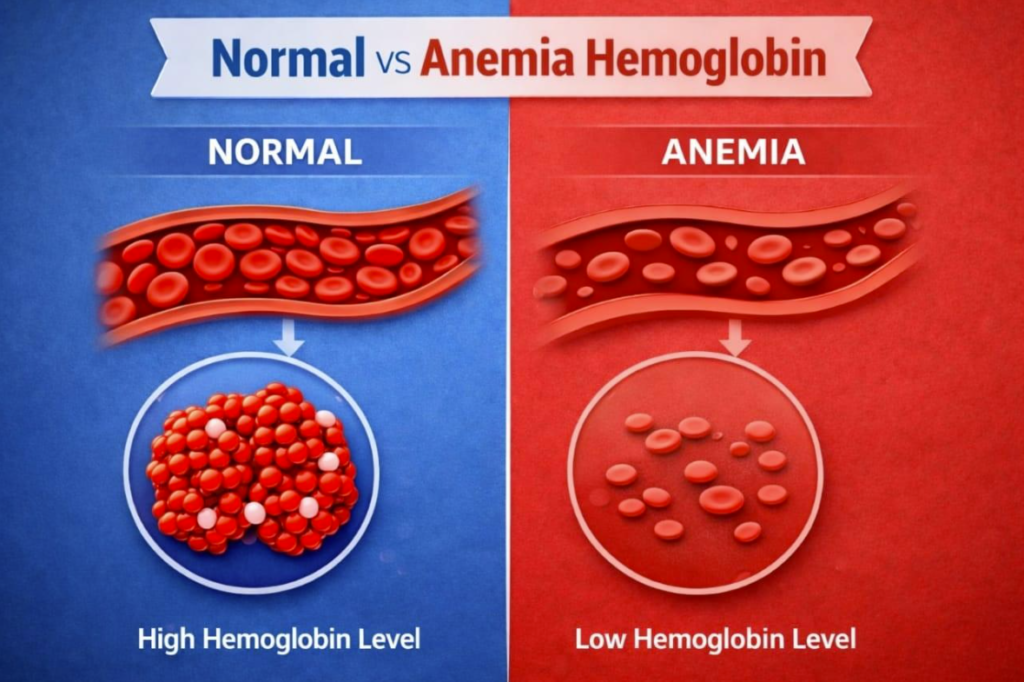
Two in three children in India don’t have enough haemoglobin in their blood for normal brain development and physical growth. Low haemoglobin means your blood isn’t carrying enough oxygen around your body. It causes a condition called anaemia. Anaemia is one of the most common nutritional disorders in the world.
Common Causes of Anaemia
- Iron deficiency: The most common cause globally, responsible for approximately 50% of all anaemia cases.
- Vitamin B12 deficiency: Prevents red blood cells from forming properly
- Chronic blood loss: Heavy periods, gastrointestinal bleeding (ulcers, colon cancer)
- Chronic diseases: Kidney disease, rheumatoid arthritis, cancer, HIV
- Bone marrow disorders: Leukaemia, aplastic anaemia, chemotherapy
What Does High Haemoglobin Mean?
High haemoglobin is less common than low, but it’s just as important. It means your blood is thicker than normal. It sounds good in theory, but it actually increases the risk of blood clots, strokes, and organ damage.
Common Causes of High Haemoglobin
- Living at a high altitude: Your body produces more red blood cells to compensate for lower oxygen in the air
- Dehydration: A false high; plasma volume drops, so haemoglobin concentration rises
- Polycythaemia vera: A rare bone marrow disorder causing excess red blood cell production
- Chronic lung disease (COPD): The body compensates for poor oxygen absorption
- Smoking: Carboxyhaemoglobin (from carbon monoxide) reduces oxygen delivery
Symptoms of Abnormal Haemoglobin Levels
Your haemoglobin levels don’t reflect in your physique easily. Sometimes, people live with mildly low levels for years without realising it. It costs them poor sleep and fatigue. Here’s what you should watch for:
Low Haemoglobin Symptoms (Anaemia)
- Persistent fatigue and weakness
- Pale or yellowish skin
- Shortness of breath on mild exertion
- Dizziness or lightheadedness
- Cold hands and feet
- Irregular or fast heartbeat
- Brain fog and difficulty concentrating
- Brittle nails, hair loss
- Headaches
High Haemoglobin Symptoms
- Headaches and dizziness
- Blurred or double vision
- Itchy skin (especially after a hot shower)
- Joint pain
- Redness of face, palms, or feet
- Fatigue
- Nosebleeds
- Blood clots or DVT risk
How to Maintain Healthy Haemoglobin Levels
For most people, dietary changes along with supplements are enough to reach normal haemoglobin levels.
Iron is the best mineral you can get in your daily food intake for haemoglobin. It comes in two forms: haem iron and non-haem iron.
Haem iron is found in animal products like red meat, liver, poultry, and shellfish. Your body absorbs it directly and efficiently. If you eat meat, this is your most reliable dietary source of iron.
Non-haem iron is found in plant-based foods like spinach, methi, moringa, lentils, dal, rajma, chickpeas, tofu, pumpkin seeds, sesame seeds, and fortified cereals. Your body absorbs it far less efficiently than haem iron.
"Iron deficiency is the most widespread nutritional disorder in the world, affecting more than 2 billion people and accounting for approximately 50% of anaemia cases globally." - WHO
When Should You See a Doctor About Your Haemoglobin?
Getting a blood test regularly is the most effective way to determine what’s going on in your body. It can determine and rule out any diseases before they show up as symptoms.
See a doctor if:
- Your haemoglobin is below the lower limit for your age and sex. Refer to the table in this article to find yours.
- Your haemoglobin has decreased by over 1-2g/dL since your last test.
- You have symptoms of anaemia (fatigue, pale skin, shortness of breath, dizziness)
- You are pregnant (to check your levels every trimester)
- You have a family history of haemoglobin disorders
- Your haemoglobin is unexpectedly high
- You’re over 65 years old
If you’re based in Gurgaon and need assistance for haemoglobin tests, Silverstreak Hospital offers integrated diagnosis.
Conclusion
Normal haemoglobin levels by age aren’t a one-size-fits-all number. They shift from the moment you were born through every stage of life. The most important thing you can do is get your CBC checked at least once a year.
If your levels are outside the normal range for your age and sex, even mildly, it’s worth a conversation with your doctor. Most causes of low haemoglobin are highly treatable.
Remember, prevention is always better than a cure. To receive the best care for you or your loved ones, contact the best doctors near you in Gurgaon.
Frequently Asked Questions (FAQs)
What is a dangerously low haemoglobin level?
A haemoglobin level below 7.0 g/dL is generally considered the threshold for a blood transfusion in otherwise stable adults. For patients with cardiac or surgical conditions, the threshold may be 8.0 g/dL. Always consult your doctor. The same number can have different implications for different people.
What is a normal haemoglobin level for a 60-year-old woman?
For women over 65, the normal haemoglobin range is approximately 11.7–16.1 g/dL. For women aged 18–65, the standard range is 12.0–15.5 g/dL. It's common for haemoglobin to decline slightly with age.
Can haemoglobin level be normal even with iron deficiency?
Yes. Your haemoglobin can appear normal while your iron stores (ferritin) are already depleted. This is called iron deficiency without anaemia and can still cause fatigue, brain fog, and hair loss. That's why doctors often check ferritin alongside haemoglobin for a complete picture.
How quickly can haemoglobin levels improve with treatment?
With oral iron supplementation, haemoglobin typically increases by about 1 g/dL every 3-4 weeks. For severe anaemia requiring IV iron or transfusion, improvement is faster. B12 deficiency anaemia often responds within 4-8 weeks of supplementation.
Is 11 g/dL haemoglobin normal during pregnancy?
Haemoglobin naturally decreases during pregnancy because your blood plasma volume increases faster than your red cell mass, a process called haemodilution. An 11.0 g/dL in the second trimester is within the borderline range. Anything below 10.5 g/dL in the second trimester or below 11.0 g/dL in the first or third trimester meets the WHO threshold for pregnancy anaemia and should be treated.
Why is my haemoglobin normal, but I still feel tired?
Fatigue has many causes beyond haemoglobin, including low ferritin (iron stores), thyroid disorders, Vitamin B12 or Vitamin D deficiency, sleep apnoea, or depression. Ask your doctor tho check ferritin, B12, Vitamin D, and thyroid function (TSH) alongside your CBC for a more complete picture.
Author:
Dr. Ved Parkash Sharma
Consultant - Pediatrics Doctor