
Gallbladder stones are the most common digestive health issue that may adversely affect your quality of life. A few symptoms, like pain, discomfort, and indigestion, can create further complications when left untreated.
In most cases, there are silent symptoms of gallbladder stones. But as soon as symptoms appear, they may be quite physically as well as emotionally draining.
Early consultation with a skilled gallbladder specialist is the best way to get a timely diagnosis and treatment. In this blog, we will know more about gallbladder stones, their types, symptoms, and available treatment options.
Understanding Gallbladder Stones
Gallbladder stones (gallstones) are hardened deposits of bile that form inside the gallbladder or bile ducts. Gallstones are more common in females. They usually don’t cause any problems, but when they get stuck in the biliary tract, they may eventually block your bile flow. Your gallbladder functions to hold and store bile juice for later use. Your liver creates bile, and your bile ducts may transfer it to the different organs in your biliary tract.
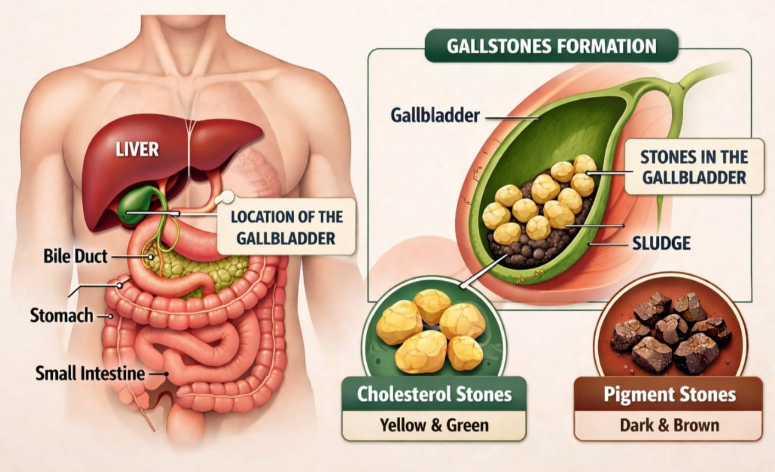
There are three primary gallbladder stone types-
- Cholesterol Stones: These stones are the most common and form when there is too much cholesterol found in the bile juice.
- Pigment Stones: These pigment stones form due to excess bilirubin, which is usually linked with liver disease or certain blood disorders.
- Mixed Stones: These stones are a combination of cholesterol and pigment stones, thus making them harder to classify.
The size of these stones may vary significantly, from tiny pea-like grains assembling into large stones that are several centimetres wide. Some stones don’t have any noticeable symptoms, while others may trigger instant and severe abdominal pain needing instant medical intervention.
Symptoms of Gallbladder Stones
Gallbladder stones can form in various ways. Some people may have silent gallstone symptoms, while others may have few or several painful symptoms.
Below are the most common symptoms:
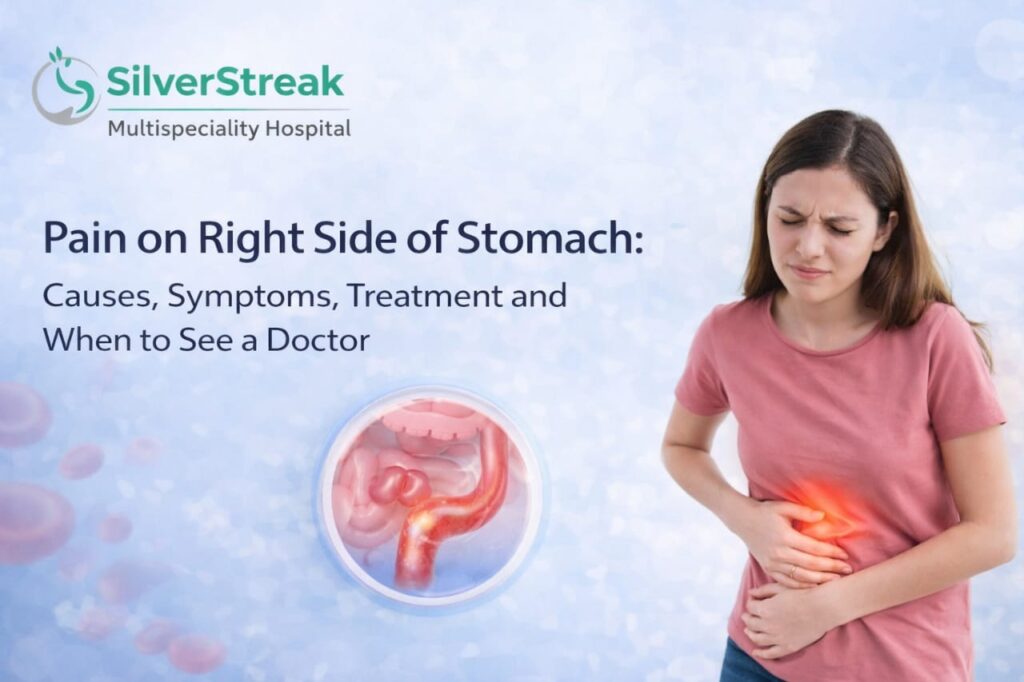
- Abrupt Abdominal Pain: There may be abrupt abdominal pain in the upper right or middle abdomen, which may stay for a few minutes to several hours.
- Pain in the Back or Shoulder-You may feel discomfort in your right shoulder or back.
- Discomfort may flow to the right shoulder blade or back.
- Nausea and Vomiting-This symptom is common during gallbladder attacks.
- Indigestion and Bloating- You may feel indigestion and bloating, especially after eating fatty meals.
- Fever or Chills- This may be an indication of infection or inflammation of the gallbladder.
- Jaundice– The yellowing of skin and eyes may be caused by stones blocking the bile duct.
Whenthe above symptoms are visible, it is advised to immediately consult with the best gallbladder specialist. When left untreated, these symptoms may lead to further complications such as gallbladder infection, inflammation of the pancreas, or liver issues.
Other Symptoms of Gallbladder Stones
There are a few other common symptoms of gallbladder stones-
- Upper abdominal pain
- Nausea and Vomiting
- Dizziness
- Diarrhea
- Bloating
- Gas
- Pain
- Fatty stools
- Burping or belching
- Feeling of Indigestion
- Constipation
- Headache
Causes of Gallbladder Stones
Gallbladder stones usually form when there is a chemical imbalance in the bile juice. There are various causes behind the formation of gallbladder stones, like bile composition, gallbladder function, genetics, and lifestyle-
Excess Cholesterol in Bile- The most common reason behind cholesterol gallstones is that your bile contains excessive cholesterol. This often results from the following
- Obesity and Overweight- If you are overweight or living with obesity, there is a higher risk for you to get gallstones. It indicates higher secretion of cholesterol into the bile.
- Diet- A diet with high fat content, high in cholesterol, and low in fibre content may promote the supersaturation of cholesterol.
- Quick Weight Loss- Rapid weight loss results in the excess release of extra cholesterol, thus creating higher risks of Gallstone formation.
Excess Bilirubin Production- Excess bilirubin may result in pigment stones. A few conditions that may cause gallstone formation are as follows–
- Haemolytic Disorders-It’s a medical condition that causes the body to destroy excessive red blood cells, such as sickle cell anaemia.
- Chronic Liver Diseases-Conditions such as cirrhosis or biliary tract infections can severely affect bilirubin processing.
Poor Gallbladder Emptying (Stasis)-
If the gallbladder doesn’t contract or empty entirely or sufficiently, the bile becomes concentrated excessively, thus resulting in gallstone formation. The factors resulting in this gallbladder stasis include-
- Skipping Meals or Long Fasting- Taking regular meals helps your gallbladder contract and empty.
- Pregnancy– Hormonal changes during pregnancy can affect your gallbladder motility.
- Hormonal Effect and Female Sex- Gallstones are significantly more common in women than in men-
- Female Sex- If you are a female aged between 20 and 60 years, you may have a higher risk of gallstone formation.
- Estrogen- Hormones like estrogen, found in oral contraceptives or any sort of hormone therapy drugs, may increase cholesterol secretion into bile.
- GeneticFactors- There may be some genetic factors that may cause gallstone formation.If you have a family history of gallstones, there is a high risk that you will have gallstones.
- Diabetes- If a person has diabetes, there is a higher risk of gallstone formation.
Risk Factors for Gallbladder Stones
A few factors may increase the risk of gallstone formation, including diet, age, gender, body composition, and genetics. Other risk factors may increase the likelihood of forming gallbladder stones-
- More than 40 years of age.
- Have a family history of gallstones
- Overweight or obese people
- Obesity or rapid weight loss.
- High-fat or high-cholesterol diet
- Pregnancy and hormonal changes.
- Certain medical conditions, such as diabetes or liver diseases.
Other Risk Factors for Gallstones
- Eating a poor diet
- Losing weight abruptly
- High triglycerides
- Diabetes
- Inactive lifestyle
- Low HDL (good) cholesterol
Diagnosis of Gallbladder Stones
- Ultrasound- Ultrasound utilizes sound waves to diagnose gallstones in the gallbladder. It’s non-invasive, painless, and radiation-free.
- X-Rays- X-rays are effective for detecting gallbladder stones, supporting precise diagnosis and treatment planning.
- Oral Cholecystography- It involves swallowing dye pills to plan the gallbladder and stones on X-ray film. A few risks include radiation exposure.
- Percutaneous Transhepatic Cholangiography (PTC): Dye injection via a catheter reveals the bile ducts on X-rays, detecting stones. Compilations include leaking or bleeding.
- Endoscopic Retrograde Cholangiopancreatography (ERCP):An Invasive procedure that uses an endoscope to get a clear view of the digestive tract directly.
Side Effects of Gallbladder Stone Removal
Here are a few important symptoms of gallbladder stones-
- Mild pain
- Gas and bloating, distension.
- Burping, belching
- Feeling fullness.
- Heartburn
- Acid and bile reflux
- Constipation
- Diarrhea
- Weight gain
- Dumping syndrome
Treatment Options for Gallstones
One good thing about gallstones is that they have no symptoms, and mostly no treatment is required until and unless there are any serious complications. In case any symptoms arise, there are multiple treatment options that may range from non-invasive to surgical ones.
A. Non-Surgical Treatments- A few non-surgical treatment options are as follows-
- Medications– There are certain drugs that may dissolve your cholesterol gallstones, but they are usually not preferred to use as they act slowly and are not effective for all sorts of stones.
- Lifestyle Modifications – Few patients may reduce the mild symptoms that are consequently followed by following a low-fat diet and also by maintaining a healthy weight.
B. Surgical Treatments – Here are some surgical treatment options available for gallbladder removal-
- Laparoscopic Cholecystectomy– It is the most widely used method to remove the gallbladder. This is minimally invasive surgery that involves incisions, an instant recovery, and minimal scarring.
- Open Surgery- This surgical treatment is used in rare cases where laparoscopic surgery is prohibited due to complications.
- Robotic Gallbladder Removal Surgery- An advanced minimally invasive technique that precisely uses robotic precision to remove the gallbladder. It provides greater accuracy, decreased pain, faster recovery, and minimal scarring as compared to traditional methods.
Living without the Gallbladder:
Although the gallbladder helps in fat digestion, your body is still able to manage without it. Post-surgery, bile flows directly from the liver into the intestine. Most individuals adjust well after surgery, thus making small dietary changes to ensure proper digestion.
There are certain prevention measures that help in gallstone prevention and help you to live a healthy life even if you have gallstones. Those proactive measures are-
Conclusion
SilverStreak Multispecialty Hospital, located in New Gurugram, is the centre of medical excellence. Founded by Dr. V.K. Gupta, a visionary leader and Neurosurgeon of international repute, with a vision to offer the best medical care services to its patients. You may get the bestgallbladder surgical care with augmented medical equipment and expert surgeons having wide years of surgical experience, offering positive surgical outcomes.
FAQs:
Gallbladder stones causing symptoms like pain, nausea, or infection usually require surgery, irrespective of their size. However, stones that are larger than 2 cm or those blocking the bile ducts need surgical intervention.
Generally, gallstones larger than 10 mm are regarded as more dangerous, especially if they migrate into the bile ducts. Even smaller stones can create severe complications; it becomes urgent to contact gallbladder specialists near me.
The most common ways to remove gallbladder stones are via laparoscopic surgery. There are other surgical methods like open surgery and robotic-assisted gallbladder surgery.
The main reason behind gallbladder stone formation is an imbalance found in the bile juice. Excess cholesterol, high bilirubin levels, and poor gallbladder emptying are the key reasons that result in the formation of gallstones.