

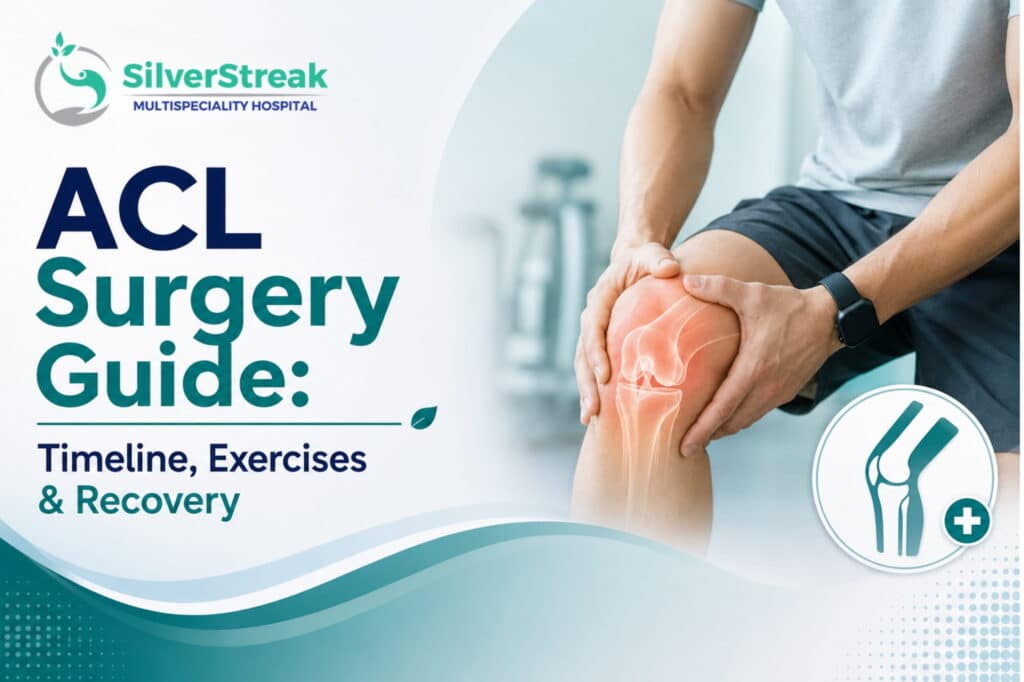
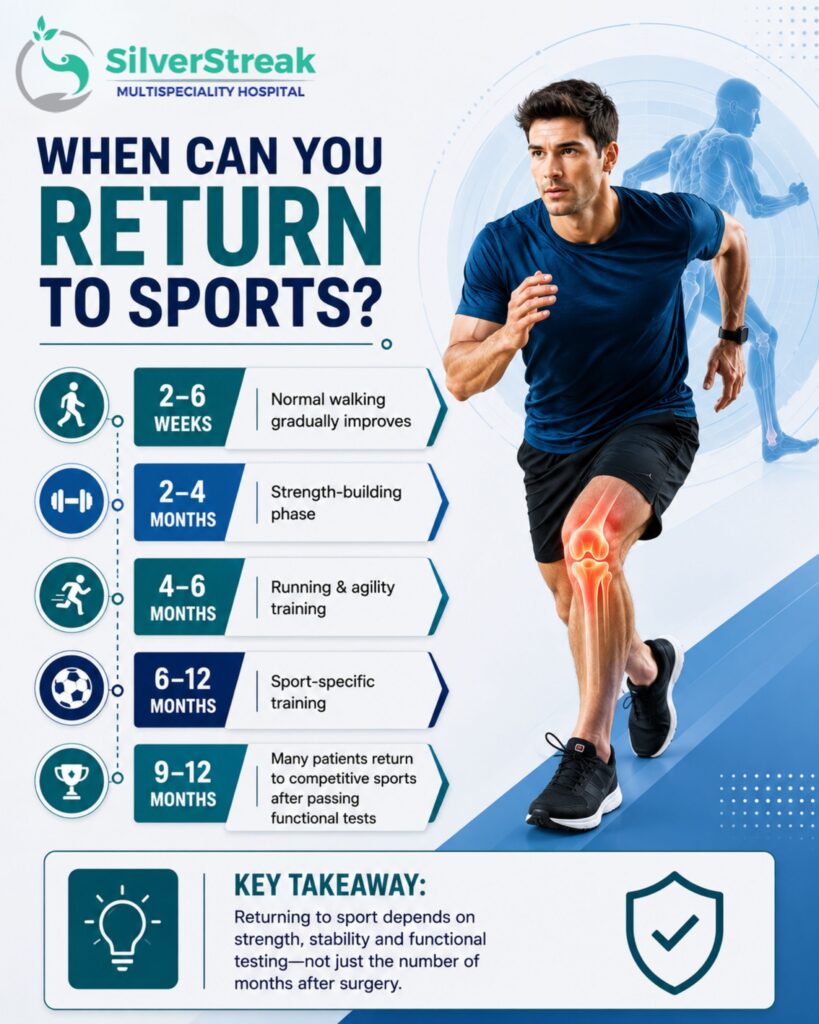
How long does recovery really take after ACL surgery? Most patients gain full knee stability in 9-12 months. By week three patients can walk without crutches. Your recovery timeline depends on the type of graft used, the care and attention you take in rehabilitation and whether other knee structures are injured, alongside the ligament tear by the initial injury or accident.
Most surgeons perform arthroscopic knee surgery to correct a torn ACL (Anterior Cruciate Ligament). This is procedure widely known as ACL surgery or ACL ligament surgery. This form of ACL tear surgery uses small incisions and a graft taken from your own hamstring, patellar, or quadriceps tendon, avoiding the need to open the joint. This is a less invasive procedure and causes less scarring, shortens hospital stay, and allows physiotherapy to begin early. In the first two weeks, protection of knee and controlling swelling is necessary. Through the second and third months, strength and range of motion improve. After nine to twelve months, activities progress to running, agility work, and sport-specific training before return to full activity.
Who Needs ACL Surgery?
Not all torn ligaments require surgery. There are several factors considered before an ACL surgery, such as your age, activity level, your sports, or job that requires heavy activities, and whether there are other injuries to the knee. Recurrent knee instability is more likely to occur in in younger athletes and in patients Older or less active patients sometimes do well with physiotherapy and bracing. A thorough clinical exam and MRI help your surgeon.o0
What Is Arthroscopic ACL Reconstruction?
If you have torn your anterior cruciate ligament, your surgeon might suggest arthroscopic ACL reconstruction; a keyhole surgery that involves reconstructing the torn ACL with a graft. This is a conventional approach to ACL tear surgery in active adults. Arthroscopic surgery of the knee is performed through small incisions and leaves less scarring. It gets the knee moving more quickly than an open surgery. As Johns Hopkins Medicine explains in its overview of ACL treatment and reconstruction, not everyone needs a surgery. Other cases of partial tears respond to rehabilitation alone. Your surgeon will help you decide what fits your case.
Graft Options: Which One Is Right for You?
There is no single best graft for everyone. Your surgeon will take all the factors into consideration before moving forward. Some of these factors are your sport or job, your anatomy, and whether this is a first-time or revision surgery. Your surgeon will usually select from three sources of grafts, each having its own pros and cons.
- Hamstring tendon graft: The quadriceps and patellar tendon are preserved. Some patients notice mild hamstring weakness at the donor site for months.
- Patellar tendon graft: known for strong bone healing, though it can cause soreness at the front of the knee, particularly with kneeling.
- Quadriceps tendon graft: strong and increasingly popular since it keeps the hamstrings intact, early quadriceps strength needs focused attention.
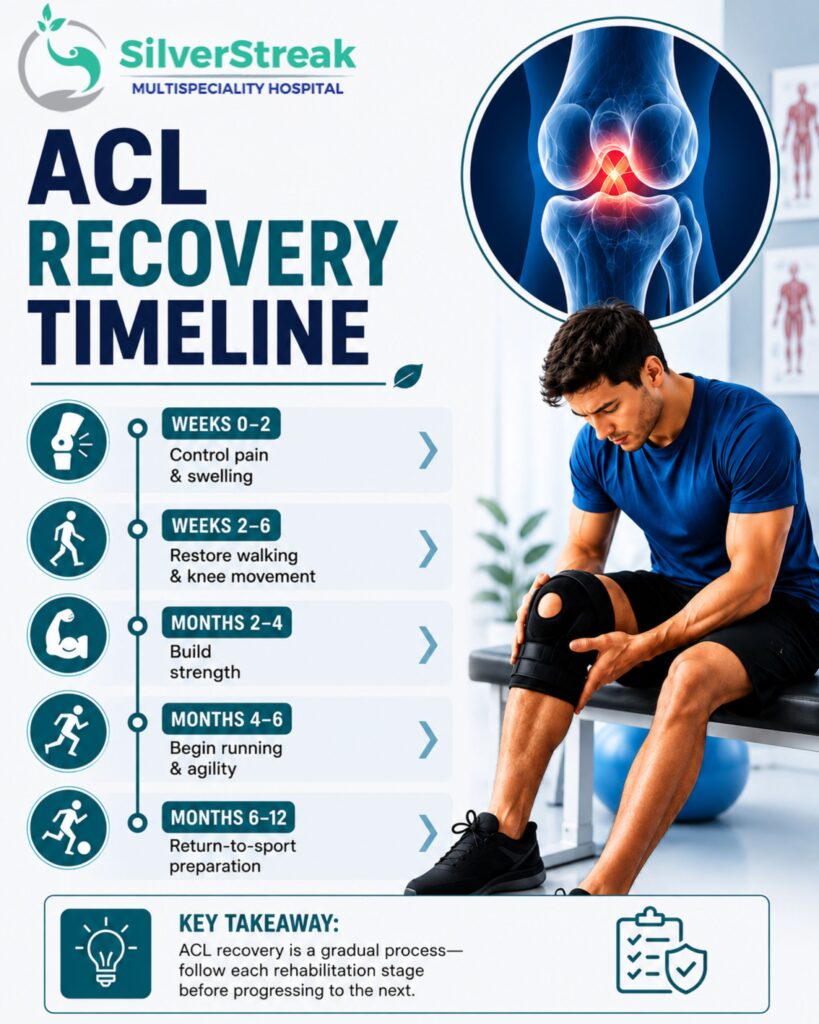
ACL Surgery Recovery Timeline: Phase by Phase
The ACL ligament surgery recovery process goes through distinct phases of knee rehabilitation. The following is a general guideline for recovery phases. This will entirely depend on your type of graft and nature of the surgery and recovery ability. A procedure for a simple fistula or graft is performed on the same day or the next day, and discharge is sooner. Longer stays are necessary for more complicated procedures with more extensive vascular reconstruction.
Weeks 0–2: Protecting the Knee
After the surgery, a knee braces and crutches for a week or two, help the knee healing process. During this stage, your prescribed medicines, help control swelling. Physiotherapy begins exceedingly early, typically starting from 24-48 hours after the injury, and the primary aim is to regain full knee extension. At the end of week 2, most patients can do short unsupported walks. This indicates a satisfactory progress and reassuring sign that recovery is underway.
Weeks 2–6: Early Rehabilitation
At this point, use of crutches is no longer necessary, and full weight bearing is possible. Cycling, mini squats and balance drills help to regain joint control. Swelling decreases and a normal walking pattern slowly returns. Exercises to strengthen the quadriceps become a regular part of daily activity, as strong quads are one of the main factors for a speedy recovery.
Months 2–4: Building Strength
The most critical time for a graft is between May and August when grafting and remodelling is done. If too much pressure is there, during this time, it may prolong the recovery rather than shorten it. Bicycling and swimming are the best choices for cardio fitness during this phase. Strength testing at third month, is necessary.
Months 4–6: Sport-Specific Training
Light jogging typically begins once quadriceps strengthen. After this, agility drills, cutting, and pivoting are reintroduced step by step, rather than all at once. Hip and core strength are as important as knee strength at this stage. Adherence to this routine, protects the healing ligament during more dynamic movement.
Months 6–12: Return to Sport
Clearence to return to sport by testing strength, hop distance, and confidence, before return to any sports activity. Most patients return to competitive sport between 9 and 12 months. Returning earlier than 9 months increase the risk of re-injury.
Best Exercises After ACL Surgery: Supporting Recovery
There are diverse types of exercises in each stage. In weeks 0 to 2, the focus is on quad sets and straight leg raises. Mini squats and step-up, from six to twelve weeks. In addition to this, single-leg balance work-out. Mini squats, step-ups, and single-leg balance work are continued throughout the recovery phase. Do not skip any of the stages as this is one of the most frequent reasons, recovery can be longer than anticipated from your physiotherapist.
Nutrition and Mindset
The only treatment that everyone knows about is physiotherapy, but two additional factors influence the process of recovery. During periods of restricted activity, protein-rich foods, vitamin C and zinc-rich foods, are important in helping to produce collagen. It helps to preserve muscle mass. Drinking fluids and limiting alcohol during the first few weeks helps heal the tissue as well. It is normal to be frustrated somewhere between week 6 and 3 months. This duration is critical since when knee feels stronger, but the graft remains fragile. Kinesiophobia (fear of re-injuring the same body part) is common during sport testing. It is helpful to communicate these concerns openly with your physiotherapist, as this can help you transition back to be smoother and more confident.
When to Call Your Doctor
A little swelling and stiffness is normal after surgery. If you notice fever, redness, or drainage from the incision site, contact your surgeon promptly, since these can signal infection. Other symptoms that demand immediate attention are, sudden and intense pain that is not relieved, by the medication prescribed. Swelling or tenderness in the calf area may indicate a blood clot instead of normal post-surgical pain. If your knee gives way or feels unstable, you should see your doctor.
Why Choose SilverStreak for ACL Surgery in Gurgaon
ACL recovery plans at SilverStreak Hospital, are in detail and provide a clear estimate of costs before you make a commitment. You get everything together and we do not impose any hidden charges. Our treatment is cashless with 40+ insurance TPAs, CGHS, ECHS, and ESIC partners, making quality healthcare accessible with hassle-free insurance support. We provide you with a clear price for your ACL surgery, just book your consultation today.
Meet our specialist

Dr. Parteek Bansal, Consultant Orthopaedic Surgeon
MBBS, DNB Orthopedic Surgery, FIAS, FIJR and Diploma in Sports Medicine from FIFA
Dr. Bansal has expertise with joint and sports injury surgeries, particularly ACL tears, meniscal repair, and complex ligament surgeries. His FIFA Diploma in Sports Medicine also equips him with a unique perspective. He focuses on knee healing from the initial stages of rehabilitation to the last step of getting back on the pitch. He closely collaborates with the SilverStreak physiotherapy team from the time of surgery. Therefore, a patient’s progress towards recovery is faster. Whether the patient is a recreational or competitive athlete, patients with an ACL tear will have a treatment plan tailored to their individual graft selection, activity, and timeline.
A reference for general background on ligament injuries and non-surgical options is the NHS patient guidance on ACL injury and treatment choices. As a NABH-accredited facility, SilverStreak also offers on-site MRI and diagnostic imaging. Your knee assessment, surgery, and early rehabilitation reviews happen at one place.
Frequently Asked Questions
Q1. How long does ACL surgery take to heal?
Most people reach 9 to 12 months for a full, unrestricted recovery. Daily activities feel normal by 6 to 8 weeks, but the graft keeps maturing for up to a year, which is why sport clearance is based on strength testing rather than time alone.
Q2. When can I walk after ACL surgery?
Most patients walk short distances without crutches within 2 to 3 weeks and reach a normal walking pattern by 4 to 6 weeks, once swelling settles and the knee regains full extension.
Q3. What is the ACL surgery recovery time week by week?
Weeks 0 to 2 focus on pain control and knee extension. Weeks 2 to 6 restore normal walking and light strength work. Months 2 to 4 build muscle strength. Months 4 to 6 add running and agility. Months 6 to 12 prepare the knee for full return to sport.
Q4. What are the best exercises after ACL surgery?
Early on, quad sets, straight leg raises, and heel slides matter most. Later phases add mini squats, step-ups, cycling, and single-leg balance work, always guided by your physiotherapist’s assessment of your progress.
Q5. Can I return to sports after ACL surgery?
Yes, most patients return to their sport, though the timeline depends on strength symmetry and functional testing rather than a fixed date. Returning before the knee passes these checks increases the risk of re-injury.
Q6. Does the type of graft affect recovery time?
Q7. Is ACL surgery painful, and how is pain managed?
The first few days are the most uncomfortable, managed with prescribed pain medication, ice, and elevation. Pain drops noticeably after the first week and continues to ease through the early rehabilitation phase, though soreness during exercise is normal throughout recovery.
Conclusion
ACL surgery is only the beginning of recovery. A structured rehabilitation program, progressive strengthening and regular follow-up are essential for restoring knee function and reducing the risk of re-injury. If you are looking for an ACL specialist in Gurgaon, consult Dr. Parteek Bansal, Consultant Orthopaedic Surgeon at SilverStreak Hospital, for personalized ACL treatment and rehabilitation guidance.