



Chest pain while breathing can trigger a lot of anxiety about what the real cause behind it might be. It is true that a heart attack can be one of the suspected reasons. Yet it is important to remember that our chest is packed with many organs, and any one of them can be the main cause behind the pain.
Thus, professional medical opinion cannot be replaced by a Google search. It is also important to remember that it is better to go to the doctor and find out that nothing is wrong, rather than go to the doctor too late. See the cardiologist in Gurgaon today.
Is it always a heart attack if I have chest pain while breathing?
Not necessarily. Your chest holds the heart, lungs, ribs, muscles and the oesophagus or food pipe. The source of sudden chest pain can be any of them. However, the word “Heart attack” does have a scary ring to it.
A heart attack may occur when the blood flow to the heart muscles is suddenly blocked. It usually occurs due to a blood clot in the coronary artery.
It is a medical emergency that requires you to immediately seek medical help. Call 112 or immediately visit your nearest ER. 112 is the pan-India, single toll-free Emergency Response Support System, ERSS, number.
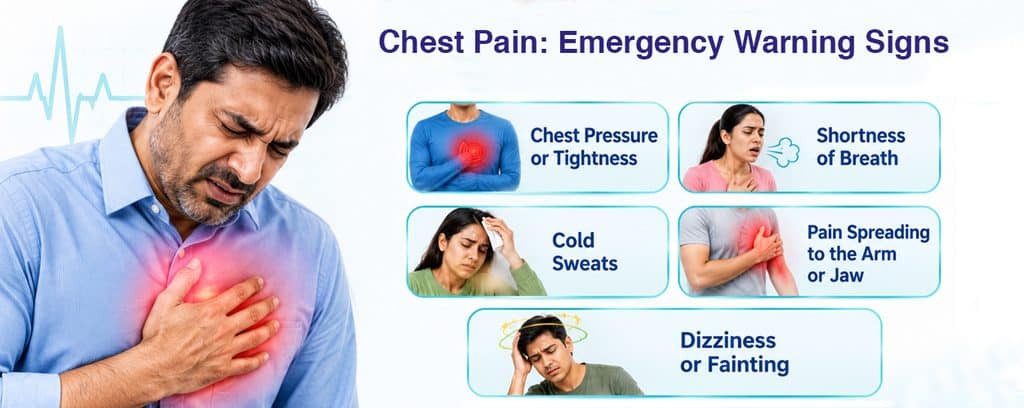
You may suspect a heart attack when the symptoms include:
- Pressure, tightness or squeezing pain in the centre or left side of chest lasting for a few minutes (or coming and going)
- Pain that spreads to one or both arms, shoulders, back, neck, jaw and upper abdomen
- Shortness of breath
- Cold sweat
- Nausea or vomiting
- Dizziness
Symptoms of chest pain in women
Women who suffer from heart attack may have a classic chest pressure, but they are also more likely to have other symptoms. These include:
- Unusual and sudden fatigue
- Shortness of breath
- Nausea or vomiting
- Pain in the back, jaw and upper abdomen
It is important to note that sometimes there is little or no obvious chest pain. This is why these symptoms often are ignored.
When is it less likely to be a heart attack?
Doctors call pain that worsens when you breathe in as “pleuritic” chest pain. Pain that changes with breathing, movement or touch is more often linked to the lungs, the lining around them, the ribs, the muscles or the digestive tract.
Chances of the chest pain being heart attack are reduced if:
- There is a change in the pain with changes in body position
- Pain increases when taking a deep breath or coughing
- There is tenderness of the chest when pressing it
- The chest pain lasts for hours or even days
- A sour taste or regurgitation of foods is observed
- Swallowing is difficult
However, symptoms change from person to person. Do not jump to conclusions. Get in touch with the best cardiologist in Gurgaon at SilverStreak to get a proper diagnosis.
Causes of Chest pain while breathing
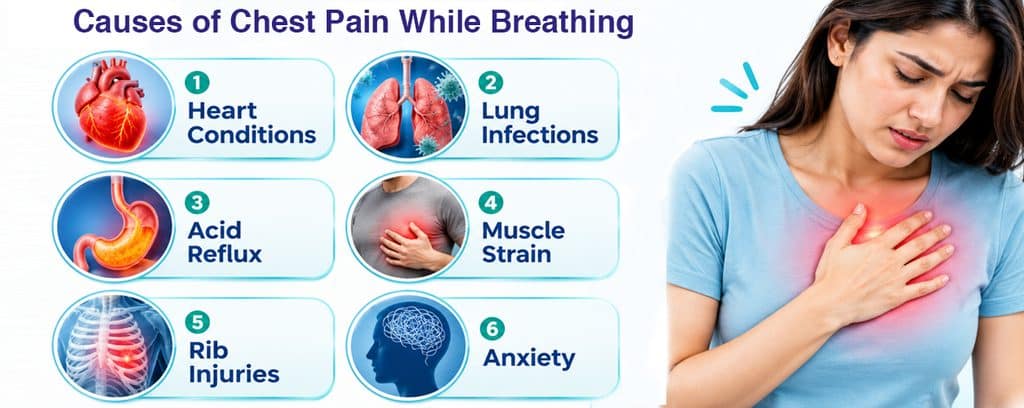
Causes of Chest Pain Due to Lung Problems
Pulmonary hypertension: This is the condition when the blood pressure in the arteries that carry blood to the lungs is high. The pain normally occurs on exertion or high physical activity. It can cause difficulty in breathing and fatigue. Medications may be required for treatment.
Pleurisy: This refers to the condition where there is inflammation in the lining of the lungs, which is called the pleura. It causes sharp chest pain that worsens with breathing or coughing. It can be caused by viral or bacterial infection. Sometimes an autoimmune disease can also cause pleurisy. Treatment depends on the cause. Medications include antibiotics and anti-inflammatory medicines for pain. Drainage of excess fluid may also be done.
Pneumothorax: This occurs when air leaks into the space between the lung and the chest wall. It causes the lung to collapse. Treatment options include observation and oxygen therapy. In some cases, the air is removed with a needle or a chest tube.
Pulmonary embolism: This occurs due to the blockage of one of the pulmonary arteries by a blood clot. The clot usually develops in the veins of the leg. It results in sudden breathing difficulty. The situation needs urgent attention. One may also cough up blood and have painful or swollen legs. Treatment involves blood-thinning medication to stop the clot from growing and to prevent new clots. In severe cases, a procedure to remove the clot may be needed.
If you start coughing up blood along with chest pain, call 112. Also immediately visit the nearest ER.
Pneumonia: Pneumonia also causes chest pain that worsens with breathing and coughing. It is due to bacteria, viruses or fungi causing infection. Treatment depends on the cause. Hence medications include antibiotic, antiviral or antifungal medication. Severe cases may require hospital admission.
Asthma: Asthma is an inflammatory condition of lungs in which airways become narrow and produce extra mucus. This makes it difficult to breathe. It can lead to chest tightness and pain. The treatment plan combines avoiding triggers and a quick-relief inhaler for sudden symptoms. Long-term controller medicine will also be prescribed. A severe attack can be life-threatening.
If you cannot speak a full sentence, your lips turn bluish or your reliever inhaler is not helping, call 112. Also visit the nearest ER immediately.
Lung cancer: Lung cancer occurs due to the multiplication of abnormal cells within the lungs. The disease may result in a constant chest pain that worsens with breathing deeply, coughing or laughing. Other symptoms of lung cancer include a constant or changing cough, coughing of blood, inexplicable weight loss, fatigue and chest infections. There are many causes for lung cancer but smoking is seen as one of the main reasons for developing lung cancer (However, even non-smokers can develop lung cancer). Surgery, chemotherapy and radiation are some forms of treatment for this disease. Early detection can make a huge impact on lung cancer.
Causes of Chest Pain Due to Heart Problems
Angina: Angina is caused by reduced blood supply to the heart due to blockage or narrowing of arteries. The tightness felt in the chest area may extend to the left arm, neck, and jaw. Additional signs include difficulty breathing, sweating, and nausea. For women, unexplained tiredness and nausea or vomiting is typical. Medication and a change in lifestyle will be used for treatment purposes. In some cases, surgeries like angioplasty and bypass surgery may be necessary.
Pericarditis: Pericarditis is the medical term used for the swelling of the sac that covers the heart called pericardium. Pericarditis can develop due to an infection caused by a virus, or an autoimmune disease. It also occurs in patients with a recent history of heart attacks. The pain gets relieved by sitting upright and leaning forward, which helps in diagnosis. Treatment mainly involves anti-inflammatory medication. Fluid build-up around the heart needs to be monitored.
Myocarditis: Inflammation of middle heart muscle called myocardium is called myocarditis. It can lead to chest pain, difficulty breathing and an irregular heartbeat. Treatment consists of medications to support heart function and manage the heart rhythm.
Mitral valve prolapse: This occurs when the mitral valve bulges backwards into the upper chamber of the heart. Symptoms include unexplained tiredness, chest pain and a fast heartbeat. Some people may have no symptoms at all, which brings difficulty in its diagnosis. In severe cases, valve repair or replacement surgery may be required. Otherwise, medications for symptom management may be sufficient.
Aortic aneurysm and dissection: An aortic aneurysm is an abnormal bulge in a weakened section of the aorta, which can sometimes leak or rupture. The aorta is the main artery that carries blood from the heart to the rest of the body. Aortic dissection is a tear in the inner layer of the aortic wall. A dissection, or a leaking or ruptured aneurysm, can cause severe chest pain. It must be treated as a medical emergency that needs immediate attention.
Coronary artery dissection: This occurs when a tear or bleeding forms in the wall of a coronary artery. It often causes sudden, severe pain that spreads across the chest, neck and back. It is a medical emergency and may require urgent treatment such as stenting or bypass surgery. If you have these symptoms, immediately call 112 or visit your nearest ER.
Alternatively, get in touch with our best cardiologist in Gurgaon at SilverStreak for a thorough check-up of your heart health from time to time. It is better to be over-cautious than to end up in the ER in the middle of the night.
Causes of Chest Pain Due to Gastrointestinal Problems
GI diseases account for one of the most frequent non-cardiac causes of chest pain. They can be associated with stomach pain, distension, nausea, heartburn, and acid reflux.
Gastro-oesophageal reflux disease (GERD): It is a chronic digestive condition where stomach acid flows back up into the food pipe and causes burning pain. It may occur due to faulty diet or lifestyle conditions like obesity or alcohol abuse. It may also occur due to a malfunctioning oesophageal sphincter. It usually happens after meals or when lying down or bending over. You may notice a sour or bitter taste and food coming back up into the mouth. You may have difficulty swallowing. Treatment includes dietary changes and avoiding late meals. Antacids may be prescribed.
Peptic ulcers: These are sores in the lining of the stomach or the upper part of the small intestine. They are commonly caused by an infection with the bacterium Helicobacter pylori (H. pylori). Ulcers may be caused by long-term use of painkillers such as aspirin and ibuprofen. Treatment involves acid-reducing medicines. Antibiotics may be prescribed.
Pancreatitis: The pancreas is the organ behind the stomach that makes digestive enzymes and insulin. Inflammation of pancreas is called pancreatitis. Gallstones and heavy alcohol use are the most common causes. It brings severe upper abdominal pain that can spread to the back and the chest. It may be accompanied by nausea, vomiting and fever. Treatment includes hospital admission for supportive care. Sometimes surgery is required.
Gallbladder disease and gallstones: Gallbladder disease occurs when hardened deposits of digestive fluids called gallstones block the biliary tract and cause inflammation. This blockage can cause pain in the upper right or middle of the abdomen. The pain may spread to the right shoulder, back or chest. Fever or yellowing of the skin or eyes needs urgent medical attention. Treatment can include dietary changes, medication or surgical removal of the gallbladder.
Hiatal hernia: The upper part of the stomach pushes up through the diaphragm into the chest. Severe cases may need surgery.
Oesophageal (food pipe) rupture: This is rare, but it is a medical emergency. If you feel sudden pain in the chest, neck or upper abdomen along with vomiting, call 112 or go to the nearest ER immediately.
Causes of Chest Pain Due to Musculoskeletal Problems
Costochondritis: This is inflammation of the cartilage linking the ribs to the breastbone. It may arise from an injury to the chest or from overexertion. It normally clears up after a few weeks. Rest, anti-inflammatory medication and warm compresses help control the symptoms.
Muscle strain: This arises from strain on the muscles between the ribs due to lifting heavy objects, excessive coughing and so forth. It usually resolves with adequate rest and the use of heat or cold packs.
Rib injury (bruised or fractured rib): Rib injury or fracture can be caused by trauma or accident. The pain is sharp, and the spot is tender to touch. Treatment includes pain relief, rest and gentle breathing exercises to keep the lungs clear. A fractured rib can injure the lung, so seeking urgent medical opinion is important.
Fibromyalgia and other long-term pain syndromes: Fibromyalgia is a syndrome of persistent widespread pain, fatigue, sleep issues and cognitive difficulties. It causes widespread muscle and soft tissue pain and the chest wall can be affected. It is diagnosed after other causes have been ruled out. It is managed with regular exercise, stress management and good sleep. Medication whenever needed is prescribed.
Causes of Chest Pain Due to Nerve Problems
Shingles: It is possible for the chickenpox virus to lie dormant even after the first attack and cause shingles many years later. It may lead to burning, tingling, or stinging pain on one side of the body. The area of pain may be the chest or back and this condition occurs sometimes before the formation of the band of blisters. The antiviral drug is most effective when administered early.
Nerve pain or a pinched nerve: Compression or irritation of nerve in the upper spine or between the ribs can cause sharp and shooting pain around the chest wall with a burning sensation. This may become worse with deep breathing. Treatment includes rest, physiotherapy, and pain medication. It is of course important to take care of the underlying cause.
Causes of Chest Pain Due to Psychological Factors
Anxiety: A panic or anxiety attack can look a lot like a heart attack, with chest pain, sweating, rapid breathing and dizziness. Treatment includes stress management and breathing techniques. Sometimes medicines are prescribed too.
How is the cause diagnosed?
- The first step is taking a patient’s full medical history. It is vital for you to be entirely open with the physician regarding your history to help him make a proper diagnosis.
- The next step is doing a physical examination. The doctor will do a check on your heart and lungs, among other things.
Depending on what they find, they may order tests such as:
- Pulse oximetry, which is done by placing a clip on the fingertip that measures the oxygen level in the blood
- Electrocardiogram to detect the rhythm and the electrical pattern of the heart
- Blood tests to identify cardiac enzymes and D-dimer to screen for blood clots
- X-ray of the chest or CT scan to examine the lungs, pleura, and the chest wall
- CT pulmonary angiography is a special type of CT scan performed using contrast medium to identify any blood clot in the arteries of the lungs in case of suspected pulmonary embolism
- Echocardiogram to evaluate the structure and functioning of the heart
- Stress test to observe the response of the heart during exercise
- Abdominal ultrasonography or endoscopy in case of any gastrointestinal or biliary disease
At SilverStreak Hospital, Sector 87, our best cardiologist in Gurgaon works alongside the gastroenterology and general physician teams. Whether the cause turns out to be the heart, the lungs, the chest wall or the digestive tract, you get your answers in one place.
Book an Appointment | or call +91-124-432-4444
FAQ
No. Chest pain while breathing can also come from the lungs, the lining around the lungs called the pleura, the ribs, chest muscles or acid reflux.
But since a heart problem cannot be ruled out, it is better that you get any unexplained chest pain checked by a doctor.
Yes. Anxiety and panic attack can result in tightness in chest, chest pain and shortness of breath. But it is very crucial to visit a cardiologist without diagnosing on your own.
Yes, gas can cause chest pain. It often goes away once the gas passes or after taking an antacid. But if the chest pain remains longer than a few minutes or occurs with symptoms like trouble breathing, feeling dizzy, or pain spreading to the arm, back, or jaw, call your doctor immediately. Do not try to self-diagnose.
In some cases, yes. If the pain comes from something like a pulled muscle, it may go away on its own. But if other symptoms are present, it is best to see a doctor.
A cardiologist is usually the place to start to rule out heart problems. Depending on the results, you may be referred to a lung specialist, a gastroenterologist or a general physician.
See a doctor if chest pain lasts more than a few minutes. Also go if it comes with symptoms like shortness of breath, dizziness or tiredness.
Yes, some people report chest tightness after having COVID, especially after a long illness. It could be linked to lung damage or a condition called post-viral syndrome. If you are having chest tightness after COVID, talk to your doctor.
Chest pain can occur for various reasons other than heart issues, as mentioned above. However, an ECG can be normal even when there is an underlying serious heart condition. Consult our cardiologist at SilverStreak for a thorough examination.