



What is Chikungunya?
Chikungunya refers to an infectious disease caused by the chikungunya virus (CHIKV) and transmitted by Aedes mosquitoes. The disease is characterized by its incapacitating, disabling arthritic pains. The name derives from the Makonde words for “to twist” and “to bend”, a description of the stooped posture of afflicted persons.
Good news: chikungunya is rarely fatal.
Bad news: the debilitating fevers and joint pains can linger for weeks and months.
What is chikungunya caused by?
Aedes aegypti and Aedes albopictus mosquitoes carry the chikungunya virus, which cause chikungunya disease in humans. Aedes mosquitoes thrive in stagnant water and bites humans predominantly during the early morning and evening hours. Dengue too is transmitted by the same kind of mosquitoes, which accounts for the frequent occurrence of both infections in the same region.
Chikungunya: Is it contagious?
No, it is not contagious. Chikungunya is a vector borne disease that can only be transmitted from an infected person to a healthy person through the bite of infected female mosquitoes. There is no other direct or indirect mode of transmission. So if your sister has chikungunya, you cannot catch it by tending to her, unless the female mosquitoes in your vicinity bite both of you.
What are the signs and symptoms of chikungunya?
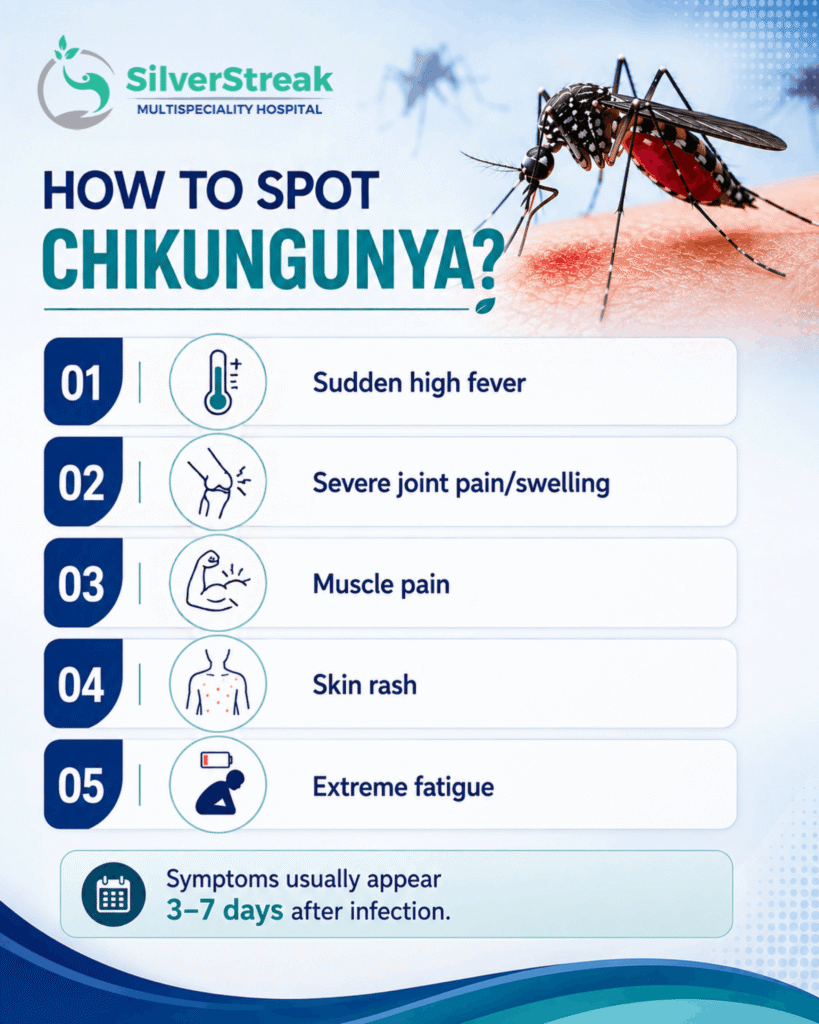
Chikungunya symptoms begin abruptly, usually 3-7 days after being bitten by an infected mosquito. The most common symptoms are:
- High fever, usually above 102 degree Fahrenheit that subsides within 2-3 days
- Severe joint pain
- Swelling of the joints, especially in the ankles, wrists, knees and fingers
- Muscle pain
- Headache
- Malaise or tiredness
- Red rash that usually erupts 2-5 days after the onset of fever
Chikungunya diagnosis: How to confirm chikungunya infection?
The diagnosis for chikungunya infection is primarily clinical, i.e., it is based on history and physical examination. However, other blood tests help distinguish between chikungunya, dengue and Zika virus infection. These diagnostic tests are:
How is chikungunya managed?
Chikungunya treatment for joint pain
Joint pains are one of the most bothersome symptoms of chikungunya. These can last for weeks, and can even be permanent in some cases. The following treatment steps can help manage the various degrees of joint pain:
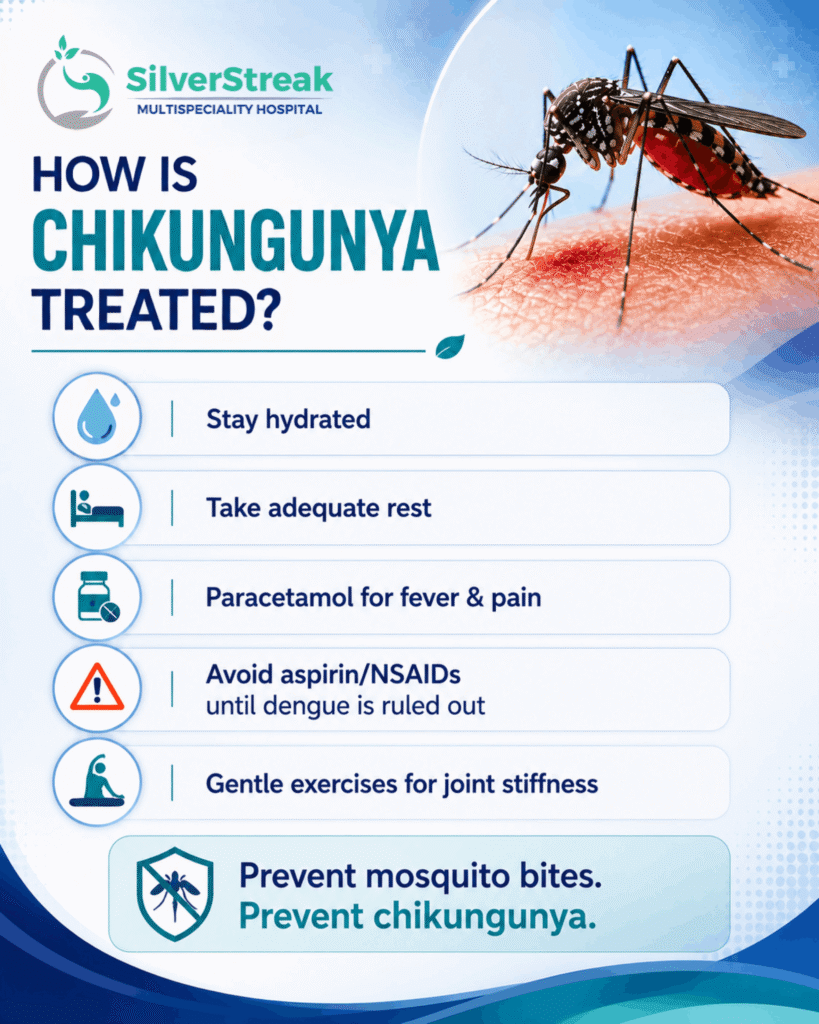
- Acute phase of chikungunya (during the first 1-2 weeks): Pain relieving medications such as paracetamol, cold compressions on the joints, and rest help alleviate pain and reduce swelling
- Persistent pain (after 2-3 weeks): NSAIDs (non-steroidal anti-inflammatory drugs) can be used with caution after confirming that dengue has been ruled out.
- Warm compressions can also help reduce pain and stiffness.
- Physiotherapy and gentle range of motion exercises can help prevent stiffness, promote healing and reduce pain.
- Physicians might recommend a nutritious diet to aid inflammation control and improve the body's healing mechanism.
If the pain continues unabated for more than 3-4 weeks, it is important to consult a doctor for physiotherapy and post-viral management.
Prevention of chikungunya
Since there is no chikungunya vaccine, the best way to tackle the infection is to prevent it. Following the below-mentioned preventive measures can help:
- Destroy stagnant water to remove the breeding grounds for mosquitoes
- Use mosquito repellents
- Install mosquito nets on windows and doors
- Wear full-sleeved clothes and avoid going out during dawn and dusk
- Encourage fogging and larviciding in your local area during outbreaks
Home remedies for chikungunya
Home remedies can provide symptomatic relief to patients with chikungunya infection. Some effective home remedies for chikungunya are:
- Ginger tea helps reduce body pain and nausea in chikungunya
- Turmeric milk is considered helpful in reducing body ache and pain
- Tulsi water aids in reducing fever
- Coconut water helps replenish fluids lost due to fever
- Epsom salt baths ease body aches and muscle cramps
- However, it is important to seek medical attention if home remedies fail to reduce fever and body pains.
When to see a doctor for chikungunya?
If you have high-grade fever along with acute joint pains or joint swelling, consult a doctor. A rash that develops after a mosquito bite is also an indication for medical care. Fatigue following these symptoms should also be evaluated by a medical professional. A physician should be consulted if any of the following conditions accompany chikungunya or appear after an initial set of symptoms:
- High fever with rash
- Dengue-like symptoms (such as bleeding)
- Fatigue after several days of fever
- Dehydration (indicated by thirst, reduced urination, dizziness, etc.)
Chikungunya treatment at Silver Streak Hospital
Chikungunya recovery involves symptomatic management and early diagnosis. If you suspect chikungunya, it is imperative that you get yourself tested and treated as soon as possible. The following reasons will explain why it makes sense to choose Silver Streak Hospital for your chikungunya treatment:
Efficient diagnosis
Joint pain management
Trained doctors
At Silver Streak Internal Medicine Clinic, physicians understand the regional epidemiology better than most other doctors and hence are well-equipped to make accurate diagnoses and manage the condition without unnecessary investigations. Doctors here understand the limitations of treatment and advise caution in terms of medication, as chikungunya is often misdiagnosed as dengue.
Doctors at Silver Streak Internal Medicine Clinic are highly trained and experienced in treating patients with complicated tropical infections such as chikungunya, dengue, malaria, kala azar, etc. For chikungunya treatment, patients are advised to consult one of the best internal medicine doctors at Silver Streak Hospital.
Comprehensive management
Chikungunya management often involves intravenous fluids, especially during the initial phase of fever and if the patient is dehydrated. In addition to this, Silver Streak Hospital also has qualified and experienced nursing staff to take care of patients.
Most patients make a full recovery from chikungunya within 7-10 days. If you have chikungunya, it is best to ensure absolute rest while the fever lasts. Thereafter, you should gradually resume normal activity without overexertion. If the symptoms of chikungunya persist beyond 10 days or if you have post-viral fatigue, it is best to consult a physician.
Takeaway
Chikungunya usually is not life-threatening, but the joint pain can have a significant effect on your day-to-day activities for a long time. The treatment for chikungunya needs careful management and regular follow-up. However, with proper treatment, most people recover well and return to their usual activities.
Frequently Asked Questions
Q1. Which mosquito causes Chikungunya?
Aedes aegypti and Aedes albopictus
Q2. Is it contagious?
Q3. What is the best treatment for joint pains?
Paracetamol is advised during the acute phase of chikungunya. NSAIDs help control pain and inflammation and can be taken once dengue has been ruled out. Cold compressions, along with medications help with the pain and swelling. Resting is of utmost importance during this period. Physiotherapy and range of motion exercises can help reduce stiffness and pain during the recovery period.
Q4. How long do the symptoms and treatment for chikungunya last?
The symptoms usually last for about 7-10 days, although the joint pains can sometimes persist for a long duration.
Q5. Is there a cure for chikungunya infection?
There is no particular treatment for chikungunya infection. Doctors recommend symptomatic management for the condition. Most people recover completely from the infection without treatment.