




When someone is diagnosed with diabetes, the first thing that comes to his mind is, “What should I eat henceforth?” The simple answer is that a properly designed diabetic food regimen is composed of lots of fibre, green vegetables, grains, and proteins, along with limited amounts of carbohydrates, with four to five small meals a day instead of three large ones. This aids in maintaining blood sugar levels without compromising on the taste of the food.
Diabetes is rapidly turning into an epidemic in today’s world. There are around 89.8 million people with diabetes in India, which is second in number only to China in the whole world, with 43% of cases being unidentified. In a scenario like this, it becomes all the more important to know about the proper planning of meals.
Here at Silverstreak Hospital in Gurgaon , we help our patients design a healthy diabetic diet plan according to their personal taste, cultural and dietary preferences, along with their daily lifestyle. We provide them customised care which cannot be achieved through any printed document alone. Here’s a guide for you.
The Significance of a Diet Plan for Diabetics
Management of diabetes does not simply involve taking medication or administering insulin. Your diet has the strongest influence on your blood sugar levels. A diet plan for diabetes will enable you to:
- Maintain even blood sugar levels throughout the day
- Maintain your weight because weight affects your insulin resistance.
- Protect your heart, kidneys, and nerves from getting affected.
- Get an energy boost post-meals instead of feeling tired.
The American Diabetes Association emphasises meal planning techniques, including plate technique and carbohydrate counting, as the main techniques for controlling blood sugar levels – and these techniques are what the diet plans we prepare at Silverstreak Hospital are based on.
Understanding the Diabetic Plate Method
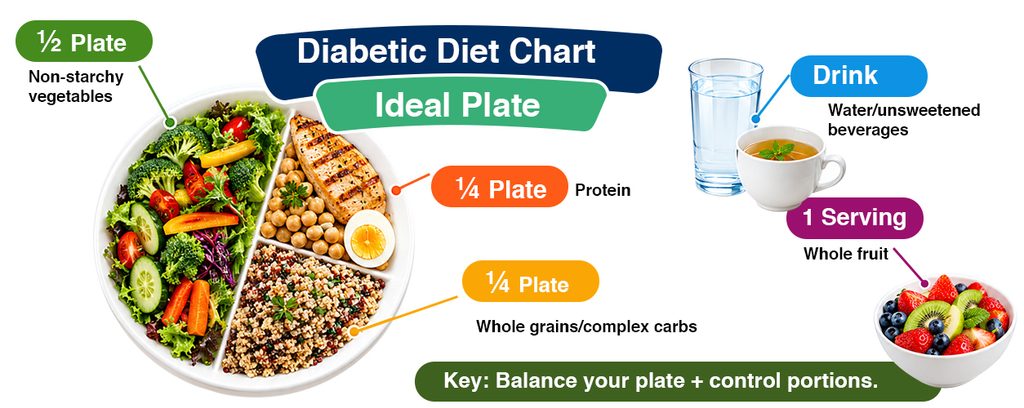
One of the simplest ways to fill up your plate during each meal would be as follows:
- ½ plate – non-starchy vegetables (spinach, bottle gourd, broccoli, cauliflower, cucumber)
- ¼ plate – protein (dal, paneer, fish, chicken, eggs, tofu)
- ¼ plate – complex carbs (brown rice, millets, whole wheat roti, quinoa)
- Plus, a glass of water or buttermilk on the side
This does not include counting each gram of food intake but is an effortless approach to managing starchy food intake.
Sample Diet Chart for Diabetic Patient (Indian Meal Plan)
The following is a sample one-day menu. Do keep in mind that this is just an example — you need to consult a professional nutritionist to have your own meal plan made according to your blood sugar levels, medicines, and other aspects.
Early Morning (6:30 – 7:00 AM)
- A glass of hot water with methi (fenugreek) seeds, or
- 4-5 soaked almonds and a walnut
Breakfast (7:30 – 8:30 AM)
- Oats or moong dal cheela with mint chutney
- One boiled egg or some sprouts
- Green tea or black coffee without added sugar
Mid-Morning Snack (10:30 – 11:00 AM)
- 1 small guava or apple with skin, or
- A handful of roasted chana
Lunch (1:00 – 1:30 PM)
- 2 multigrain rotis (or 1 cup brown rice)
- 1 bowl dal or some amount of fish/ chicken curry
- 1 bowl mixed vegetable sabzi
- Some curd or buttermilk in a small bowl
- Salad (cucumber, tomato, onion)
Evening Snack (4:30 – 5:00 PM)
- Green tea with roasted makhana or vegetable soup
- Some nuts
Dinner (7:30 – 8:00 PM)
- 2 rotis or 1 cup quinoa/ millet
- 1 bowl dal or paneer sabzi
- Non-starchy stir-fried vegetables
- Salad
Bedtime (9:30 – 10:00 PM)
- A cup of low-fat milk (unsweetened), on advice of your dietitian
The above-mentioned diabetic meal plan ensures that there is no blood sugar rise after meals and also a constant supply of energy to the body throughout the day.
Foods to Include in a Diet Chart for Diabetes
A proper diet can do just as good things to you as any prescribed drug. Here are the categories of foods that need to become a part of your daily menu:
1. High-Fibre Vegetables
Dark green leaves, gourds, beans, and cruciferous vegetables help regulate the rate at which sugars are absorbed into the body.
2. Whole Grains and Millets
These have a lower glycemic index compared to wheat and polished rice; hence, they increase blood glucose more gradually.
3. Lean Protein
Proteins do not cause an increase in blood glucose levels and make one feel satiated for longer periods of time.
4. Healthy Fats
Eating nuts, seeds, olive oil, and avocados in small amounts is good for the heart, as people with diabetes have a tendency towards heart problems.
5. Low-Glycemic Fruits
These fruits include apples, guavas, pears, berries, and whole oranges, which have vitamins and fibre without having a rapid effect on sugar levels.
6. Fermented and Probiotic Foods
Curd, buttermilk, and batter of idli and dosa, which are slightly fermented, help in increasing insulin sensitivity.
Diet Plan for Type 1 and Type 2 Diabetic Patients
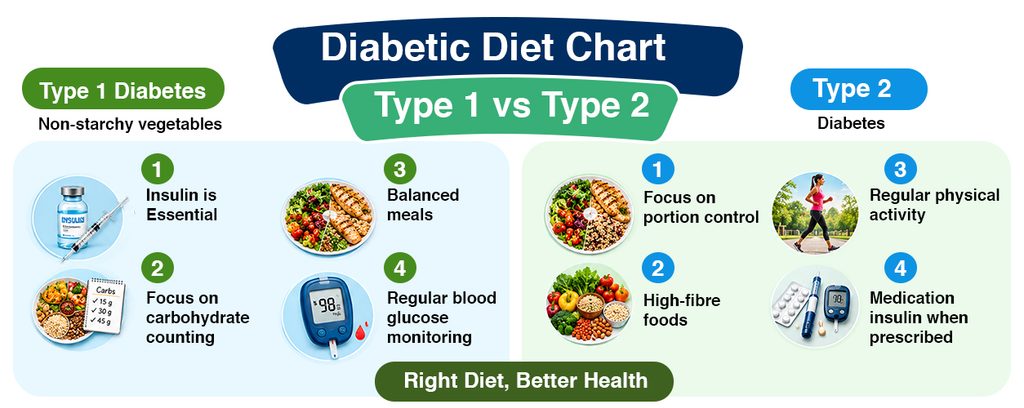
For the Type 1 diabetic patients, the vital skill is carbohydrate counting, matching the dose of insulin to the carbs in each meal. On the other hand, for type 2 diabetes, the main aim is weight management and insulin sensitivity. Losing a minimum percentage of body weight can significantly improve the blood sugar level, cholesterol and reduce the risk of cardiac problems. Let’s highlight the diet chart for both patients.
| Meal | Type 1 | Type 2 |
| Breakfast | 2 boiled eggs+1 whole-wheat roti+ plain yogurt | Oats with milk+walnuts+½ apple |
| Mid-morning | 1 small apple+ 5-6 almonds | 1 cup green tea or plain yogurt |
| Lunch | ½ cup brown rice+grilled chicken and salad | Chicken/fish+1 roti+salad+vegetables |
| Evening | Green tea and a small bowl of chana | Roasted chana or nuts |
| Dinner | Fish/dal+1 roti+1 bowl of cooked vegetables | Dal/vegetable curry+ 1 bowl brown rice+salad |
Foods To Avoid Or Reduce
- As much as it is important to know about what to eat, it is important to know about what not to eat. Some foods that will certainly increase your blood sugar level are:
- Refined sugar, candies, and baked items
- Maida, white flour, and polished white rice
- Sugar-loaded beverages, fruit juices, and sodas
- Fried items and trans fat foods
- Too much salt and processed foods rich in salt
- Alcohol, strictly in moderation as per doctor’s advice
Tips to Make Your Diabetic Diet Chart Work
A proper diet chart is only half of what is required. The other half is adhering to the diet chart faithfully. Remember these helpful tips:
- Have Meals at Regular Intervals
Meal skipping followed by eating a big dinner will result in more fluctuations in sugar than having small regular meals.
- Practice Portion Control
Rice and fruits will also raise sugar levels when consumed in large quantities, even though they are healthy. Moderate portion sizes should be eaten.
- Eat More Complex Carbohydrates Than Simple Carbohydrates
Complex carbohydrates are digested slowly, thus, less sugar is released into the bloodstream compared to simple carbohydrates.
- Drink Adequate Water
It keeps kidneys healthy, which is very crucial for diabetics since diabetes affects the functioning of kidneys.
- Check Glucose Levels After Meals
All bodies react in different ways to the same food. Checking your glucose levels will help you and the dietitian refine the table.
- Diet + Exercise
Walking 20-30 minutes after meals, particularly after the evening meal, is an excellent practice for controlling blood sugar.
Why You Need a Personalised Plan, Not a Generic Chart
Online diet charts may serve as a good base, but diabetes treatment cannot be generalised. What is best for you is determined by factors like:
- Type of diabetes (Type 1, Type 2, or gestational)
- Existing drugs or insulin intake
- Weight, lifestyle, and presence of kidney or heart disease
- Personal food tastes and schedule
- Other diseases such as high blood pressure or high cholesterol
It is right here that the consultation at the Best Dietician Hospital becomes crucial for you personally – when a tailor-made chart is created specifically for you.
How Silverstreak Hospital Helps Build the Right Diabetic Diet Chart
Here at Silverstreak Hospital, our diabetes management service doesn’t just involve giving you a printout. Our clinical nutrition and endocrinology department:
- Analyses your HbA1c levels, pre- and post-meal sugar levels, lipid profile, and kidney function before planning your regimen
- Makes your diet chart for diabetic care by using the foods you consume while altering their quantity and composition and not introducing something totally new to you
- Cooperates with your treating doctor so that your nutritional plan does not conflict with the medication/insulin regimen
- Provides follow-ups to change your chart based on the improvement in your sugar levels or change in your lifestyle
- Trains the patient and his/her family in reading food labels, going to restaurants, attending festivals or travelling without disrupting your sugar control
If you are in need of expert advice in the form of an extensively documented dietary program recommended by best doctors, then our department in Silverstreak Hospital is willing to guide you through the process of managing diabetes.
Conclusion
A diabetic patient’s diet plan does not necessarily have to mean sacrificing taste and convenience; all that it means is adopting a smarter way of eating. With a well-thought-out dietary plan consisting of fibre-filled foods, lean proteins, and limited quantities of whole grains, you can keep your blood sugar levels under control and avoid future complications.
If you or someone near you needs a custom diabetic diet plan, then book an appointment with our Dietetics Hospital in Gurgaon.
FAQs
There is no such thing as the “best” diet chart; however, generally speaking, it depends on the level of sugar in your body and your weight and physical activity. The one consisting of a good amount of fibre, veggies, grains, proteins, and controlled portions of carbohydrates, spread over 4-5 smaller meals would do well.
Yes, of course, provided you control the portions. You could have brown rice or add some vegetables and protein along with it, and limit your intake of rice to only around ½-1 cup at a time.
Fruits can be taken in moderation by diabetics. But fruits with high sugar content, such as mangoes, too many bananas, grapes, and litchis, should not be eaten, and packaged fruit juices are out of the question for them.
In general, a diabetic patient should take 5-6 meals in a day. Three main meals and two or three smaller ones.
Low-fat, unsweetened milk can be beneficial in moderation. Your nutritionist will recommend how much you should have according to your daily carbohydrate intake.
In the case of early diabetes or prediabetes, it is possible to control your sugar levels only through diet and lifestyle modifications. However, this needs to be closely followed up with your physician because medication is still required for most patients.
It is recommended that you review the diet chart every 3-6 months, but sooner than that if there are any significant changes in your blood sugar levels, weight, medication or medical conditions.
A registered dietitian or a clinical nutritionist will be able to help you create one based on your blood report and your lifestyle habits. Silverstreak Hospital’s clinical nutritionists will be glad to help you with a doctor-coordinated diabetic diet chart.