


Have you or a loved one ever felt a sudden, sharp ache in your belly? If so, you might be looking for gallbladder stone causes and treatment options. Gallbladder stones are a very common digestive issue in India, particularly in urban areas like Gurgaon.
In fact, NIH Gallstones Guide shows that roughly 10% to 20% of adults will develop these stones at some point in their lives. Many people carry these stones around without ever knowing it. But they can cause intense pain and serious health issues if they block your digestive pathways.
When it comes to your health, finding the right medical care is important. If you are experiencing abdominal discomfort, consulting the best gallbladder doctor in Gurgaon at SilverStreak Hospital ensures that you get professional diagnosis and an advanced personal care plan.
In this blog, you will know about what causes gallbladder stones, how they form, the signs you should watch out for and the most effective treatment options available today.
What is the Gallbladder and What Drives Gallbladder Stone Causes and Treatment?
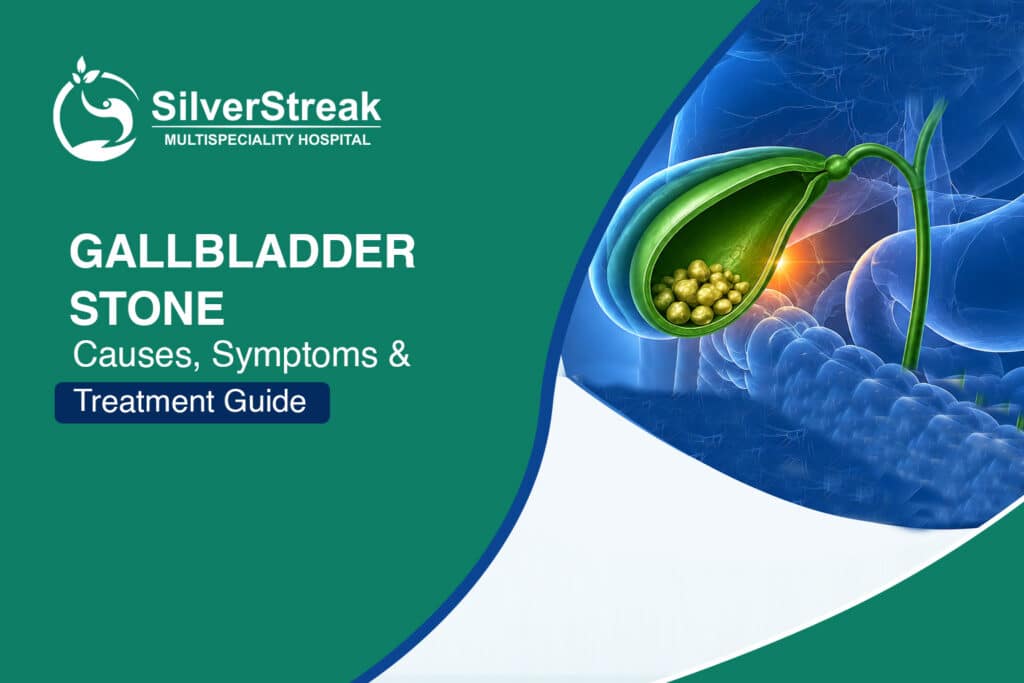
To understand how gallbladder stones are formed and what dictates your care plan, it helps to know how this specific part of your digestive tract works. The gallbladder is a small pear-shaped storage organ tucked neatly right beneath your liver in the upper right abdomen. Even though it is small, it plays a vital role in helping your body digest the foods you eat every day, especially fats.
- The Production Line: Your liver constantly creates a digestive fluid called bile. This greenish-yellow liquid is made of water, cholesterol, fats, bile salts and a natural waste product named bilirubin.
- The Storage Tank: Your liver sends this fluid down a series of tiny tubes into the gallbladder which serves as a holding tank. The bile sits inside the tank but the gallbladder absorbs extra water from it which makes the fluid highly concentrated and powerful.
- The Delivery System: When you eat a meal especially rich, fried or greasy Indian foods like paranthas, pakoras or heavy dairy, your stomach sends a signal to your gallbladder. The organ squeezes hard and pumps the concentrated bile through a small tube called the cystic duct into your small intestine. Once there, the bile acts like dish soap which breaks down the fat molecules so that your body can absorb them easily.
Understanding a Gallbladder Stone: How Do They Form?
The official medical term for having gallbladder stones is cholelithiasis. They are pieces of solid material that accidentally form right inside your digestive system when the balance of these fluids gets thrown off. The primary gallbladder stone reason is a chemical imbalance in the fluid stored inside the organ.
Think of it like mixing sugar into a glass of water. If you add one spoonful, it dissolves easily. But if you keep dumping cups of sugar into that same tiny glass, the water cannot hold it all. The extra sugar will settle at the bottom and turn into hard crystals. A similar process happens inside your body which lead to how gallbladder stones are formed:
Excess Cholesterol in the Bile
This is the single most common gallbladder stone reason which accounts for nearly 80% of all diagnosed cases. Your liver naturally filters cholesterol out of your blood and discards it into the bile as waste. Normally, the bile salts can dissolve this cholesterol completely.
However, if your liver dumps more cholesterol than the bile salts can handle, the extra material undergoes cholesterol crystallization to turn into tiny, floating crystals. Over months or years, these crystals clump together, grow larger and harden into stones.
Too Much Bilirubin in the Bile
Bilirubin is a yellowish waste pigment created when your body naturally breaks down old red blood cells. Certain health conditions can cause your liver to make way too much bilirubin. These include liver damage (cirrhosis) , biliary tract infections and specific hereditary blood disorders like sickle cell anemia. When the gallbladder is flooded with excess bilirubin, the chemical binds with calcium to form dark, rock-hard stones.
However, if your liver dumps more cholesterol than the bile salts can handle, the extra material undergoes cholesterol crystallization to turn into tiny, floating crystals. Over months or years, these crystals clump together, grow larger and harden into stones.
Lazy or Incomplete Gallbladder Emptying
Your gallbladder needs to squeeze completely and regularly to stay clean and healthy. If it fails to empty all its bile which can happen during pregnancy, due to certain medications or during long periods of fasting, the leftover fluid sits completely still. This stagnant bile becomes thick, sluggish mud (often called gallbladder sludge), which provides the perfect environment for crystals to grow into large stones.
The Different Types of Gallbladder Stones
Not all gallbladder stones look or act the same way. Doctors divide them into three major categories based on what they are made of:
Cholesterol Stones
These are usually yellow, white or light green in color. They are made almost completely of crystallized cholesterol. They can grow quite large and are highly linked to diet, body weight and metabolic health.
Mixed Stones
As the name suggests, these are a combination of both cholesterol and pigment materials. They are very common and occur when an initial cholesterol crystal gets coated over time with layers of calcium and bilirubin.
Understanding these variations is essential when looking for gallbladder stone causes and treatment pathways.
Key Risk Factors
Anyone can develop gallbladder stones. When looking at what causes gallbladder stones, medical research has identified several specific risk factors which are as follows
Identifying the Symptoms of Gallbladder Stones
Many people have harmless silent stones that sit quietly in the gallbladder without causing pain. However, a serious cause of a gallbladder begins when a stone gets trapped in the cystic duct. Mayo Clinic Guide on Gallstones shows how these symptoms develop into a painful episode medically known as a gallbladder attack or biliary colic . The most common symptoms include:
Sudden, Intense Pain
A sharp, stabbing or crushing pain in the upper right section of your belly which is right beneath your ribcage. It can also strike in the center of your abdomen, just below your breastbone.
Timing of Attacks
These painful episodes usually occur within 30 minutes to two hours after a heavy, fatty or rich meal. They often wake people up in the middle of the night.
Radiating Discomfort
The pain frequently shoots upward and backward which settles between your shoulder blades or directly into your right shoulder.
Nausea and Vomiting
The intense internal pressure and nerve irritation almost always trigger severe waves of nausea or active vomiting during an attack.
Digestive Distress
Chronic bloating, heavy gas, severe indigestion and acid reflux after eating are common warning signs that your gallbladder is struggling to process fats.
Warning Signs of a Medical Emergency
If a stone stays stuck in the duct for too long, it can cause severe infections or even cause the gallbladder to rupture. You must seek emergency medical care immediately at an advanced center like SilverStreak hospital if you experience any of these red flags:
- Abdominal pain that is so intense you cannot sit still or find a comfortable position.
- A high grade fever accompanied by severe chills or shaking.
- Jaundice: A noticeable yellowing of your skin and the white parts of your eyes.
- Stools that look chalky, pale or clay-colored along with dark, tea colored urine.
How Do Doctors Diagnose Gallstones?
If you visit the best gallbladder doctor in Gurgaon with symptoms pointing toward gallstones, they will use highly accurate imaging tests to find out exactly what is going on inside your abdomen.
Abdominal Ultrasound
This quick painless test is the best way to find gallstones using safe sound waves. It creates real-time images that let doctors spot tiny stones and check for any swelling in your gallbladder wall.
Endoscopic Ultrasound (EUS)
If a tiny stone slips past a standard scan and hides deep inside your bile ducts, this advanced test is used. A specialist gently passes a thin, flexible tube down your throat to capture highly detailed pictures from inside your digestive tract.
MRCP Scan
This is a highly specialized non-invasive MRI scan designed to look closely at your entire digestive setup. It creates sharp three-dimensional pictures of your liver, gallbladder and pancreas to check for hidden blockages.
Blood Tests
Your doctor will take a small blood sample to check your overall health and look for signs of internal infection. It measures liver enzymes and waste levels to see if a stone is causing wider strain or damage to your body.
Gallbladder Stone Treatment Options: Surgical vs. Non-Surgical
Once active, gallstones will not disappear naturally. Leaving them untreated causes dangerous problems like severe infections or life-threatening organ inflammation. Your doctor will check your gallbladder stone causes and treatment to recommend the safest options. You can check the WebMD Gallstones Treatment Reference to see how doctors compare long term surgical cures with temporary non-surgical treatments.
1. Surgical Treatment: The Effective Solution
The single most effective and permanent treatment for symptomatic gallstones is the surgical removal of the gallbladder.This surgery is called a cholecystectomy.
As the gallbladder is not an essential organ, removing it does not change your life expectancy or stop you from digesting food. After surgery, your liver simply sends the bile directly into your small intestine on a continuous basis.
There are two primary ways surgeons perform this procedure:
Laparoscopic Cholecystectomy (Keyhole Surgery)
This is the modern standard of care for gallstones. Instead of making a large deep cut, the surgeon makes three to four tiny incisions in your abdomen. They insert a laparoscope (a miniature tube equipped with a powerful light and a high-definition camera) through one opening to see inside your body on a monitor. Using precise tools through the other small cuts, the surgeon carefully detaches and extracts the gallbladder.
Open Cholecystectomy
In some complex cases, a surgeon might need to make a single larger incision of about 5 to 7 inches long in the upper right side of the belly. This is usually done for situations where the gallbladder is severely infected, deeply scarred from past diseases or if unexpected bleeding or anatomical complications happen during a laparoscopic attempt. It needs a hospital stay of a few days and a longer recovery period at home.
Benefits: Minimal postoperative pain, very little scarring, a low risk of infection and a rapid recovery time. Most patients are up and walking within hours and can go home either the same day or the next morning. At SilverStreak Hospital, Dr. Paras Kumar Gupta and Dr. Utkarsh Gupta has years of advanced surgical experience with advanced laparoscopic tools to deliver excellent outcomes and ensure patients get back to normal life quickly. You can also check the gallbladder surgery cost in Gurgaon to plan your treatment effectively.
2. Non-Surgical Alternatives: When Are They Used?
Many patients wonder if gallstones can be dissolved without surgery. Non-surgical options exist but they rarely work long term, take years and stones usually return. Doctors only recommend these alternatives for extremely elderly or frail individuals who cannot safely undergo general anesthesia due to severe heart or lung conditions.
Oral Dissolution Therapy
Doctors can prescribe special pills like Ursodiol to slowly dissolve small cholesterol stones by thinning your bile fluid. But, this method takes months or years of daily medicine to show results. New stones will form almost immediately if you stop taking the treatment.
Shock Wave Lithotripsy
This alternative method uses high energy shock waves directed through your body to shatter larger gallstones into tiny fragments. It is rarely used by medical professionals today as the sharp broken pieces can easily get trapped inside your bile ducts which cause severe blockages or painful attacks.
Why Choose SilverStreak Hospital for Gallbladder Treatment?
If you experience any signs of abdominal pain, frequent bloating or chronic indigestion, it is important not to ignore them as simple gas. Getting an early checkup can save you from a severe painful attack or emergency complications.
SilverStreak Multispecialty Hospital stands out as a trusted name for advanced laparoscopic and general surgeries. Our General & Minimal Access Surgery department offers a proper care experience:
Experienced Specialists
We have a popular laparoscopic surgeon in Gurgaon called Dr. Paras Kumar Gupta with over 11 years of experience and thousands of successful procedures.
Modern Operation Theatres
They are filled with high definition laparoscopy equipment and completely sterile environments to guarantee patient safety.
Personalized Support
From your initial ultrasound through post operative counseling and dietary recovery tracking, our medical team provides 24/7 care.
Smooth Recovery
Our focus on minimally invasive techniques ensures less postoperative pain, virtually invisible scars and shorter hospital stays.
Frequently Asked Questions
Q1. Can gallbladder stones melt or dissolve on their own with medicines?
Generally, no. When looking for options for gallbladder stone causes and treatment, patients often ask about non-surgical remedies. There are special pills that can slowly dissolve very small cholesterol stones but they only work for a few people. It takes months or even years of daily medication to see results.
Q2.What happens if I leave gallbladder stones untreated?
They can cause severe pain and dangerous medical emergencies. If a stone gets stuck in the digestive tubes, it blocks the flow of bile. This can lead to heavy swelling, severe infections in the gallbladder or liver and intense pain attacks. In serious cases, it can even cause the gallbladder to burst which is a life threatening emergency.
Q3. Can I live a normal life without a gallbladder?
Q4. How long does it take to recover from laparoscopic gallbladder surgery?
Most people return to routine activities within a week. Healing is very fast in laparoscopic surgery. Most patients can walk around the same day, leave the hospital within 24 to 48 hours and return to light office work within 5 to 7 days.
Q5. Do I need to change my diet permanently after removing my gallbladder?
Book Your Appointment Today
Do not live with chronic abdominal discomfort or let the fear of a sudden gallbladder attack disrupt your life. Book your consultation today with our leading specialists at SilverStreak hospital to know about gallbladder stone causes and treatment and protect your digestive health.