




Irregular Periods: Why They Happen and How to Treat Them
Do your periods suddenly feel unpredictable? A delayed or irregular period happens when your cycle falls outside the typical 21 to 35 days range or shifts by more than seven days each month. This is often a sign that your cycle needs attention. In most cases it simply signals that your body needs a proper diagnosis.
There are several reasons for delayed periods and identifying yours is the first step toward proper treatment. Common causes include hormonal imbalance, PCOS, thyroid disorders, stress, sudden weight changes, and certain medications. Most cases are manageable once the reason for the delayed period is diagnosed correctly. After diagnosis your doctor may recommend a diet, medication, or a suitable exercise routine, as per your case. If your period is late and you are not sure why, you do not have to wait. Book a consultation with our gynecology team at SilverStreak Hospital, Gurgaon, for same-day evaluation and a clear, personalised treatment plan built around your specific cause.

What Counts as an Irregular Period?
A regular menstrual cycle usually lasts between 21 and 35 days, with bleeding lasting four to seven days. Your period is still considered normal even if it shifts slightly from month to month. Doctors only call it irregular when the pattern changes noticeably or repeatedly. Understanding irregular periods and your specific pattern helps your doctor to diagnose the cause faster and avoid unnecessary testing.
- Amenorrhea: periods that have stopped completely for three cycles or never started by age 15 to 16.
- Oligomenorrhea: periods that come fewer than nine times a year, or more than 35 days apart.
- Polymenorrhea: periods that arrive too frequently, less than 21 days apart.
- Dysmenorrhea: periods accompanied by severe pain, cramping, nausea, or vomiting. Abnormal uterine
- Bleeding: bleeding between periods, prolonged bleeding, or unusually heavy flow.
Why Is My Period Late? Common Reasons for Delayed Periods
There is rarely just one cause behind a late period. According to the NHS, conditions like polycystic ovary syndrome (PCOS) or thyroid problems are frequent causes of irregular periods. These cases are treated by our specialists at SilverStreak. Here are the reasons for delayed periods:
Hormonal imbalance
Fluctuating oestrogen and progesterone levels are the single biggest driver of irregular cycles. Even small shifts can push ovulation later, which pushes your whole cycle off track.
Stress and menstrual cycle disruption
Chronic stress increases cortisol, which can suppress the hormones needed to trigger ovulation. Emotional stress, job pressure, travel, or even short-term illness can delay a period by days or weeks.
PCOS (Polycystic Ovary Syndrome)
A hormonal condition where the ovaries produce excess androgens, which delays or blocks ovulation altogether. It is one of the most common causes of missed or unpredictable periods in women of reproductive age, and often comes with other signs like acne, excess facial hair, or weight gain.
Thyroid disorders and periods
Thyroid disorders, including underactive (hypothyroidism) and overactive (hyperthyroidism) thyroids, can upset your period because thyroid hormones directly affect ovulation and the lining of the uterus. A woman's first test may be a thyroid blood test and that is a surprise to many women.
Weight changes
Extreme weight loss, being underweight or overweight can affect the levels of hormones in the body and stop ovulation
Over-exercising
Low body fat, which is common in athletes, dancers and long-distance runners, can stop periods altogether.
Perimenopause and puberty
Periods are more unpredictable in the first few years after menarche and again in the years before menopause, usually between the ages of 45 and 55.
Medications and contraceptives
Taking birth control or certain blood-thinning medications, steroids and antipsychotics may cause changes to your cycle.
Underlying medical conditions
Endometriosis, pelvic inflammatory disease, uterine fibroids, and primary ovarian insufficiency may be present with irregular bleeding patterns and should be evaluated.
How Doctors Diagnose the Cause
The first step in a gynecologist’s examination is to take a detailed history of your cycle. This initial consultation is more productive if a simple period diary is kept, with start dates, flow pattern and symptoms. It provides your doctor with a true pattern to follow, rather than a guess. The diagnosis is carried out by following steps:
- A physical and pelvic examination.
- Blood tests to check hormone levels, including thyroid function.
- A pelvic ultrasound to look for cysts, fibroids, or polyps.
- In some cases, further tests like an endometrial biopsy if bleeding patterns suggest a lining problem.
Period Delay Tablets: Tablet to Postpone Periods
Norethisterone needs to be started roughly three days before your expected period to work properly. Periods typically resume within a few days of stopping the medicine. This is in line with advice from the NHS Specialist Pharmacy Service, which emphasises that the effectiveness of period-delay medicine depends on timing and individual medical history. These tablets delay bleeding and are not a form of contraception. These can only be used following a full medical history, such as any previous migraines, blood clots, or high blood pressure.
Is It Safe to Take Period Delay Tablets?
Most healthy women can safely use period-delay tablets occasionally, but they are not entirely risk-free. Safety depends heavily on individual health history. Tablets like norethisterone are generally avoided in women with medical history of blood clots, migraines, high blood pressure, liver diseases, or active breast cancer. Body weight and BMI also affect suitability.
This is why self-medicating without a consultation is risky. What works safely for one woman may not suit another, and buying period delay tablets without medical guidance is a risk.
Possible medication side effects include:
- Nausea or mild stomach upset
- Breast tenderness
- Headaches
- Mood changes
- Breakthrough spotting or unexpected bleeding
- Bloating or water retention
- Fatigue in the first few days of use
How to Get Periods Fast and Safely
If your period is late and you want it to start, there is no instant fix. However, a few evidence-informed steps can help. These should be followed alongside consultation with your doctor. Speak to your doctor about hormonal options if a medical cause, such as PCOS or a thyroid disorder, is confirmed. Stress should be managed through consistent sleep, light exercise, and relaxation techniques such as breathing exercises or yoga. Healthy body weight should be maintained. Avoid over-exercising in the days leading to your expected period. You should stay consistent with any prescribed hormonal treatment and avoid skipping doses.
Diet and Lifestyle Support
When Should You See a Doctor?
Delayed diagnosis of conditions like PCOS or thyroid disorders can affect long-term fertility and overall health, so earlier evaluation generally means simpler treatment. If you notice symptoms like excess hair growth, acne, or unexplained weight change alongside irregular periods this may be a sign. See a gynecologist if you:
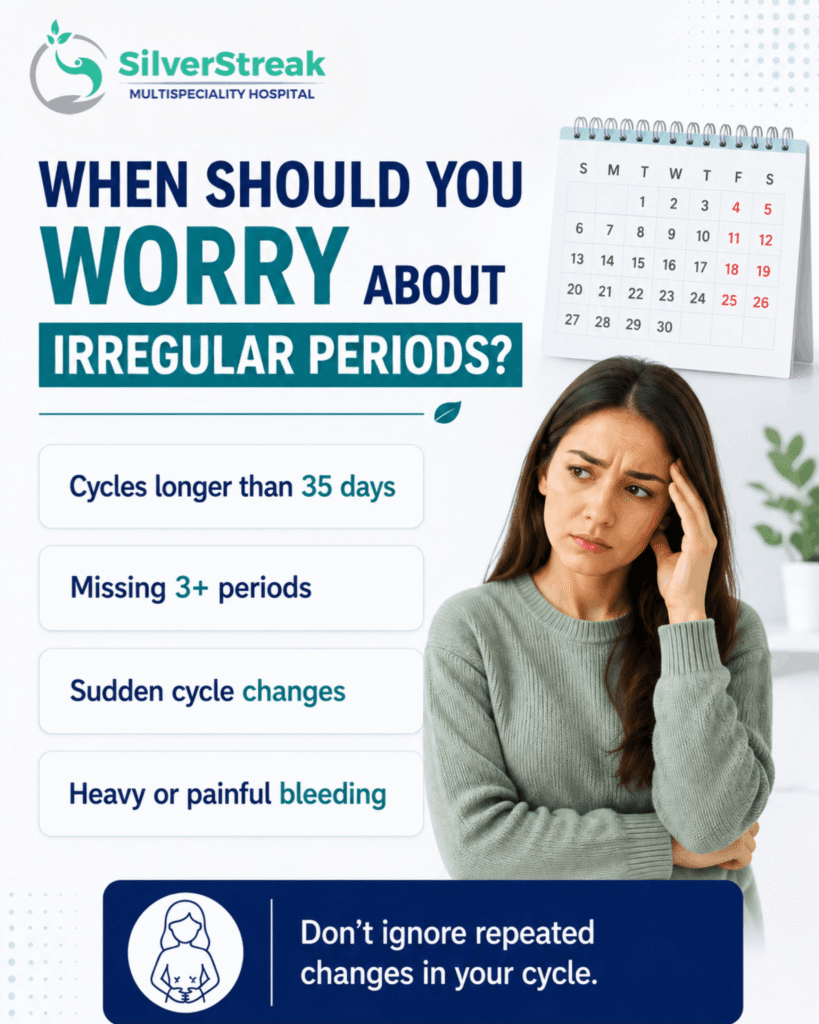
- Miss three or more periods in a row and are not pregnant
- Have cycles shorter than 21 days or longer than 35 days
- Experience sudden, unexplained changes in your usual pattern
- Have heavy bleeding, severe pain, or bleeding between periods
Why Choose SilverStreak Hospital, Gurgaon
Irregular periods should not be treated with a quick prescription. At SilverStreak Hospital, we have a dedicated team of obstetrics and gynecology specialists who perform hormonal testing, ultrasound diagnostics and personalised treatment all in one place. You are not sent from lab to lab before receiving answers to your questions.
Meet our specialist

Dr. Swapnil Agrahari
(MBBS, MS obstetrics and gynecology, F.MAS, D.MAS)
She brings more than 8 years of experience in high-risk pregnancy, normal and cesarean pregnancies, hormonal irregularities, gynecological issues among teenagers and performs keyhole surgeries like laparoscopy and hysteroscopy. Her treatment and surgical skills strongly focus on evidence-based patient care ensuring safe and holistic treatment.
Our doctors work within a NABH-accredited hospital with round-the-clock diagnostic support. Your evaluation and treatment plan happen without unnecessary delays between departments. Consult Dr. Swapnil Agrahari at SilverStreak Hospital, Gurgaon for your personalised treatment.
Frequently Asked Questions
Q1. Why is my period late if I am not pregnant?
The most common causes are hormonal imbalance, PCOS, thyroid disorders, stress, and sudden weight changes. A blood test and pelvic ultrasound usually identify the cause quickly.
Q2. How many days of delay is normal in periods?
A delay of up to seven days from your usual cycle length is generally considered normal. Repeated delays should be evaluated by a gynecologist.
Q3. Is it safe to take period delay tablets?
For most healthy women, short-term use under medical supervision is safe. Women with a history of blood clots, migraines, or certain other conditions should avoid them without a doctor’s review.
Q4. What is the medical term for irregular periods?
Doctors use terms like amenorrhea (no periods), oligomenorrhea (infrequent periods), and polymenorrhea (too-frequent periods), depending on the exact pattern.
Q5. Can stress alone delay a period?
Yes. Chronic stress raises cortisol levels, which can suppress the hormones responsible for triggering ovulation, often delaying the entire cycle by several days.
Q6. Are irregular periods linked to fertility problems?
Yes, this depends from case to case. Since irregular cycles often mean irregular or absent ovulation, they can make conceiving more difficult, which is why early evaluation matters if you are planning a pregnancy.
You can contact us
Ready for clarity on your menstrual health? Whether you need a quick opinion or a treatment, the team at SilverStreak Hospital, Gurgaon is here to guide you, step by step. Call, WhatsApp, or book online, with no obligation. Contact us in the following ways:
- Online: Visit silverstreakhospital.com/book-appointment
- Call/WhatsApp: +91-124-432-4444
- Walk-in OPD: Sector 87, Opp DLF Skycourt, Gurugram