


Hernia Surgery Guide: Laparoscopic Repair, Recovery & Cost
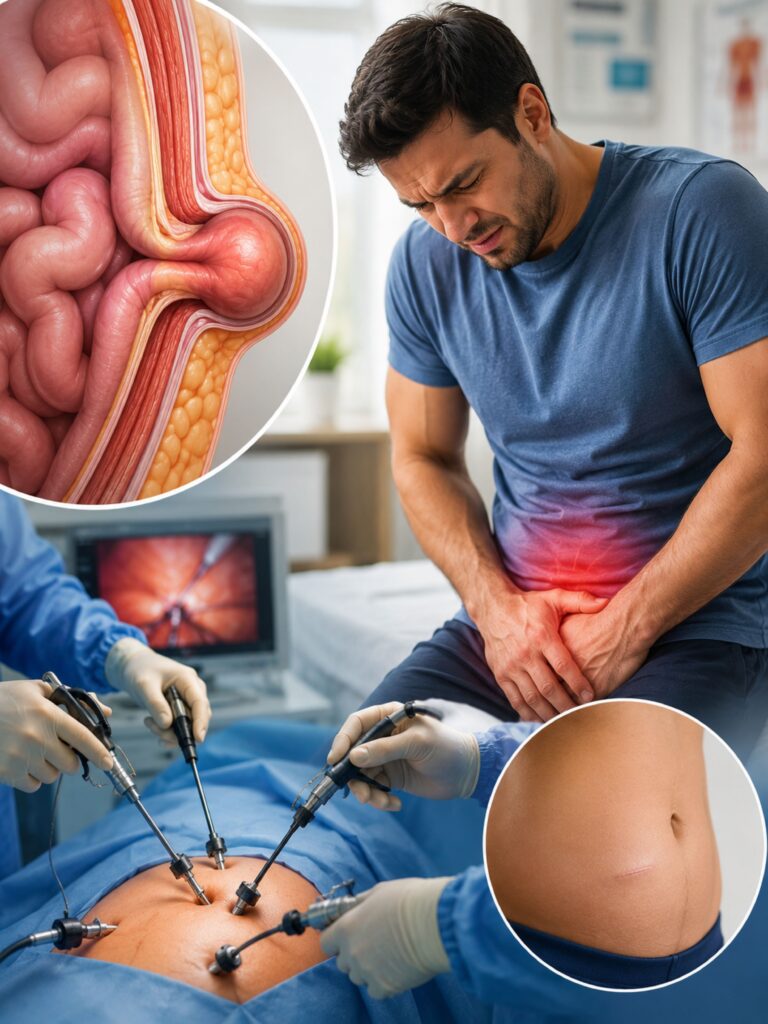
Noticed a bulge or discomfort that won’t go away? The pain or the slight bulge you have, could be a hernia. Fortunately, laparoscopic hernia repair is now much faster and safer. This guide explains everything about hernia and how to find the best treatment in Gurgaon.
Laparoscopic hernia repair involves pushing the bulging tissue back into the place with the help of 3 to 4 small incisions and using surgical mesh to strengthen the weak spot. For most people, it results in less pain and less scarring than open surgery. The patients can resume their normal activities sooner after the treatment. The procedure is done by qualified laparoscopic surgeons at SilverStreak hospital, Gurgaon under general anaesthesia and with good pre & post-operative care.
What Is a Hernia, and Why Does It Happen?
Why Choose SilverStreak in Gurgaon
If you’re looking for the best hospital for hernia surgery in Gurgaon, the right team matters as much as the right technique. We offer transparent cost quotes and accept all major health insurance policies at our facility. Here are the doctors who take care of you at SilverStreak Hospital.
Dr. Paras Kumar Gupta
General & Minimal Access (Laparoscopic) Surgery
Dr. Paras Kumar Gupta is one of Gurgaon’s most experienced laparoscopic surgeons. He specialises in minimally invasive hernia repair, complex biliary surgery, and single-incision laparoscopic procedures. He has performed many successful laparoscopic surgeries. He also brings a strong focus on reducing recovery time.

Dr. Abhijeet Ranjan
Dr. Abhijeet Ranjan handles cases related to hernias linked with digestive symptoms, such as hiatal hernia and acid reflux. He provides diagnostic clarity for every case. Conservative-first approach is followed before any surgical decision is made.

Types of Hernia You Should Know About
Hernias can be classified according to their site of development. The two most common hernias treated with surgery are inguinal hernia and femoral hernia. Other hernias like umbilical, incisional and hiatal hernia require slightly different treatments. Of these, inguinal and femoral hernias are generally operated upon once they are diagnosed; hiatal hernia is often treated with medication first and surgery second if symptoms continue.
Type of Hernia | Where It Forms | Who It Affects Most |
|---|---|---|
Inguinal hernia | Groin, inguinal canal | Most common type in men |
Femoral hernia | Upper thigh, near the femoral artery | More common in women |
Umbilical hernia | Near the belly button | Infants, pregnant women, obese adults |
Incisional hernia | At a previous surgery scar | Anyone with prior abdominal surgery |
Hiatal hernia | Diaphragm, near the food pipe | Adults with acid reflux or heartburn |
Common Symptoms of Hernia
- A visible bulge that increases when you stand, cough, or strain
- Around the bulge, there may be a feeling of aching, heaviness or burning sensation.
- Pain during lifting, bending, or exercise
- A swelling that will go away when you lie down
- Sudden, intense pain, vomiting or an unretractable bulge
- If the bulge is red, hard, or painful it could mean a medical emergency.
How Is Hernia Diagnosed?
Diagnosis usually starts with a simple physical examination. The doctor examines for the bulge when you stand, cough or strain. Your doctor may suggest:
- Diagnostic ultrasound or CT scan for hernia to verify size, location and involvement of nearby tissues.
- Evaluation before surgery, including blood tests and fitness-for-surgery checks
- If a hiatal hernia is suspected, then endoscopy is performed.
Do You Always Need Surgery?
Not all hernias require an immediate surgery. If the hernia is small and you don’t have any symptoms, discussing this case with your doctor is important. When the hernia is painful, the only treatment suggested is surgical repair. Medicines and support belts are only to alleviate symptoms of abdominal weakness, but not to correct it.
Post-Surgical Care and Follow-Up
Good aftercare is what prevents a hernia from coming back. At SilverStreak Hospital, we provide you follow-up care and guidance. The post-surgical care includes wound care advice to prevent infection, pain management support, scheduled follow-up visits, clear guidance to resume driving, exercise, or work and direct access to your surgeon.
Laparoscopic Repair vs Open Surgery:
- Smaller cuts
- Minimal scarring
- Less pain
- Shorter hospital stays
- Faster return to daily activity
- Reduced chances of wound infection
- Increased accuracy

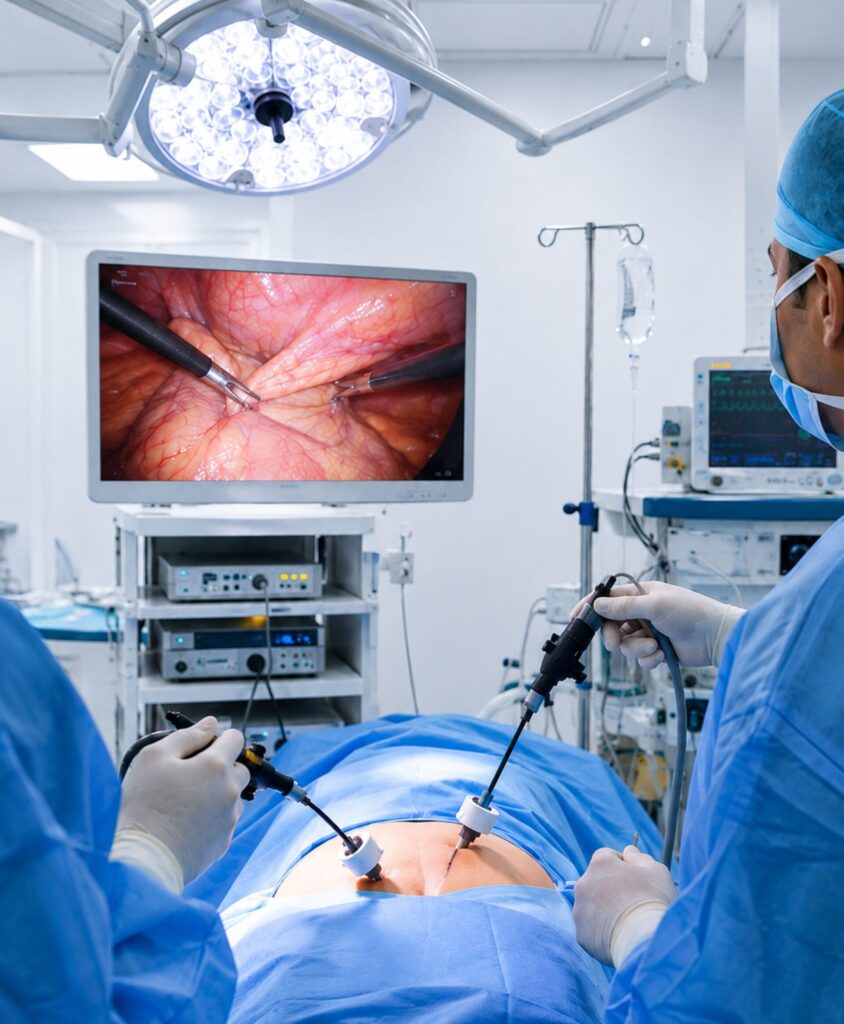
How is Laparoscopic Inguinal Hernia Repair done?
Laparoscopic repair, recovery & benefits begin with a short well-planned procedure. The entire surgery typically takes 30 to 60 minutes, depending on the hernia’s size and complexity. Most patients go home within a day. Below is what takes place at the real operating table:
- The doctors will put you under general anaesthetic, so that you don't feel any pain during the operation.
- The surgeon makes three to four small incisions in the abdomen.
- A thin camera (laparoscope) is inserted in the body for guidance.
- The bulging tissue is gently pushed back into place.
- The weak muscle wall is supported by a surgical mesh.
- The small incisions are closed with dissolvable stitches or clips.
This is consistent with guidance from the Johns Hopkins Comprehensive Hernia Center, which notes that minimally invasive and robotic techniques are now widely used to give patients individualised, less disruptive treatment options compared with traditional open surgery.
Diet and Lifestyle After Hernia Surgery
What you eat in the first couple of weeks matters more than you think. Start with light, easy-to-digest food such as soups, khichdi, and boiled vegetables. Since straining puts pressure on the repair, eat fibre-rich foods to avoid constipation. Drink water throughout the day. Avoid heavy, oily, or gas-forming foods for the first week. Avoid alcohol until your doctor allows you. Refrain from smoking until your recovery. Avoid heavy lifting, intense exercise, or straining until you are allowed to
Week 1
Stick to soups, khichdi, dal, and steamed vegetables; sip water frequently through the day and avoid straining.
Week 2
Slowly reintroduce protein — eggs, paneer, or boiled chicken — while continuing fibre-rich foods to prevent constipation.
Week 3 to 4
Return to a near-normal diet, but keep avoiding carbonated drinks, fried snacks, and alcohol until your surgeon clears you.
Hydration
Aim for 8 to 10 glasses of water daily, since adequate fluid intake softens stool and reduces the urge to strain.
Ongoing
A dietician-guided plan can further support healing without adding pressure on the repaired muscle wall.
What you eat directly affects how well the repair holds. Straining from constipation or bloating puts avoidable pressure on the mesh in the first few weeks, so pacing your meals matters more than most patients expect. If you’d like a personalized recovery diet, SilverStreak Hospital’s clinical nutrition and dietary team can design a meal plan that supports healing while keeping strain on the abdominal wall to a minimum.
What Happens If You Delay Hernia Treatment?
A hernia does not go away on its own, and avoiding treatment makes things more complicated. The hernia usually grows larger if left untreated. It becomes more uncomfortable over time. The tissue may get stuck and pushing it back may be difficult. The risk of strangulation may take place, where the blood supply is cut off. This may give rise to a surgical emergency. Bowel obstruction may take place and cause severe pain, vomiting, and bloating. Delayed treatment gives rise to more complex surgery later hence timely management is necessary.
The Real Risk of Waiting — What the Research Shows
- A large hernia-outcomes study found that the cumulative risk of needing emergency surgery rises from about 1% at 12 months to nearly 5% at four years when elective repair is delayed.
- The same research recorded a measurable strangulation risk even among patients who had felt completely fine for months, which is why a small, painless bulge still deserves an early evaluation.
- Emergency hernia repairs typically involve a longer hospital stay, a higher rate of complications, and a harder recovery compared with a planned, elective laparoscopic procedure.
- Waiting also tends to make the operation itself more complex, since a long-standing hernia can develop scar tissue and adhesions that increase operating time and recovery.
- Similar urgency applies to other common abdominal emergencies, such as an untreated appendix condition, where delay narrows the safe treatment window considerably.
Choosing to get evaluated early, rather than waiting for the pain to worsen, is the safest route. SilverStreak Hospital’s laparoscopic surgery specialists in Gurgaon can assess your hernia and recommend whether elective or urgent repair is right for you. The earlier the repair, the simpler, shorter, and safer the surgery tends to be.
SilverStreak Hospital vs Other Hospitals in Gurgaon
- Emergency and critical care support is available for complicated cases.
- Complete diagnostic support, including ultrasound, CT scan, and pre-operative assessment is provided
- Transparent explanation of the procedures before you decide anything
- Post-surgery care and follow-up is provided
- Same-day consultation and WhatsApp booking for faster access to care is available
Feature | SilverStreak Hospital | Typical Large Hospital |
|---|---|---|
Consultation Wait Time | Same-day available | 3 to 7 days typical |
Doctor Access | Direct | Rotation-based team |
Diagnostics + Surgery | Under one roof | Often split across departments |
Post-Op Follow-Up | Included | Frequently an add-on |
Emergency Support | Available | Available |
WhatsApp/ Online Booking | Available | Sometimes available |
Book Your Hernia Consultation at SilverStreak Hospital
A hernia rarely improves on its own, and the earlier you act, the simpler the treatment tends to be. Whether you need a quick opinion or are ready to plan your surgery, the team at SilverStreak Hospital, Gurgaon is here to guide you, step by step.
1. Online: Visit silverstreakhospital.com/book-appointment and select General & Minimal Access Surgery
2. Call/WhatsApp: +91-124-432-4444
3. Walk-in OPD: Sector 87, Opp DLF Skycourt, Gurugram
Book An Appointment
By submitting this form you are agrecing to our Privacy Policy, We guarantee not to disclose your information.
FAQs — Best Hospital in Gurugram
Can a hernia heal without surgery?
No. A hernia will not go away on its own. It may stay stable for a while with lifestyle changes. Surgery is the only way to permanently repair the weak muscle wall.
What types of conditions does a neurosurgeon in Gurgaon treat?
No. You will not feel anything during the surgery, since it is done under general anaesthesia. Mild soreness may be present for a few days. This is manageable with medicine prescribed by doctors.
How many days of rest are needed after hernia surgery?
Most patients resume light activity within a week. Their normal routine is continued within two to three weeks, depending on the type of hernia and repair.
Will there be visible scars after laparoscopic surgery?
There will be virtually less scars. The incisions are only a few millimetres wide, far smaller than open surgery scars.
Is hernia surgery covered by insurance?
Most major insurance plans and cashless policies cover hernia surgery. It's best to confirm your specific coverage with the hospital's patient services team before the procedure.
Can I exercise with an untreated hernia?
Light movement is usually fine, but heavy lifting, intense workouts, or straining can worsen the hernia and should be avoided until it's treated.
Is hernia more common in men or women?
Inguinal hernias are more common in men, while femoral hernias occur more often in women and carry a higher risk of complications.
What is a hernia mesh made of?
Surgical mesh is typically made from synthetic materials like polypropylene, designed to reinforce the muscle wall permanently and reduce the chance of recurrence.