



If you have been living with a PCOS diagnosis, something important has just changed. You deserve to know how it matters for you. PCOS is a term that refers to polycystic ovary syndrome. Many women have been diagnosed with it for decades.
Surprisingly, some of you don’t have polycystic ovaries. But you are dealing with the hormonal imbalances. Basically, the “cysts” are immature follicles, failing to ovulate. Following this, PCOS is now Polycystic Metabolic Ovarian Syndrome (PMOS), published in The Lancet on May 12, 2026. So, PCOS renamed PMOS: this landmark shift has occurred.
PMOS, previously PCOS, affects 170 million women worldwide. It includes nearly 1 in 5 Indian women of reproductive age. The current name, PCOS, misleads women in Gurgaon. Also, it creates confusion and delays diagnosis. It leads to miscommunication and dissatisfaction among patients.
In this blog, we will cover ‘What is PMOS?’ Also, we will discuss PMOS treatment in Gurgaon, hormonal imbalance treatment in Gurgaon, and irregular period treatment in Gurgaon.
Your PCOS Diagnosis Has a New Official Name: Discover Why & How
PCOS (Polycystic Ovary Syndrome) is now PMOS (Polyendocrine Metabolic Ovarian Syndrome). The name change took 14 years of global collaboration between experts and those with lived experience. Also, it went through 22,000 survey responses, two dozen international workshops, and the collective effort of 56 medical and patient organizations to get here.
The earlier term ‘PCOS’ was always related to reproductive issues. This way, it creates a stigma for women. The term “PMOS” has been breaking this societal and cultural pressure.
“Lorna Berry, an Australian woman who has PMOS and played a key role in the renaming process, said the result will be life-changing.”
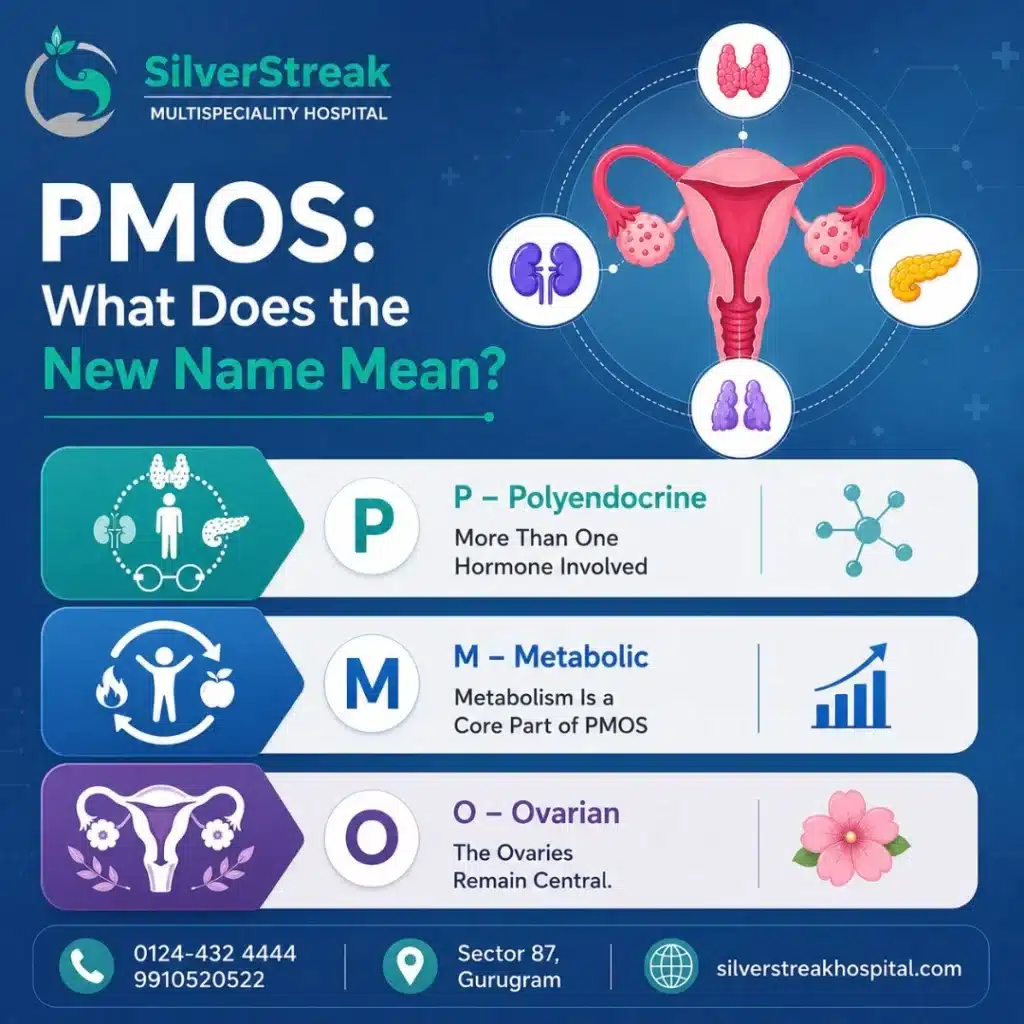
Every word in the new name, PMOS, has unique meanings and significance. Read on to learn them:
Polyendocrine: It involves multiple, interacting hormonal disruptions. Insulin, androgens (like testosterone), and brain-signaling hormones contribute to this condition. Moreover, it is not a single-hormone concern.
Metabolic: Insulin resistance, difficulty in weight management, high blood sugar, and increased cardiovascular risk are not side effects of PMOS. Rather, they are core features of it.
Ovarian: The ovaries remain central in this condition. Irregular periods, ovulatory dysfunction, and fertility challenges continue to be the defining features of PMOS.
Together, there are three dimensions: hormonal (polyendocrinal), metabolic, and ovarian, which reveal far more reliable information than PCOS does.
Why Was the Old PCOS Name Causing Harm?
PCOS is associated with the presence of ovarian cysts. The misleading cyst framing led to a delayed diagnosis. In some cases, patients were told no cysts were found, so they did not have PCOS. But this is not the actual fact behind their symptoms. They have hormonal imbalances but no cysts at all.
PCOS mainly focuses on the ovary. It hid the metabolic risks, such as insulin resistance, type 2 diabetes, cardiovascular disease, and mental health. If you or your healthcare professionals don’t consider these prevailing concerns, it may result in serious issues.
From the cultural context, there is a stigma that revolves around ovarian conditions, like PCOS. It is mostly prevalent in South Asian communities, including the Gurgaon audience. If any woman is battling with PCOS renamed PMOS, people will assume she must have reproductive or fertility issues. It causes mental and societal distress, as fertility still carries a significant role in society.
A study reports that an estimated 70 percent of Indian women with PMOS remain undiagnosed. You may be shocked to know the reason. Most of the women were sent between gynecologists, dermatologists, and endocrinologists because no single specialty owned the full condition.
Considering this, SilverStreak Hospital has built a multidisciplinary team of specialist doctors. They come forth, diagnose your specific condition, and treat you accordingly and accurately. Now, you can get the right treatment at the right time.
PMOS: A Complete & In-Depth Understanding
PMOS (polyendocrine metabolic ovarian syndrome) is a hormonal imbalance. In this condition, your ovaries produce high levels of hormones called androgens (hyperandrogenism). It makes imbalances in your multiple hormones, such as androgens, insulin, LH, FSH, and neuroendocrine hormones.
As a result, you may have irregular menstrual cycles, missed periods, unpredictable ovulation, and fertility issues. In addition to these, you may experience cardiovascular problems; skin issues like acne, hirsutism; and psychological concerns like anxiety, depression, etc.
If you have PMOS, small follicle cysts (fluid-filled sacs with immature eggs) may be seen on your ovaries on ultrasound. These cysts are formed due to a lack of ovulation (anovulation). Here, the ovarian cysts aren’t dangerous or painful. But PMOS does not confirm the existence of cysts in your ovaries.
Apart from ovulatory dysfunction, PMOS involves insulin resistance, which is a critical metabolic concern. It has a two-way relationship with type 2 diabetes and weight. Therefore, PCOS, renamed PMOS, is accompanied by a cluster of symptoms that vary based on individuals. Have a glance at a simple comparison table that will help you understand the PCOS-PMOS difference:
| Facets | PCOS | PMOS |
| Core focus | Ovaries and reproductive disorders | Hormonal, metabolic, & ovarian imbalances |
| Ovarian cysts | Sometimes, ovarian cysts are present. | Not always present |
| Hormonal disorders | High levels of androgens, but not always insulin resistance | Insulin resistance and elevated levels of androgens |
| Metabolic malfunctions | No such focus on metabolic dysfunctions | Insulin resistance issues |
| Reproductive concerns | Impacts ovulation & fertility | Impacts ovulation & fertility |
| Cardiovascular & diabetes risk factors | Present but less considered | Higher risk |
I Have PCOS: Does the Name Change Affect My Diagnosis or Treatment?
Your existing diagnosis is still valid. You do not need to be re-diagnosed. The condition is the same for PCOS and PMOS. The name “PMOS” is more accurate and specific than “PCOS.” Therefore, treatment options will be similar for you:
- lifestyle changes,
- medication (metformin, oral contraceptives, and anti-androgens)
- fertility support where needed.
However, management of insulin resistance is a significant aspect of treating PMOS. A PCOS doctor in Gurgaon in 2026 may suggest a healthy diet low in refined sugars, regular exercise, and weight management. They can help improve your insulin sensitivity. Often, medications like metformin, which boost insulin sensitivity, may also be prescribed. Doctors may recommend all of these to manage insulin resistance and minimize the associated symptoms of PMOS.
Now, your clinicians and doctors should look at the full picture, including metabolic health, mental health, and skin. In the present day, your healthcare providers should not just limit their diagnoses to periods and ovaries. They should extend their health examination and evaluation patterns.
Most importantly, as a patient, you should ask your doctors, “Are you checking my insulin resistance and cardiovascular risk, not just my periods?” Grab the opportunity to get a proper evaluation if you have been dismissed or mismanaged before.
Comprehensive PCOS Renamed PMOS Care in Gurgaon
SilverStreak Hospital in Gurgaon has introduced a multidisciplinary approach in the treatment segment. You will find gynecology, endocrinology, nutrition, and mental health departments under one roof.
For PCOS renamed PMOS management: SilverStreak Hospital is one of the best places with modern equipment and technologies. Here, the specialist doctors use a patient-centric perspective while diagnosing or treating you as well.
Diagnosis Procedure
Your healthcare provider will discuss your symptoms and then suggest some diagnostic tests for a hormone panel (androgens, insulin, LH, FSH, and thyroid), a pelvic ultrasound, and metabolic screening. The test results will help them create a personalized treatment plan. Discover different treatment options for PMOS care and management:
| Treatment categories | Detailed descriptions |
| Pillar 1 | Lifestyle & Nutrition: PCOS-specific low glycemic index diets and weight management plans. |
| Pillar 2 | Hormonal Regulation: Oral contraceptive pills and anti-androgen therapy are prescribed. |
| Pillar 3 | Metabolic Management: Metformin, an insulin-sensitizing treatment. |
| Pillar 4 | Fertility Support: Ovulation induction, IUI referral if required. |
| Pillar 5 | Skin & Hair: Dermatology-integrated care for acne and excess hair growth. |
| Pillar 6 | Mental Health: Counseling support for anxiety and body image concerns. |
Moreover, choosing SilverStreak Hospital will help you get the right diagnosis and a genuine treatment approach. With the assistance of our doctors, you can get rid of the myths of PCOS and live a better life ahead with no confusion.
Real Lifestyle Changes for PCOS Renamed PMOS Management
Evidence-backed lifestyle modifications are the sustainable strategy to cope with PCOS renamed PMOS. It is a combination of targeted nutrition, consistent physical activity, and behavioral changes. To manage your PMOS-induced insulin resistance, balance your hormones, and improve your metabolic health: Adopt these lifestyle modification recommendations:
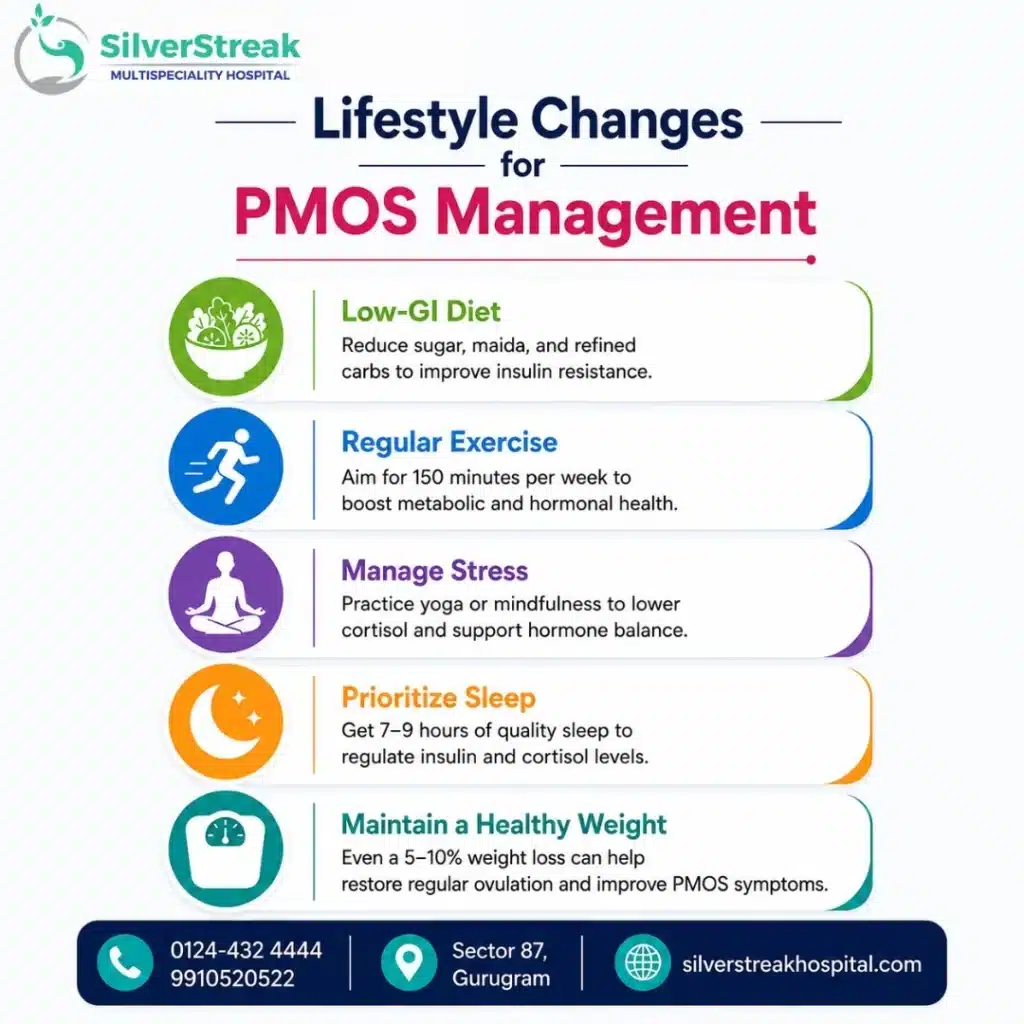
- Low glycemic index diet: You should reduce refined carbohydrates, sugar, and maida in your diet.
- Moderate exercise: You need to invest 150 minutes per week. It will improve your insulin sensitivity in a significant manner.
- Stress management: Cortisol worsens androgen levels. Practising yoga or mindfulness will help you manage stress.
- Sleep hygiene: Disrupted sleep raises insulin and cortisol. It is important to sleep abundantly and with no disturbance.
- Weight management: A 5 to 10 percent reduction in body weight can even restore regular ovulation. So, you should focus on your weight loss journey.
FAQs
Yes. It is the same condition. PMOS is a more accurate name. It reflects the hormonal, metabolic, and ovarian nature of the disorder.
PCOS officially becomes PMOS on May 12, 2026. It is published in The Lancet by the Global Name Change Consortium.
No, you don’t need a new diagnosis if you have PCOS, now PMOS. Your existing diagnosis remains valid. The condition has not changed; only the name has.
It cannot be cured. But you can manage it with ease. You should follow the right combination of lifestyle changes and medical treatment.
Yes. An estimated 1 in 5 Indian women of reproductive age is affected by PMOS. On the other hand, around 70 percent remain undiagnosed.
Silver Streak Hospital offers comprehensive PMOS care. Here, you will get tailored treatment with compassionate care. Make an appointment with us.
Book Your PMOS Consultation in Gurgaon
“PCOS renamed PMOS”: The name changed to better reflect the condition you live with. This is a positive shift in medicine, not a reason to worry. Use this moment to get a full evaluation — not just a prescription. If you are diagnosed with PCOS or have symptoms of PCOS, it is worth paying attention to that.
Book a PMOS consultation at Silver Streak Hospital, Gurgaon, to know the real picture behind it. We consider every woman’s journey unique and help them get a personalized treatment. Call