



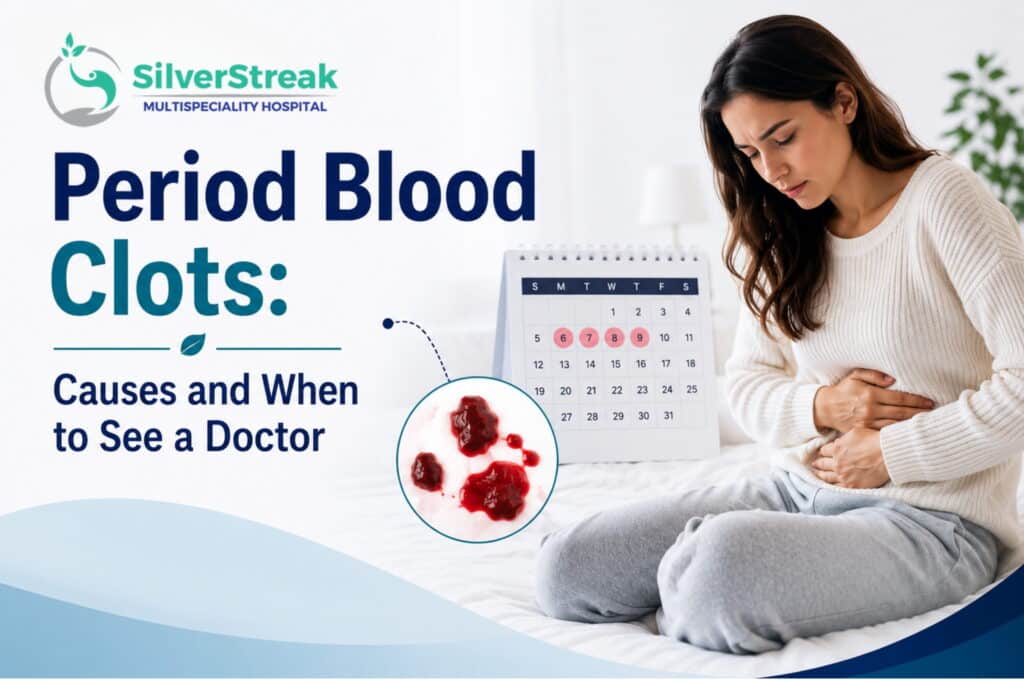
Are period blood clots normal or something to worry about? Most women see them at some point, especially during the first two heavy days of a cycle. Clots are a natural part of how your body manages menstrual flow. But their size and color can say a lot about what is going on inside your body.
Period blood clots form when blood collects in the uterus faster than your body’s natural thinning agents can work. This is common on heavy days and rarely a problem. Still, jelly like blood clots during period flow, or clots that look unusually dark, are worth understanding properly. Black, brown, or dark period blood usually just means older blood took longer to leave the body. But frequent large clots, clots with severe pain, or very heavy bleeding can point to fibroids, a hormonal imbalance, or another condition that needs a gynecologist’s opinion.
What Are Period Blood Clots?
During your period, the lining of the uterus breaks down and sheds. As this tissue leaves the body, your body releases proteins called anticoagulants to keep the blood thin enough to flow out smoothly. When your flow is heavy, blood can pool in the uterus faster than these proteins can act. The result is a soft, gel-like clump made of blood cells, uterine tissue, and clotting proteins. This is different from the kind of clot that forms after a cut or injury.
Are Period Blood Clots Normal?
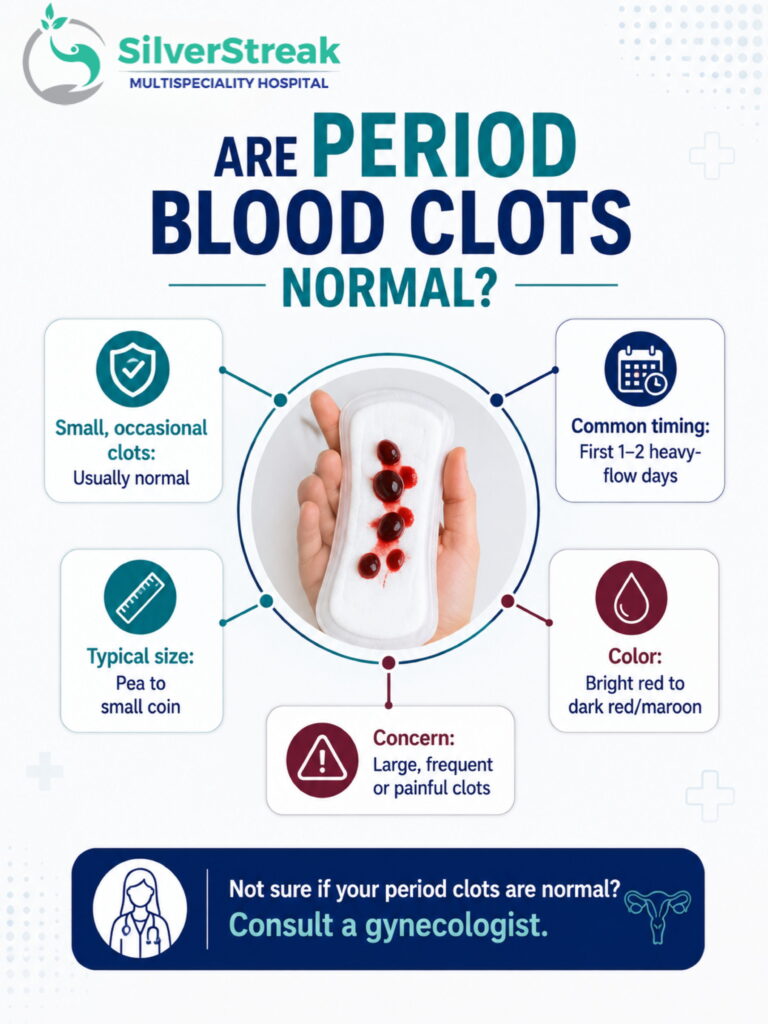
Yes. Small clots are a normal by-product of a healthy cycle, and nearly every woman experiences them at least occasionally. What matters is size, color, and pattern. Normal clots are usually around the size of a pea to a small coin, not larger, and range in color from bright red to dark red or maroon. They tend to appear mainly on your first two heavy-flow days and stay occasional rather than showing up as a constant feature of every cycle.
What Does an Unhealthy Period Clot Look Like?
What Causes Blood Clots During Periods?
Occasional clotting during heavy days is a normal process. However, if clots are large, frequent, and painful, there is a cause to consider. Generally, the cause is tied to uterine contractions or hormonal changes. Still, identifying the exact reason matters, since the right treatment depends entirely on what is driving the clotting. Common causes include:
- Heavy menstrual bleeding: blood flow outpaces the body's ability to break the clot.
- Uterine fibroids: non-cancerous growths in the uterine wall that increase flow and clotting.
- Endometriosis: tissue like the uterine lining grows outside the uterus, causing heavier periods.
- Adenomyosis: the uterine lining growing into the muscular wall of the uterus, thickening it and increasing flow.
- Uterine polyps: small growths on the uterine lining that can cause irregular, heavier bleeding.
- Hormonal imbalance: fluctuations in estrogen and progesterone that affect how the uterine lining sheds.
- Bleeding disorders, such as von Willebrand disease, affect blood clotting
- Miscarriage or early pregnancy loss, which can cause sudden, large clots
- Perimenopause, when hormone levels shift and periods become heavier or less predictable
Why Clots Form on Heavy Flow Days
When your flow is light, the anticoagulant proteins make the blood thin before it leaves the uterus. During heavier days, the rate of blood build-up exceeds the capacity of the proteins to thin the blood. This is a mechanical response to volume and speed, and not a symptom of any problem. This is why most women notice clots on day one or two, when the flow peaks.
Structural vs Hormonal Triggers
Abnormal blood clotting usually occurs due to two causes. Structural causes, such as fibroids, polyps, or adenomyosis, physically change the shape or surface of the uterus and increase the surface area that bleeds. Hormonal causes, such as an estrogen-progesterone imbalance or perimenopause, affect how thick the uterine lining grows before it sheds. Knowing which category it is helps your gynecologist to choose the right treatment.
Black, Brown, or Dark Period Blood: What Does It Mean?
Seeing black or brown or dark period blood can feel alarming, but it is usually just older blood. Blood that remains longer in the uterus will turn darker due to the extended time it has to interact with oxygen. This is most often at the beginning of your cycle or towards the end when your flow is lighter. Dark blood does not necessarily mean trouble. It is worth checking if it comes with significant pain, an unusual odor, or clots that persist for several cycles.
How Much Clotting Is Considered Normal?
Generally, clots smaller than a small coin on your heaviest days are considered normal. The NHS mentions that heavy periods affecting daily life are common and treatable, so you do not have to simply suffer silently with them. If the clots are persistent, or you are having multiple clots each day, you should see your gynecologist.
Anemia and Heavy Bleeding
Heavy bleeding with large clots can drain your iron levels gradually, leading to anemia. This is one of the most underrecognized effects of heavy periods. Be alert for symptoms, including constant fatigue or low energy even after a good rest, pale skin, lips, or inner eyelids; difficulty breathing when doing normal activities; dizziness or light-headedness; and a fast or noticeable heart rate. According to Johns Hopkins Medicine, prolonged heavy bleeding is a well-known cause of anemia. Iron supplementation is often part of the treatment plan alongside addressing the underlying cause.
How Blood Loss Turns Into Iron Deficiency
Iron is used to make hemoglobin, the protein that carries oxygen in your blood. If you have periods of heavy bleeding that steadily deplete your iron stores, you will be iron deficient after each period. This is a gradual process, and therefore symptoms such as tiredness or breathlessness can develop slowly. It can be detected by a simple blood test and is good to detect in its early stages.
When to See a Doctor
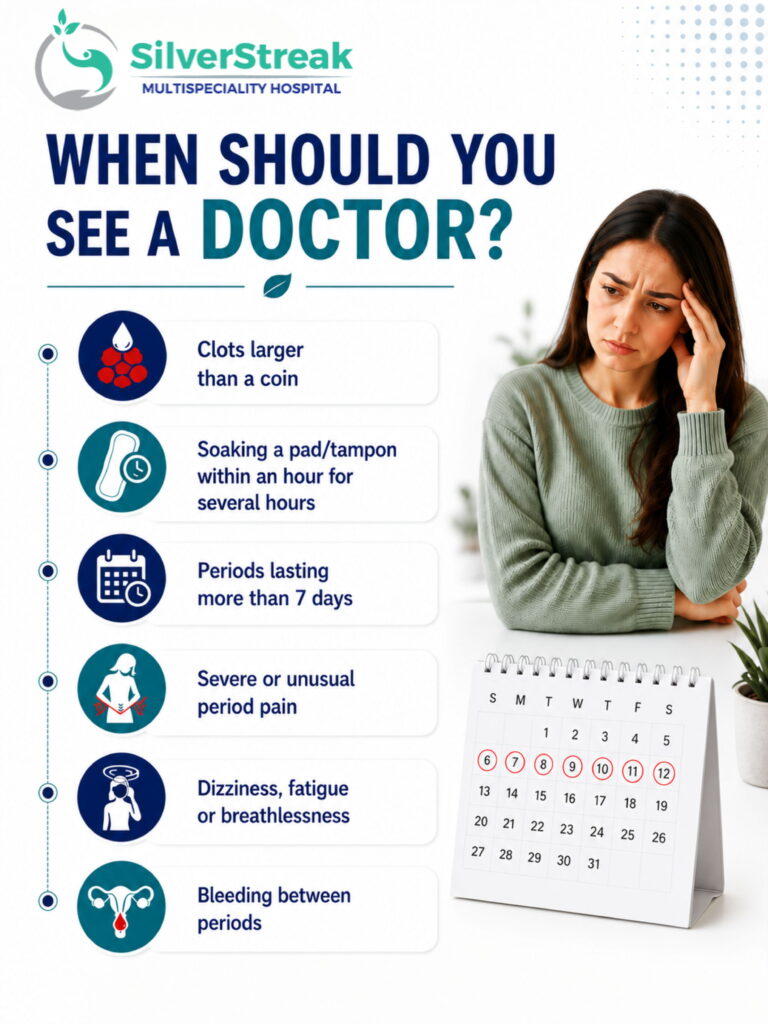
Many women disregard the symptoms for months. These symptoms can be treated if the cause is determined. Early detection also means simpler treatment, rather than waiting until symptoms become severe. If you experience any of the following, see a gynecologist:
- Clots larger than a coin
- Soaking through a pad or tampon within an hour, for several hours in a row
- Periods lasting longer than seven days
- Severe pain that over-the-counter medication does not relieve
- Bleeding or clotting between periods
- Symptoms of anemia, such as fatigue, dizziness, or breathlessness
- Any clotting alongside a known or suspected pregnancy
How Doctors Diagnose the Cause of Abnormal Clots
Your gynecologist often uses a structured classification system to organize findings by cause, whether structural, hormonal, or related to a bleeding disorder. This makes the treatment targeted rather than trial and error. The following steps are used for diagnosis:
- Detailed history: questions about clot size, clotting pattern, frequency, cycle length, and pain.
- Physical and pelvic examination: to check for visible causes and rule out pregnancy-related bleeding.
- Blood tests: complete blood count, thyroid and, iron studies.
- Pelvic ultrasound: to look for fibroids, polyps, or structural changes in the uterus.
- Hysteroscopy or biopsy: a closer look inside the uterus if the ultrasound raises questions.
Treatment Options for Abnormal Period Clots
Treatment is dependent upon the cause. Most treatments are not immediate, and your doctor will monitor how your response to the treatment goes over a cycle or two before adjusting. The aim throughout is to control symptoms while addressing the underlying cause. The aim throughout is to control symptoms and cure the condition. Your gynecologist might suggest one or more of the following:
- Anti-inflammatory pain relief to ease cramping and reduce flow during periods
- Tranexamic acid, a medication that helps control heavy bleeding
- Hormonal therapy, including birth control pills or a hormonal IUD, to regulate the cycle
- Iron supplementation, if blood tests show anemia
- Treatment of the underlying condition, such as fibroids, polyps, or a thyroid disorder
- Minimally invasive procedures, such as removal of fibroids or polyps
Diet and Lifestyle Tips to Support Healthy Periods
Small habits can genuinely help manage flow and protect your energy levels. Leafy greens, lentils, and lean meat are good sources of Iron. Additionally, vitamin C sources, like citrus fruit or amla, improve absorption. Staying well hydrated throughout your cycle is important. Keep up gentle regular movement to ease cramping in muscles. It also helps to track your cycle, clot size, and symptoms in a diary or app, so you have clear information to share with your doctor.
Why Choose SilverStreak Hospital for Period Health
SilverStreak Hospital in Gurgaon is a multispecialty hospital with a dedicated obstetrics and gynecology department that focuses on patient-centered care. It is NABH-accredited, with a primary focus on quality healthcare and patient-centered treatment. Every consultation takes in your full history, not just your immediate symptom, so the treatment plan is tailored to your lifestyle and your body.
Meet our specialist

Dr. Swapnil Agrahari
(MBBS, MS obstetrics and gynecology, F.MAS, D.MAS)
She brings more than 8 years of experience in high-risk pregnancy, normal and cesarean pregnancies, hormonal irregularities, gynecological issues among teenagers and performs keyhole surgeries like laparoscopy and hysteroscopy. Her treatment and surgical skills strongly focus on evidence-based patient care, ensuring safe and holistic treatment.
Our doctors work within a NABH-accredited hospital with round-the-clock diagnostic support. Your evaluation and treatment plan happen without unnecessary delays between departments. Consult Dr. Swapnil Agrahari at SilverStreak Hospital, Gurgaon, for your personalized treatment.
Frequently Asked Questions
Q1. Are period blood clots normal?
Yes. Small clots, especially on your heaviest one or two days, are a normal part of menstruation for most women. They only need medical attention if they become large or frequent, or are paired with severe pain or very heavy bleeding.
Q2. What causes blood clots during periods?
Clots form when menstrual blood pools in the uterus faster than the body’s natural anticoagulants can thin it. Underlying causes of frequent or large clots include heavy menstrual bleeding, uterine fibroids, endometriosis, adenomyosis, and hormonal imbalance.
Q3. When should I see a doctor for period clots?
See a doctor if clots are larger than a coin and occur regularly, if you soak a pad or tampon within an hour, if periods last beyond seven days, or if you have severe pain, dizziness, or fatigue alongside your bleeding.
Q4. Do period clots mean I am infertile?
No, clotting alone does not indicate infertility. It is usually linked to flow and hormones. However, persistent large clots can sometimes be tied to conditions like fibroids or endometriosis, which are worth ruling out with a gynecologist, especially if you are planning a pregnancy.
Q5. Can stress affect period blood clots?
Stress can disrupt hormone levels and, in turn, affect cycle regularity and flow. High stress causing irregular periods, large clots, and pain should be discussed with your doctor.
Conclusion
Period blood clots can be a normal part of menstruation, especially during heavy-flow days. However, persistent large clots, excessive bleeding, severe pain, or symptoms such as dizziness and fatigue should not be ignored. If you are experiencing unusual or recurring period clots, consult the best gynaecologist in Gurgaon for proper evaluation, diagnosis, and personalized treatment. At SilverStreak Hospital, Gurgaon, Dr. Swapnil Agrahari, an experienced obstetrician and gynaecologist, provides evidence-based care for a range of menstrual and gynecological concerns.