


Fracture Surgery in Gurgaon
Comprehensive Bone Healing & Trauma Care at Silver Streak Hospital
A sudden break can immediately interfere with your life and cause extreme pain and loss of movement. Fracture Surgery in Gurgaon offers highly advanced methods of surgery that will align your broken bones, bring back their full structure, and get you back on your feet sooner than you would expect. At SilverStreak Hospital, professional orthopaedic surgeons will perform high-precision surgery with the help of internal fixation and minimally invasive plating.
What is Fracture Surgery?
Fracture Surgery is defined as a surgery in which a fracture that cannot be treated in conventional ways such as casting and splinting is surgically fixed so that the healing process of bones occurs in a proper way. According to the World Health Organisation, over 1.71 billion people around the world have musculoskeletal diseases, with bone injuries being the most common reason for surgical procedures.
In cases where the bone experiences high-energy injury, torsion injury, and osteoporosis, there is a bone fracture or bone dislocation from the usual anatomic position. Bone fracture treatment in Gurgaon involves rigid fixation using titanium plates, nails, screws, and pins.
Fracture Surgery: When is it required?
It may not be necessary in all fractures to have surgery. Sometimes, hairline fractures heal well through just a plaster cast. However, when other kinds of fractures are involved, then surgery becomes the better option. Here’s when you should see a fracture specialist at Gurgaon:
1. Displaced Fractures
If a bone moves from its usual position, it will not return to its right position by itself, but requires an operation to put it back into place.
2. Comminuted Fractures
In this case, the bone has broken into a number of pieces and internal fixing devices are used to reconstruct the bone’s original structure.
3. Open/Compound Fractures
These types of fractures happen in places where the bone extends through the skin and have a high chance of leading to an infection (osteomyelitis). Therefore, surgery is normally required in order to treat this wound.
4. Intra-Articular Fractures
Such fractures occur in a joint, including the knee, wrist, elbow, or ankle joint. For this reason, perfect alignment is required to prevent future post-traumatic arthritis.
5. Pathological and Fragility Fractures
These occur due to the weakening of bones by osteoporosis and/or decreased bone density, mostly in the hip joints of elderly patients.
6. Non-union/Mal-union
This means the fractures that either fail to heal by themselves or heal in a misaligned position.
Types of Fracture Surgeries Performed at SilverStreak Hospital
Various surgical techniques should be used when dealing with different kinds of fractures.
1. Open Reduction and Internal Fixation (ORIF)
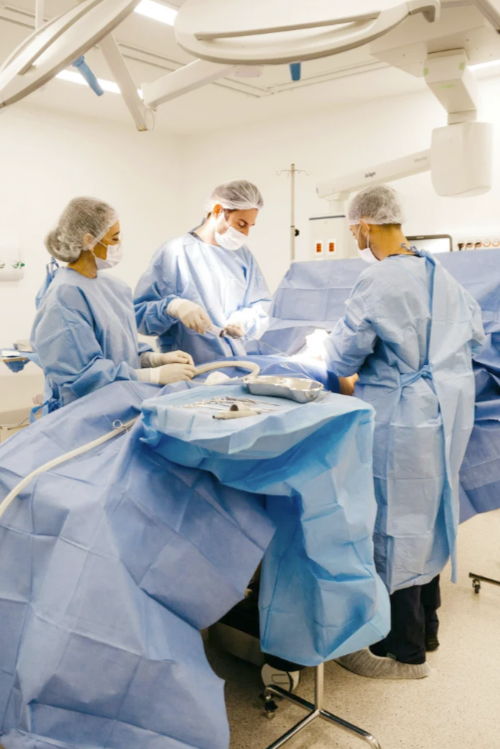
Open Reduction and Internal Fixation is a frequently employed procedure in treating complex and displaced fractures. ORIF involves cutting through the skin above the fracture to expose the ends of the bone so that the doctor can manipulate them (Open Reduction). After manipulation, plates and screws will be inserted.
2. Intramedullary (IM) Nailing
This is one of the best methods that can be used when dealing with injuries on the long bones like the femur (thigh bone) and tibia (shin bone). In this process, a titanium nail is inserted in the bone via the medullary canal of the bone. The rod acts as an internal splint, which equally distributes forces on the bone.
3. External Fixation
For fractures that involve a lot of soft-tissue damage or polytrauma, external fixation is used. Metal pins or screws are inserted into the bone both above and below the point of fracture. These metal rods are attached to an external stabilisation framework on the outside of the body.
4. Joint Replacement for Geriatric Fractures
For instance, in the case of an older person having fractures in the femoral neck, whereby the risk of failure of bone fixation is due to the development of osteoporosis, removal of the fractured joint and the use of artificial devices will enable early weight bearing.
Non-Surgical vs. Surgical Fracture Treatment
Comparison of non-surgical management and fracture surgery will help the patients make their informed choices in healthcare.
| Factor | Non-surgical Treatment | Surgical Treatment |
|---|---|---|
| Primary Goal | External stabilisation for simple fractures using splints or casts. | Precise anatomical realignment for complicated or unstable fractures. |
| Best suited for | Simple, non-displaced hairline fractures. | Displaced, joint-involving or multi-fragment fractures. |
| Accuracy of alignment | Moderate | Millimetre-level precision, guided by real-time C-arm fluoroscopy. |
| Early joint mobility | Limited; the joints above and below are fracture stay immobilised. | Better, surgical fixation is often stable enough to ensure earlier movement. |
| Weight-bearing timeline | Delayed until the natural formation of callus. | Often begin sooner, depending on the stability of the fixation. | Risk of deformity | Higher in unstable fracture patterns | Lower, due to controlled surgical correction. |
Why Should One Opt for SilverStreak Hospital for Fracture Treatment in Gurgaon?
The choice of your medical facility can have a great impact on your recovery rate. Our hospital, situated in Sector 87, Gurgaon, provides an opportunity to get qualified trauma surgeons, ultramodern OTs and round-the-clock emergency services for fracture treatments in Gurgaon.
Qualified Orthopaedic Surgeons
We offer the services of our orthopaedic team, which consists of certified professionals with rich experience in treating injuries, managing periarticular fixation and joint reconstruction.
Advanced Modular Operating Rooms
The advanced OTs have a HEPA air filter, laminar airflow system, and intraoperative C-arm fluoroscopy. This combination helps in maintaining the sterile environment as well as minimising the chances of infection. Also, it makes sure that there is accurate implant positioning.
High-Field Diagnostic Imaging
In-house high-field 3D CT scans, MRI integration, and digital X-ray systems support exact pre-operative planning and allow our surgical team to map out even the complicated or multi-fragment fractures before entering the operating room.
Specialised Trauma & Anaesthesia Teams
Our 24/7 Accident & Emergency unit works with dedicated orthopaedic anaesthesiologists, who use regional nerve blocks like femoral or sciatic blocks to keep post-operative pain low and reduce the dependency on oral painkillers.
Meet Our Experts
SilverStreak Hospital offers fracture and trauma services provided by specialist doctors with international training.
Dr. Bhaskar Varma
Dr. Bhaskar Varma, an extremely experienced Orthopaedic Surgeon and Physician with more than 37+ years of experience in his field, having worked at some of the best central and state health services, brings to you unmatched knowledge in dealing with complex orthopaedic problems.
Parteek Bansal
Dr. Bansal (MBBS, DNB Orthopaedics, FIAS, FIJR, Diploma in Sports Medicine - FIFA) at SilverStreak Hospital has earned himself a good reputation as a very successful doctor for trauma & fracture surgery, Joint Replacement surgery, Arthroscopic Surgery for Knee and Shoulder, and sports injury. His precise decision-making has gained him success in more than 8 years of experience in this field.
Surgical & Recovery Process Overview
The process starts when you enter our emergency room, to the day you go back to your normal work schedule.
Phase 1: Pre-Surgery Assessment & Planning
- Splinting of the affected limb.
- Digital X-rays and CT scans in 3D to fully assess the nature of the fractures.
- Routine pre-operative tests including blood tests and ECG.
Phase 2: Intra-Operative Execution
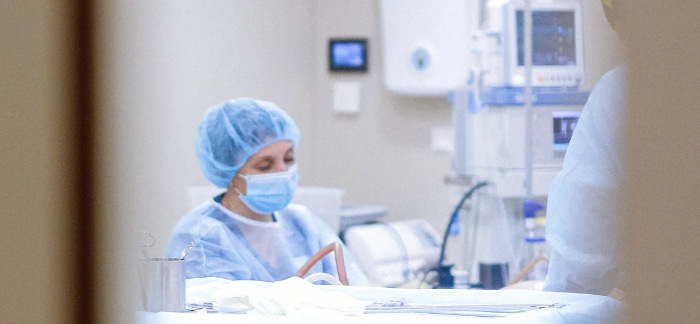
- Anaesthesia delivery (regional nerve block or general anaesthesia, based on the severity of the condition).
- C-arm fluoroscopy to ensure accurate implantation of plates and screws lengths.
- Bone grafting (either autogenous or artificial) where there is insufficient bone density.
Phase 3: Post-Operative Rehabilitation
Weeks 0-2-Joint Protection and Pain Relief
Major emphasis on reducing swelling through cryotherapy, elevation of the affected limb, and painkillers. Non-weight-bearing isometric exercises and joint mobilisation techniques avoid muscle stiffness.
Weeks 2-6- Gradual Activations
Start of partial weight-bearing activities with the help of crutches or walkers. Specific physiotherapy involves stabilisation, quad and glute activation.
Weeks 6-12- Strengthening
Full weight-bearing activities following digital X-ray confirmation of good bone callus formation. Functional and resistance training along with gait training are done for the purpose of eliminating limping.
Months 3-6- Advanced Functional Activities
Impact progression, agility and return-to-work-specific exercises for active people and athletes.
Patient Safety, Bone Health & Healing Factors
Bone mending is a highly active physiological process. Several crucial elements determine the time required for the healing of a broken bone post-operation.
Nutrition
Sufficient consumption of proteins, calcium and vitamin D facilitates callus formation.
Abstinence from smoking
Smoking causes constriction of blood vessels, resulting in oxygen deprivation at the fracture site, increasing chances of non-union by double.
Diabetes Management
Proper management of diabetes is important to avoid any problems with the surgical wound and facilitate healing.
Conformity to weight-bearing activities
Compliance with your orthopedist’s instructions is essential to ensure that there is no bending of internal fixations.
Conclusion
A fractured bone might sound like an upsetting incident, but it need not be followed by lifelong disability. With the help of advanced surgical procedures along with proper rehabilitation therapy, the majority of people will be able to regain their movements free from pain.
Choosing SilverStreak Hospital in Sector 87 of Gurgaon enables one to get access to advanced FIFA-certified trauma surgeons and a complete recovery path under one roof.
peace of mind connect with our
bone team today!
Frequently Asked Questions
Is the fixing of metal plates and screws permanent? Can they be removed later?
In adult patients, nowadays titanium or stainless implants are biocompatible and made for permanent use, not leading to any negative consequences for health. The necessity of removing the implant is only considered in the case of localised irritation of the skin, mechanical restraint and in pediatric patients due to the bone growth process.
How long does it take to recover from surgery?
Initially, the recovery of bones may take 6-12 weeks, which varies according to the kind of bone that is affected and the age of the patient.
Is surgery painful?
The operation itself is performed under complete regional or general anaesthesia and therefore is absolutely painless. Postoperative pain is managed by regional blocks, continuous analgesia and taking pills.
When can I start working and driving after fracture surgery?
People who have office-based jobs may begin work 2-3 weeks after surgery. Driving could commence after about 4 to 8 weeks after the surgical procedure if there is no requirement for crutches, and if one is not taking any narcotics, and can use emergency brakes.
How do we recognise the early indicators of complications following surgery?
Your surgeon needs to know straight away if you experience extremely high fever, extreme pain which is not alleviated by any pain medications, unusual redness at the wound area with pus formation, or if your hands and feet appear to be cold and numb.
Would the metallic implants used in treating fractures be detected by the airport’s metal detectors?
The present metallic implants that have been produced using titanium and high-quality stainless steel will not cause the airport’s metal detectors to go off. In the case that the sensitive scanners pick up the implants, informing the security officials about the implants is enough. One can also obtain an implant card from one’s surgeon for international flights.
Will I be able to undergo an MRI in the future if there are plates or screws in my body?
Yes, one can undergo an MRI in the future if there are metal plates or screws in one’s body. The metal in current orthopaedic implants (most especially titanium implants) does not set off any magnetic field in an MRI scan. The metal does not pose any risk of dislodging or heating up.
What is the distinction between bone non-union and bone delayed union?
In bone delayed union, the bone takes more time to heal compared to what one might expect based on the age and location of the fracture. However, the bone is actually progressing towards healing in delayed union. Bone non-union is when the bone does not heal at all, creating an open space in the bone.