




What is a twin pregnancy, and how do you know if you are carrying twins? A twin pregnancy means carrying two babies at once, confirmed through ultrasound and high hCG levels. It brings its own set of symptoms, care needs, and delivery considerations. Understanding these early helps you prepare for a smoother, safer pregnancy journey ahead.
Twin pregnancy symptoms include fatigue, nausea, and early weight gain, common in the first weeks. Since carrying two babies raises the chance of complications, doctors classify a twin pregnancy as high risk and recommend closer monitoring throughout each trimester. The good news is that most twins are delivered safely with the right obstetric care and timely check-ups. If you are expecting twins, book a same-week consultation with our gynaecology team at SilverStreak Hospital, Gurgaon.
What Is a Twin Pregnancy?
A twin pregnancy happens when two babies grow in the uterus at the same time, instead of one. It is a type of multiple pregnancy and is far less common than a single pregnancy. Some women conceive twins naturally due to family history or age, while others conceive through fertility treatment such as IVF. Either way, a twin pregnancy asks for closer, more frequent care right from the first trimester.
What Are the Signs of a Twin Pregnancy?
These signs often show up earlier than they would in a single pregnancy, sometimes within the first few weeks. Many women notice a mix of physical changes rather than just one clear symptom. These signs prompt women to ask their doctor about twins. Generally, a scan can tell you for certain. Common signs of a twin pregnancy include:
- Feeling the baby move earlier than usual, sometimes in two different spots of the belly
- A fundal height (the size of the bump) that measures larger than your actual weeks of pregnancy
- Rapid weight gain in the early weeks
- Higher than expected hCG or alpha-fetoprotein levels on a blood test
- Hearing more than one heartbeat during a Doppler check
What Are Twin Pregnancy Symptoms?
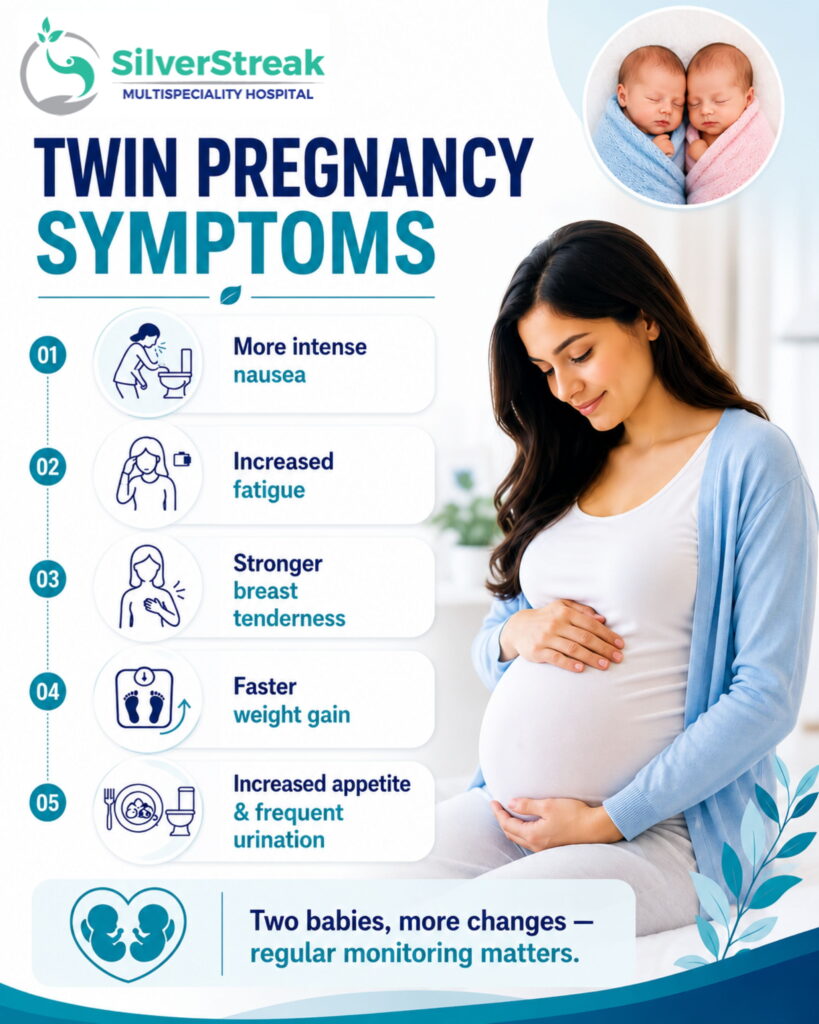
These symptoms usually start earlier and build up faster than they would in a single pregnancy, catching many women off guard in the first trimester. The higher hormone levels from carrying two babies cause this. High hCG levels in the body tend to intensify how pregnancy feels. While some symptoms may feel overwhelming, they are a normal part of carrying twins and worth discussing with your doctor rather than managing alone.
Twin pregnancy symptoms include the following:
- Morning sickness that lasts longer through the day.
- Breast tenderness that feels stronger than expected.
- Deep fatigue, especially in the first and third trimester.
- Frequent urination and an increased appetite.
- Faster weight gain, backache, and heartburn as the pregnancy progresses.
- If nausea and vomiting become frequent.
How Is a Twin Pregnancy Confirmed?
A prenatal ultrasound is the only way to be sure if you are having a twin pregnancy, and it is typically performed around 8 weeks as part of your scan. This scan counts the number of babies, checks their heartbeats, and measures growth. A blood test showing elevated hCG or alpha-fetoprotein levels may raise suspicion, but ultrasound gives a clear diagnosis.
Fraternal and Identical Twins: What Is the Difference?
Knowing which type of twins you are carrying is important information. It has a direct impact on your frequency of being scanned and what your doctor is looking for. Identical and fraternal twins develop differently in the womb, and the difference extends to placenta sharing and genetic makeup. Your doctor will usually confirm the type during an early ultrasound, so this becomes one of the first things discussed once a twin pregnancy is confirmed.
Fraternal twins
Fraternal twins form when two different eggs are fertilized by two different sperm. Each baby has its own placenta, and they can be the same or different sex, just like regular siblings.
Identical twins
Identical twins form when one fertilized egg splits into two. They have the same DNA and are always the same sex. Depending on when the split happens, identical twins may share one placenta (monochorionic) or have separate placentas (dichorionic).
If twins share a placenta, they are called monochorionic and require closer monitoring as they are at a higher risk of developing issues like twin-to-twin transfusion syndrome.
Is Twin Pregnancy Considered High Risk?
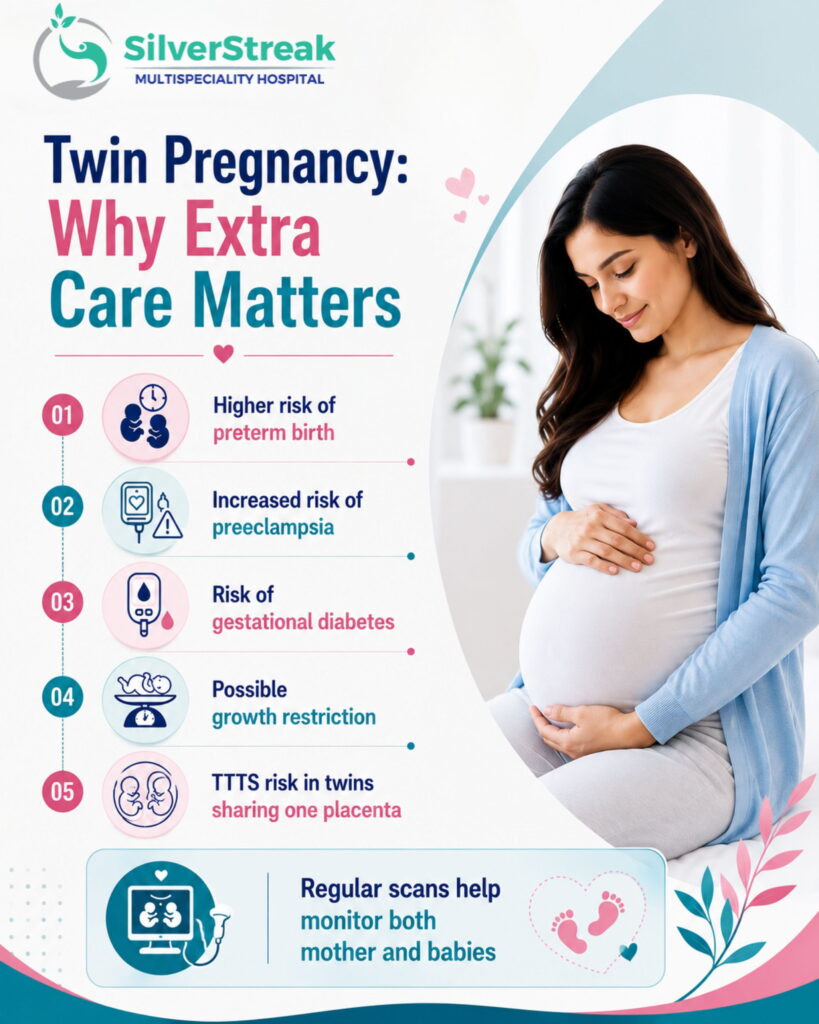
Yes. A twin pregnancy is considered a high-risk pregnancy because carrying two babies places extra strain on the body and raises the chance of complications. This does not mean something will go wrong. It just means your healthcare team must be more attentive, thus allowing for earlier detection of problems.
These risks are well documented by leading maternal-foetal medicine sources, such as Johns Hopkins Medicine’s overview of multiple pregnancy complications, which outlines how premature birth affects over 60 percent of twin pregnancies.
Twin-to-twin transfusion syndrome
Twin-to-twin transfusion syndrome (TTTS) happens when identical twins share a placenta unevenly. One baby, called the donor, gives away more blood than it receives. The other, the recipient, gets too much. If left untreated, TTTS can have serious consequences for both babies, but regular ultrasound monitoring picks it up in its early stages, and treatments such as laser therapy or careful monitoring can manage it well in most cases. If you notice unusual symptoms or are concerned about a high-risk pregnancy, talk to our specialist at SilverStreak today for a same-day check-up and next steps.
When to Call Your Doctor Immediately
Certain symptoms during a twin pregnancy should never wait for the next scheduled visit. Early action on any of these can have an impact on outcomes. If you have any of the following symptoms, call your doctor or go to the hospital:
- Vaginal bleeding or a sudden gush of fluid.
- Severe or persistent headache with blurred vision.
- Sudden swelling of the face, hands, or feet.
- Regular tightening or cramping before 37 weeks.
- A noticeable drop in your babies’ movements.
- Severe abdominal pain that does not ease.
Trimester-by-Trimester Twin Pregnancy Care
For a detailed breakdown of antenatal appointment schedules and scan timelines, the NHS guide to antenatal care with twins is a useful additional reference for expecting parents.
Diet and Lifestyle Tips for a Healthy Twin Pregnancy
Carrying two babies means your body works harder so nutrition and rest matter more than ever. It helps to eat small, frequent meals rich in protein, iron, and calcium instead of larger meals. Staying well hydrated throughout the day to support your increased blood volume is necessary. Folate-rich foods such as leafy greens and lentils are worth including alongside any supplements your doctor prescribes. Rest plays a big role, so try to rest when tired; avoid standing for long stretches, especially in the third trimester; and sleep on your side rather than your back to support blood flow to both babies. Finally, keep all your prenatal appointments even when you feel well, since twin pregnancies can change quickly and regular check-ups catch issues early.
How Are Twins Delivered?
There is no single answer to this. It depends on the twins’s position and how the pregnancy is progressing. Most twins arrive before 37 weeks. Full term for a twin pregnancy is generally considered 36 to 37 weeks rather than 40. Your obstetric team will discuss the safest delivery plan for your specific situation well before your due date.
Why Choose SilverStreak Hospital, Gurgaon
Twin pregnancies deserve a team that provides specialized care. At SilverStreak Hospital, a NABH-accredited multi-specialty hospital in Gurgaon, twin pregnancy care is led by experienced gynecologists and obstetricians who work alongside neonatology and anesthesia teams under one roof.
Meet our specialist

Dr. Swapnil Agrahari
(MBBS, MS obstetrics and gynecology, F.MAS, D.MAS)
She brings more than 8 years of experience in high-risk pregnancy, normal and cesarean pregnancies, hormonal irregularities, gynecological issues among teenagers and performs keyhole surgeries like laparoscopy and hysteroscopy. Her treatment and surgical skills strongly focus on evidence-based patient care ensuring safe and holistic treatment.
Our doctors work within a NABH-accredited hospital with round-the-clock diagnostic support. Your evaluation and treatment plan happen without unnecessary delays between departments. Consult Dr. Swapnil Agrahari at SilverStreak Hospital, Gurgaon for your personalised treatment.
Frequently Asked Questions
Q1. What are the signs of a twin pregnancy?
Early signs include feeling movement sooner than usual, a bump measuring larger than expected, rapid weight gain, and higher hCG levels on a blood test. Ultrasound is needed to confirm it.
Q2. What are twin pregnancy symptoms?
Q3. How is a twin pregnancy confirmed?
A twin pregnancy is confirmed through prenatal ultrasound, usually during the first trimester dating scan, which shows the exact number of babies and their heartbeats.
Q4. Is twin pregnancy considered high risk?
Q5. How are twins delivered?
Twins can be delivered vaginally, through a combined vaginal and cesarean delivery, or fully by cesarean section, depending on their position, chorionicity, and how the pregnancy is progressing.
Q6. What is the difference between fraternal and identical twins?
Fraternal twins come from two separate eggs and sperm, while identical twins come from one fertilized egg that splits into two, sharing the same DNA.
Q6. How many weeks are twins usually born?
Most twin pregnancies deliver between 36 and 37 weeks, earlier than the 40 weeks considered full term for a single pregnancy.
Conclusion
A twin pregnancy can be an exciting journey, but it requires closer monitoring and specialized obstetric care. From early ultrasound confirmation to regular growth scans and delivery planning, timely medical care can help identify potential complications early. If you are looking for the best gynaecologist in Gurgaon for twin pregnancy or high-risk pregnancy care, consult Dr. Swapnil Agrahari at SilverStreak Hospital, Gurgaon for personalized guidance.