



Can you feel pregnancy symptoms in the first week? In most cases, no.
Doctors use week 1 as the time from the beginning of your last menstrual cycle. At this moment, you have not become pregnant yet. As such, pregnancy signs rarely appear during this period. Females become aware of their pregnancy in most cases only starting from week 4, since this is the period when an embryo begins to implant itself in the uterine wall.
Some women may face light spotting, minor pain, breast sensitivity, and/or tiredness earlier. Nevertheless, these pregnancy symptoms are indistinguishable from PMS.
Here you can learn about what’s happening with your body, early pregnancy signs that you should look for, timing to do a pregnancy test, and effective early pregnancy advice.
What Are the 1st Week Pregnancy Symptoms?
The term “1st week of pregnancy” can refer to two different points in time. Here is how both are interpreted:
1. Week 1 of pregnancy (medical interpretation)
Doctors calculate from the first day of your last menstrual period. This is the week you are menstruating. So you are not pregnant at this point, and hence there are no pregnancy symptoms.
2. 1 week since fertilisation
Many women look for this info some days after either unprotected intercourse or ovulation. This is because at this point the fertilised egg has not reached the uterus yet. The hormone level is still low, and hence there are no symptoms.
Both of them are the same in terms of the advice that has been given. Such symptoms cannot prove pregnancy, and only a pregnancy test can.
What Happens in Your Body During the First Weeks
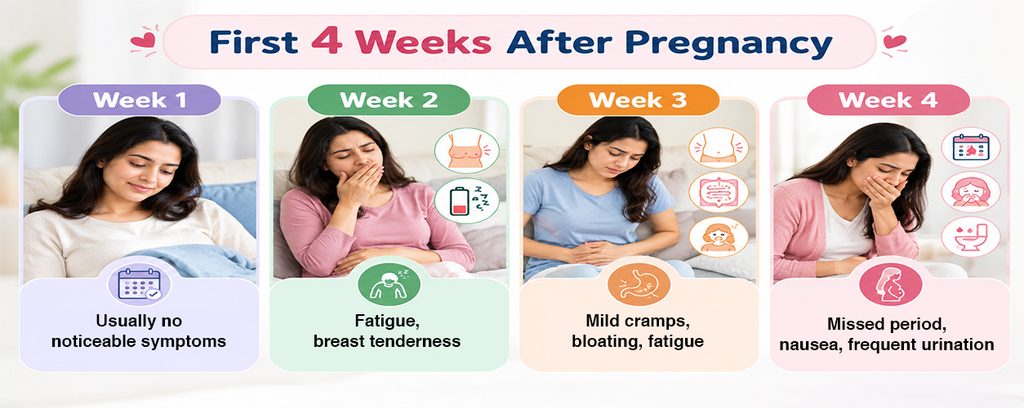
Here is how the first month works, counted from your last period:
| Pregnancy week | What is happening | What you may notice |
| Week 1 | Last menstrual period begins; pregnancy has not occurred yet | Normal period symptoms |
| Week 2 | Ovulation; the egg may be fertilised | Mild ovulation pain, clearer cervical mucus |
| Week 3 | The embryo travels to the uterus and starts to implant | Possibly light spotting or mild cramps |
| Week 4 | Implantation completes; hCG hormone increases; period is missed | Missed period, tender breasts, tiredness |
Your body will then start producing the pregnancy hormone hCG after implantation. It is this hormone that all at-home tests will try to detect. Symptoms remain mild or non-existent before that.
Early Signs of Pregnancy: The Most Common Symptoms
Not all women experience the same symptoms. Some women may experience many symptoms, while others may experience no symptoms at all.
1. Missed Period
Missing a period is the most reliable and common sign that is easily identifiable, especially if you have a regularly scheduled period. If your period is more than a week late, you should take a test.
2. Light Spotting (Implantation Bleeding)
There might be some light pink or brown spotting caused by the implantation of the fertilised egg on the walls of the uterus. It is usually lighter and shorter than the average monthly bleeding.
How common is it? Estimates vary. While some estimates indicate that it occurs in as many as 25% of women who are pregnant for the first time, other studies report lower percentages. Not experiencing any bleeding is perfectly fine.
3. Light Cramping
Implantation might cause light abdominal twinges.
4. Breast Tenderness
High levels of estrogen and progesterone might lead to sensitivity in your breasts which will start feeling painful and heavier.
5. Tiredness
Progesterone produces a calm, sleep-inducing effect. At the same time, an increase in the volume of blood is seen in your body. The majority of females experience fatigue despite getting enough sleep.
6. Frequent Urination
Due to hormone fluctuations and an increase in the volume of blood, you may need to urinate frequently. You are more likely to observe frequent urination at week 4 rather than at week 1.
7. Emotional Changes
As a result of fluctuations in hormones, you may become tearful, irritated or overly emotional. It is absolutely normal, but the emotional state is always important. According to research, 14-23 per cent of women suffer from depression during pregnancy.
Other Not-so-Common Symptoms of Pregnancy
These symptoms will come as an unpleasant surprise. You should know that.
- Metallic taste in the mouth
Everything may have a different taste.
- An increase in sensitivity to smells
Even the smells of coffee or your usual perfumes may become unbearable to you.
- Bloated stomach
Due to slower digestion, you may experience some premenstrual-type bloating.
- Headaches
Hormonal imbalances may cause mild headaches.
- Discharge from the vagina
Early pregnancy discharge is clear and odourless.
- Raised basal body temperature
If you monitor your temperature at home, it remains elevated after ovulation, rather than dropping off.
- Nausea
Morning sickness in week one of pregnancy is rare; it begins around week 4 or week 6.
Pregnancy Symptoms vs PMS: How to Tell the Difference
Pregnancy symptoms and PMS feel almost identical. Timing is what separates them.
| Symptom | PMS | Early pregnancy |
| Breast soreness | Disappears once your period comes | Continues past your due date |
| Cramps | Peak before and during your period | Milder, and no period follows |
| Bleeding | Heavier, lasts 4-7 days | Light spotting for a few hours to two days |
| Tiredness | Mild | Often stronger and more constant |
| Mood swings | Settles when your period starts | May continue |
The most basic thing is that if you experience symptoms after your period due date, go for a pregnancy test.
When Should You Take a Pregnancy Test?
Being too hasty is a typical problem. This results in misleading negative test results, causing anxiety.
The timing of the test is critical. According to one manufacturer, their test will show pregnancy in 76 per cent of women five days before the expected period, and in over 99 per cent on the day of the expected period.
Here are some tips:
- Ideal time
When you miss your period or later. Use an early morning urine sample since this contains the highest amount of hCG.
- Earlier testing
It is possible, although the results are not accurate. Some people prefer waiting until one week after missing their period for clear results.
- Negative test yet no period?
Wait 2 to 3 days before taking another test.
- Blood test (beta-hCG)
It is done in a clinical setting and detects pregnancy even before a urine test does.
The majority of home pregnancy tests boast up to 99 per cent accuracy, although only if done correctly. After a positive test, schedule an appointment with your doctor.
Early Pregnancy Advice for the First Month
These tips are important during your first month of pregnancy, even when you are not sure.
- Take Folic Acid
It is important for the healthy development of the baby’s brain and spine. The neural tube closes in the initial stages of pregnancy, often even before conception. Take 400 mcg of folic acid daily if you are going to conceive, according to the CDC.
- Eat Balanced Diets
Eat food that you would normally eat at home, like dal, green vegetables, fruits, yoghurt, nuts, whole grains, and foods rich in iron like spinach, channa, beets, etc.
- Stay Hydrated
Make sure that you drink water all day long. You can have coconut water, buttermilk, or soups if you find water boring.
- Limit Caffeine Intake
According to most recommendations, you should keep your consumption of caffeine below about 200 mg per day, equivalent to a cup of coffee. Visit your doctor.
- Do Not Have Alcohol, Smoking, and Self-medication
Immediately quit drinking and smoking once you have suspected your pregnancy. Consult your doctor before ingesting any medicine, including herbs.
- Take Rest and De-stress
You should always try to get some rest at all times. Activities like walking, yoga, breathing deeply, and journaling can be helpful in dealing with exhaustion and mood swings.
- Record Symptoms and Menstrual Cycles
You should record your menstrual cycles, symptoms, and spotting in your diary or cell phone application. This will aid your doctor in determining your due date.
- Book Your First Antenatal Visit
Early detection of problems is beneficial. Early symptoms are quite variable, so professional confirmation is recommended.
When to See a Gynaecologists
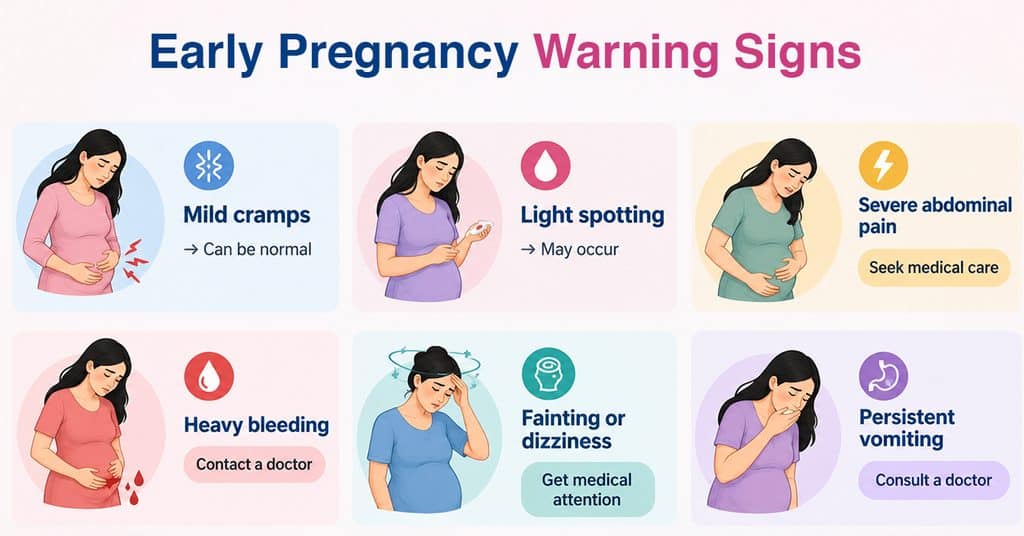
Most cases with mild early symptoms are normal. In case you experience:
- Severe or one-sided pain in the abdomen
- Heavy bleeding or bleeding with blood clots
- Fainting or feeling dizzy
- Pain in the shoulder tips along with pain in the abdomen
- Previous history of ectopic pregnancy or recurrent miscarriages
- Illnesses like diabetes, thyroid disorders or high blood pressure
- Persistent vomiting, inability to retain fluids
- Consult experienced gynaecologists in Gurgaon without further delay if you experience any of these symptoms.
Care You Can Trust at SilverStreak Hospital
Early pregnancy is filled with queries. Is this spotting normal? Is my test result accurate? What do I eat? You should not be in doubt. The SilverStreak Hospital provides gynaecological and obstetrical care in Gurgaon to all women. Our experts can assist you with:
- Confirmation of pregnancy by means of blood tests and scans
- Preconception counselling and prenatal vitamins
- Antenatal checks according to your needs and nutritional tips
- Help for women suffering from irregular periods, PCOS, thyroid problems or past pregnancy losses
- Advice on symptoms, spotting, and early pregnancy concerns
Learn more about SilverStreak Hospital’s gynaecology services.
Conclusion
Pregnancy symptoms experienced in week 1 are unusual, seeing as that is the period when the calculation of the days begins after your last period and conception isn’t even in place. These pregnancy signs, such as implantation bleeding, tender breasts, fatigue, and no periods, normally arise in week 4. These signs greatly resemble those of PMS.
Do not base your decision on pregnancy symptoms alone; test at the right time, take your folic acid pills, eat healthy, don’t drink alcohol or smoke and make an antenatal appointment. Your body is working hard now; hence, treat it accordingly.
SilverStreak Hospital is willing to assist you. Make your appointment right now at the best hospital in Gurgaon for guidance from the first week of pregnancy itself.
FAQs
It is rare. Some women get tiredness or breast sensitivity, but most women do not experience any signs at all until implantation. Absence of menstruation is usually the first sign.
It could be implantation spotting, but there are other explanations for it. Bleeding related to implantation is expected to be slight. Should there be pain or heavy bleeding, please see your physician.
Not now. During Week 1, medically speaking, you are on your period, and hCG is absent in your body.
Nausea happens between week 4 and 6 of pregnancy since the date of your last menstrual period. Nausea very rarely happens within the first week. Nausea can happen at any time of the day even though it is called morning sickness. This can be controlled by taking frequent small feeds, drinking plenty of water and avoiding strong smells. If one is not able to keep anything down, it is advisable to see a doctor.
The ultrasound scan is able to detect the pregnancy sac after 5 weeks of pregnancy. The baby’s heartbeat can be seen after 6 to 7 weeks of pregnancy. Ultrasound is conducted between weeks 6 and 8 of pregnancy. Ultrasound determines that the pregnancy is in the right place, that is, the womb.
Exercising is healthy for all women and prevents them from being tired and improves their mood. Exercises that are too hard and contact sports are to be avoided. If you have vaginal bleeding, pain or have ever experienced a miscarriage, consult with your doctor first before performing any exercise.
Basal body temperature may help you out, but alone it is not enough to prove pregnancy. The body temperature increases after ovulation. When it stays high for more than two weeks, there is a chance you might be pregnant. Other reasons such as being ill, having little rest, or being stressed may influence your temperature.