

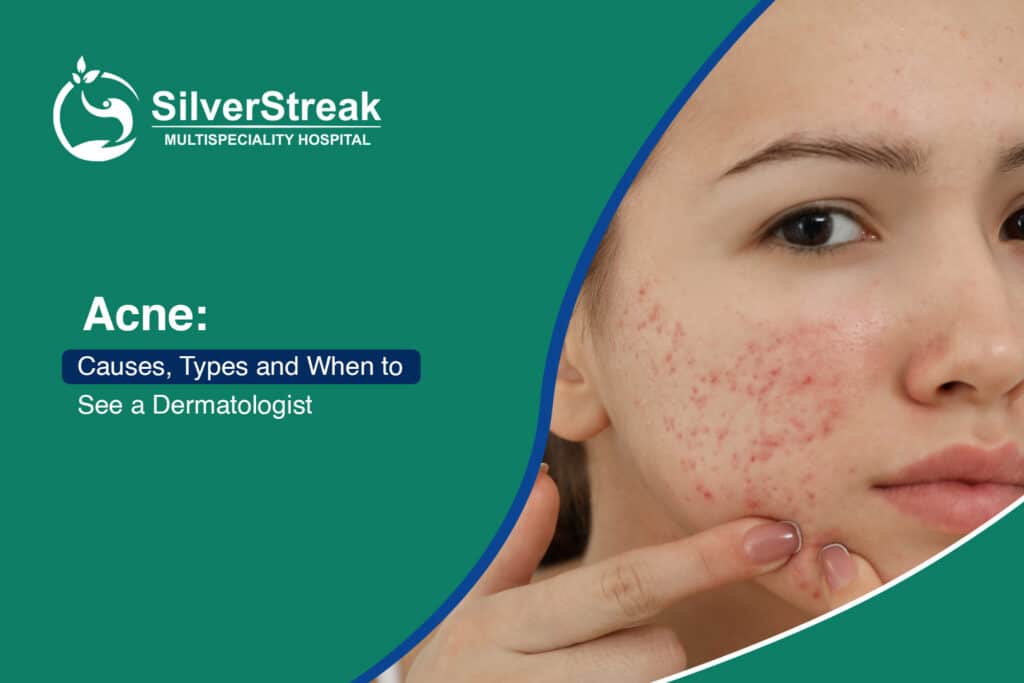
Acne: Causes, Types and When to See a Dermatologist
Acne is a very common skin disorder that happens due to clogging of the hair follicle from the combination of oil and dead skin cells. Acne can result from excess sebum production, clogged pores, bacterial infection, inflammation, and hormonal imbalances. Also, genetics, stress, medications and poor skin care habits might be factors that lead to acne. Mild cases of this skin problem can be managed using a proper skin care regimen. Visit a dermatologist if you suffer from painful acne, scarring or lack of any improvement in 6-8 weeks of home-based skin care.
This guide covers acne causes, types of acne, ways of treatment and signs to visit a dermatologist.
What Is Acne?
Acne (acne vulgaris) is an illness that attacks the pilosebaceous unit. This includes the hair follicle together with the sebaceous gland. Acne normally occurs on the face, but it can also happen in other areas like the chest, shoulders, and back.
Acne is very common. According to the American Academy of Dermatology, this is the most common skin disease in America, whereas the Global Burden of Disease has established that almost 9.4% of the world’s population is affected by it. This condition is very common among teenagers, but many adults suffer from this disease as well, especially women.
This problem is not caused by poor hygiene. They develop due to a complex of processes going on underneath the skin.
Causes of Acne: Why Do Pimples Form?
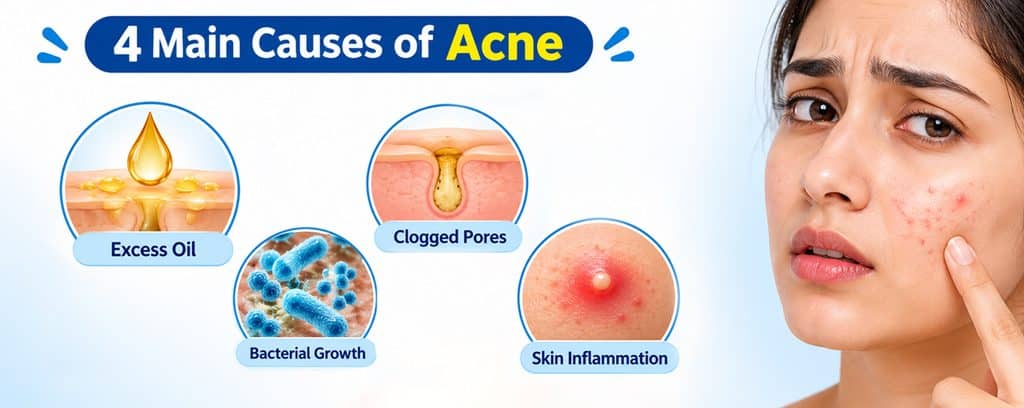
Understanding the causes of acne will help you select an ideal skin care treatment. According to dermatologists, four processes cause acne development:
- Excess oil production: Oil production takes place as a result of hormones acting on the body.
- Clogged pores: Oil mixes with dead skin cells to clog the hair follicle.
- Bacterial multiplication: The Cutibacterium acnes bacteria, which naturally live on the skin’s surface, reproduce inside the clogged hair follicle.
- Inflammation: The immune system of the body reacts to the bacteria, causing redness and pus formation.
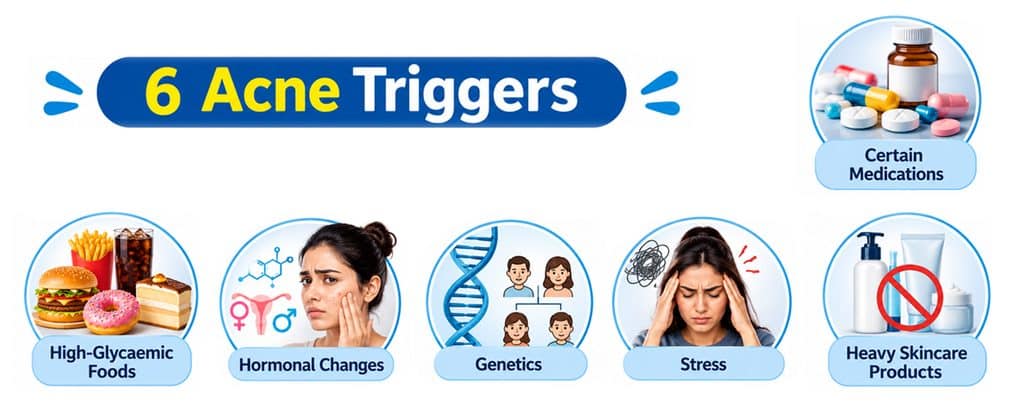
- Hormonal Changes
The androgens are those hormones that increase once one reaches puberty and stimulate the oil glands. This is the reason why acne is very common among teenagers. Hormonal changes related to the menstrual cycle, pregnancy, PCOS, and certain diseases may also cause breakouts among adults.
- Genetics
If your parents suffered from acne, then it is very probable that you would inherit the problem because your genetic makeup could control the activity of your sebaceous glands and how they react to inflammation.
- Stress and Sleep
Stress is not responsible for causing acne; however, research has found that stress can aggravate the problem of acne. When stress increases the level of hormones like cortisol, more oil is produced by the skin.
- Certain Medicines
Some drugs that might cause acne include steroids, some anti-epileptic drugs and lithium. It is never wise to stop using any prescription medication without consulting your doctor first.
- Skincare and Cosmetic Products
Oil-based or heavy cosmetic and skin care products can clog pores and cause breakouts. It would be better if you choose products marked “non-comedogenic” or “oil-free.”
- Diet
The association between food and acne is being explored further. Some studies have indicated that there could be an adverse effect on the development of acne in individuals who consume a lot of high-glycaemic foods (like white bread and sweets).
Common Pimple Causes in Daily Life
In addition to the primary biological factors, other behaviours may contribute to the development of acne:
- Touching or picking the face. Bacteria will spread, and inflammation will increase.
- Failure to remove make-up and sunscreen at the end of the day. Residue can lead to blocked pores.
- The sweat generated between a helmet, mask, or tight clothing causes irritation, and the sweat is bound to produce acne in those areas.
- Washing and exfoliating too much. This hampers the skin barrier function and activates oil secretion.
- Dirt on the phone screen, pillowcase, and towel may lead to the spread of oil and bacteria to the skin.
- Hair products such as oil and styling products touching the forehead/hairline.
Types of Acne: How To Know Your Kind
Not all pimples are the same. Knowing what kind of acne you have will help your dermatologist know what treatment is best for you. Acne lesions can be categorised into non-inflammatory or inflammatory acne.
- Non-Inflammatory Acne
- Blackheads (open comedones)
This pertains to tiny dark-colored spots that are mainly found on the nose, chin, and forehead. There is an open pore, and the dark colour is caused by the chemical interaction between sebum and oxygen, not by dirt. Blackheads are generally not painful.
- Whiteheads (closed comedones)
These are little white or flesh-colored spots. The pore is closed at the surface but has trapped oil and dead skin cells underneath.
- Inflammatory Acne
- Papules
Red and tender bumps with no sign of a pus head on them. They arise where there is a breakdown of the pore wall and inflammation of the area.
- Pustules
Similar to papules but with a white/yellow pus centre. They are usually surrounded by red skin.
- Nodules
Large and painful lumps which lie deep within the skin. They have no head to be seen, and they take weeks to heal. Nodules are associated with dark spots and scarring.
- Cysts
Soft and large pus-filled lumps which are painful to touch. The cyst is the most severe form of acne and may require a prescription medication to prevent scarring.
A Quick Way to Tell Them Apart
| Type | Appearance | Painful? | Severity |
| Blackhead | Dark, smooth, or slightly raised | No | Mild |
| Whitehead | Skin-colored or white bump | No | Mild |
| Papule | Red, tender bump | Sometimes | Mild to moderate |
| Pustule | Red pimple with pus-filled point | Often | Moderate |
| Nodule | Hard, deep lump | Yes | Moderate to severe |
| Cyst | Large, soft, deep lump | Yes | Severe |
It is true that a majority of individuals have combinations of types, hence making it necessary to conduct a professional skin analysis.
Acne Treatments: What Are the Options?
However, the treatments for acne are determined based on the severity, nature of the problem, skin type and the duration of acne. This is a summary of the treatments that dermatologists prescribe.
Over-The-Counter Acne Treatments
In case of mild acne, the following are among the treatment options:
- Use of benzoyl peroxide to kill acne-causing bacteria
- Use of salicylic acid to unclog the pores
- Use of adapalene (a retinoid, which is available over-the-counter in some forms) to regulate cell shedding
One should start with low concentrations since they are irritants and may lead to drying. It requires at least 6-8 weeks to judge the efficacy of a treatment unless one’s skin is sensitive.
Prescription Topical Treatments
A dermatologist may recommend the following medications:
- Retinoid medications like tretinoin.
- Antibiotics in topical form, like clindamycin; often used with benzoyl peroxide to decrease resistance to the treatment.
- Azelaic acid, which can be effective in treating acne and its aftermath.
Oral Medicines
In case of moderate to severe or difficult cases of acne, the following could be administered:
- Antibiotics taken orally, for a short while only, together with topical administration
- Hormone treatment, which includes oral contraceptives for some females
- Isotretinoin, which is a very potent vitamin A derivative that can be taken for severe or scarring acne.
In-Clinic Procedures
In some cases, a dermatologist can recommend:
- Chemical peeling for decongesting pores
- Comedone extraction through safe techniques
- Injection therapy for large and painful nodules
- Laser or light therapy for specific types of inflammatory acne or pigmentation
- Treatments for acne scars like microneedling or laser therapy after controlling the active acne
All treatments have side effects, and not all treatments work for everyone. A dermatologist will tell you about the advantages and disadvantages of the procedure before making your choice.
Simple Daily Routines for Clearer Skin
Good routines won’t cure any condition that needs professional treatment, but they’ll surely help.
- Clean your face twice a day using an alcohol-free and unscented cleanser.
- Use a light moisturiser, even if you have an oily skin type.
- Use a broad-spectrum sunscreen daily. Many medicines for acne increase sun sensitivity.
- Don’t pop your acne.
- Wipe off the makeup before sleeping.
- Keep your pillowcase and towel clean.
- Have a balanced diet and drink plenty of water.
- Learn how to deal with stress by means of sleep and exercise.
For more details on self-care, you can read the NHS guidance on acne.
When to Visit a Dermatologist for Acne
Many individuals wait for some time before going for professional advice. Acne is a disease and hence is treatable. Early advice would assist in developing an easier treatment plan. Consider seeing a dermatologist if you have:
- No improvement after 6 to 8 weeks of steady usage of over-the-counter drugs
- Tender nodules or cysts
- Pimples full of pus, which continue to grow or recur
- Scars developing when the pimples heal
- Spreading of acne onto back, chest, or shoulders
- Development of acne in an adult with irregular periods, excessive hair growth, or hair loss, suggesting that the cause could be hormonal in nature, such as PCOS
- Acne leading to insecurity and impacting your mood and daily functioning
- Development of acne after starting a new drug
- Formation of pimples near your eyes and lips, areas where self-treatment is very hard
- Lesions that bleed or scab over
Acne in children is not common at all and certainly needs to be discussed with a physician.
Whenever you find that your acne impacts your psychological well-being, consult a healthcare specialist. According to scientific studies, there is a direct correlation between acne and depression or anxiety disorders.
What to Expect at Your Consultation
An appointment with a dermatologist would involve:
- An assessment of your history, which would include duration of acne, previous treatment, your medical and family history, medication and menstrual history (if applicable) and skincare routine.
- Skin inspection. This would involve assessment of your acne type, severity, skin type and any scarring or hyperpigmentation.
- Further tests, where applicable. In certain cases, where there is an indication of hormonal imbalance, blood tests might be suggested.
- Individualised treatment. This could involve a combination of topical therapy, oral medications, in-clinic procedures or any combination of these, together with a follow-up protocol.
At SilverStreak Hospitals, our dermatology department places emphasis on identifying the underlying reason behind your acne, educating you regarding your options and formulating an appropriate plan based on your individual skin and personal circumstances. Your dermatologist will discuss realistic time frames for your treatment since most acne therapies require a few weeks to demonstrate any effect.
Acne Myths, Cleared Up
- “Acne is a result of dirty skin.”
False – over-cleansing might actually irritate. Hormones and blocked pores are the culprits.
- “Getting rid of pimples by squeezing helps clear them up faster.”
This might just lead to more bacteria and delay healing.
- “Only teens get acne.”
Adults can develop acne too, and many women suffer from it in their 20s, 30s and 40s.
- “Sun helps get rid of acne.”
While sun exposure may cause drying of the skin, it can worsen skin damage in the long term.
- “Toothpaste gets rid of pimples.”
Toothpaste will burn your skin. Use acne products instead.
Conclusion
Acne is a very common disease that is easily treatable; acne does not show signs of poor hygiene. Once you know the causes of acne, like excessive production of sebum, blocked pores, bacterial infection, inflammation, and hormone imbalance, then choosing the treatment mode would become very easy for you. Knowing the types of acne like blackheads, whiteheads, nodules, or cysts will help you choose the right treatment.
If your acne problem is mild, then this condition can be treated through the proper use of a skincare regimen and over-the-counter medicines for 6-8 weeks. If your acne is painful, causing scarring, and getting worse, then you will require treatment from a dermatologist.
If you wish to receive professional guidance regarding your problem, the dermatologists at SilverStreak Hospital in Gurgaon are available to examine your skin and provide you with options to follow.
FAQs
The most frequent reasons for the appearance of acne are excessive production of oil, clogging of pores, and bacteria infection because of changes in hormones. Sometimes, acne can be caused by genetics and medications.
Acne cannot be caused by stress, but stress may worsen the situation because of hormonal changes.
It is necessary to wait for at least 6-8 weeks to see any changes on your skin. It depends on your personal case.
It is not always that way. When you have acne, it will leave marks on your skin if it is really bad or you pick at it.
The difference is that adult acne often occurs on the jaw and chin lines and is associated with hormonal changes in the body. All other factors are similar.
If your acne is causing pain, scarring, spreading or has not responded to treatments after 6 to 8 weeks, visit a dermatologist.