


You may have experienced a mild form of Oedema if you have noticed your feet swell after standing for long periods and you have woken up with swollen eyes. The condition usually remains harmless and temporary, but it may reveal hidden health issues which require doctors to treat.
This guide covers the definition, causes, types, and treatment options, helping you know when to seek medical advice.
Edema Meaning and Causes
What is the Edema?
Edema is a condition where fluid builds in tissues, leading to visible swelling. The condition can affect specific body parts such as legs and face, or it can spread throughout the body.
Common Causes of Edema in Body
Understanding the causes of edema in the body helps identify whether it is temporary or serious.
Prolonged sitting or standing
- Common in office workers or travelers
- Gravity causes fluid to accumulate in legs and feet
High Salt Intake
Excess sodium found mainly in processed foods causes the body to retain water.
Pregnancy
The body experiences increased fluid retention because of hormonal changes.
Uterine pressure creates an obstruction of blood circulation.
Injuries and Inflammation
Localized swelling occurs when sprains or infections happen because the body sends fluid to the affected area for recovery.
Medications
Edema develops as a side effect of specific medications which include:
- Blood pressure medicines
- Steroids
- Hormonal Therapies
Chronic Health Conditions
Chronic illnesses can cause the most severe forms of Oedema
- Heart disease (poor circulation)
- Kidney disease (fluid retention)
- Liver disease (protein imbalance)
- Thyroid disorders
Poor Lymphatic Drainage
Lymphedema exists as a medical condition that results from the removal or damage of lymph nodes.
Types of Edemas
There are several types of edemas which depend on the specific body area where fluid accumulates and its underlying causes.
Peripheral Edema
The most common type
The condition affects the legs, ankles and feet
Causes include prolonged standing, gravity, and underlying heart problems.
Symptoms:
- My feet become swollen.
- The skin feels tight.
- Pitting edema occurs when the skin develops an indentation after somebody presses it.
Pulmonary Edema
The condition presents a major health risk which can result in death.
- Fluid builds up in lungs
- Heart failure serves as the primary cause of this condition.
Symptoms:
- Shortness of breath.
- Chest tightness
- Frothy cough
Cerebral Edema
- The brain experiences swelling.
- Injury, stroke, and infection lead to this medical condition.
Symptoms:
- The patient experiences a headache.
- The patient experiences confusion.
- Patient experiences seizures.
Macular Edema
- The condition affects the eyes through retinal damage.
- People who have diabetes commonly experience this condition.
Symptoms:
- The patient experiences blurred vision.
- The patient sees distorted images.
Lymphedema
The condition occurs because of a lymphatic system blockage.
People who undergo cancer treatments commonly experience this condition.
Symptoms:
- Patient experiences persistent swelling.
- The patient develops thickened skin.
Periorbital Edema
The condition causes swelling in the area that surrounds the eyes.
People who have allergies or kidney problems commonly experience this condition.
Signs and Symptoms of Edema
The early identification of symptoms enables healthcare professionals to stop further complications from developing.
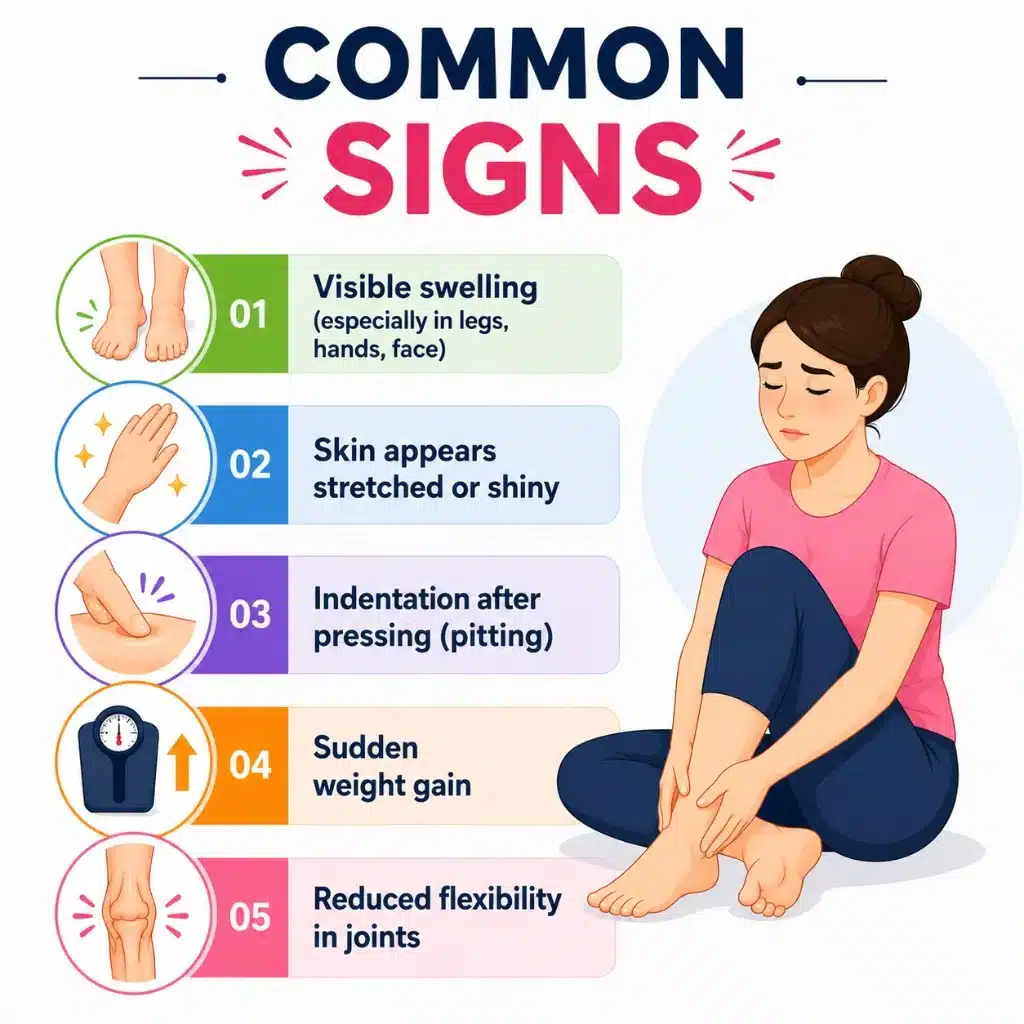
Common Signs
- Visible swelling (especially in legs, hands, face)
- Skin appears stretched or shiny
- Indentation after pressing (pitting)
- Sudden weight gain
- Reduced flexibility in joints
When It Becomes Serious
Seek medical attention if you notice:
- Sudden swelling with no clear reason
- Breathing difficulty
- Chest pain
- Swelling accompanied by fever
How Is Edema Diagnosed?
Doctors use a combination of clinical examination and tests:
Physical Examination
- Checking swelling pattern
- Pressing skin for pitting
Diagnostic Tests
- Blood tests (kidney, liver function)
- Urine tests
- Ultrasound or Doppler studies
- Chest X-ray (for pulmonary edema)
- ECG (heart function)
Treatment Options for Edema
Treatment depends on the underlying cause. There is no one-size-fits-all solution.
Lifestyle Changes
Often the first time of treatment:
- Reduce Salt intake
- Stay physically active
- Elevate legs while resting
- Maintain a healthy weight
Medications
Doctors may prescribe:
- Diuretics (water pills)
- Anti-Inflammatory drugs
- Medications for underlying conditions (heart, kidney or liver disease)
Compression Therapy
- Compression stockings improve blood circulation
- Useful for leg swelling and varicose veins
Treating the Root Cause
Edema is often a symptom, not a disease. Managing the underlying issue is key:
- Heart conditions—cardiac treatment
- Kidney problems—Renal care
- Liver disease—specialized management
Advanced Treatments
For severe or chronic cases:
- Lymphatic drainage therapy
- Surgical interventions (rare cases)
- Oxygen therapy (for pulmonary edema)
Home Remedies for Mild Edema
The following steps will help you reduce mild non-serious swelling which requires home treatment:
- Drink sufficient water throughout the day.
- Avoid staying seated for prolonged times.
- Apply light pressure to the hurt spot through massage.
- Decrease your consumption of processed food.
- Raise your legs while sleeping.
Prevention Tips
People need to seek medical help when they experience persistent swelling.
When to See a Doctor?
If the condition produces both pain and redness. You should contact your doctor, or if you experienced heart problems or kidney issues or liver disease in the past.
Doctors can stop your medical condition from developing serious health problems.
Key Statistics
- Edema occurs most frequently in elderly people and pregnant women.
- The research shows that 20 to 30 percent of adults will experience leg swelling at some time in life.
- People who have heart-related edema face higher chances of needing hospitalization if their condition remains untreated.
Why Choose SilverStreak Hospital?
SilverStreak Hospital provides patient-centered medical services with operational excellence for its medical treatment. The specialists who work with us will use their expertise to provide medical services, which include:
- An accurate diagnosis through the use of advanced diagnostic tools.
- Customized treatment strategies for everyone.
- Complete medical treatment because they need to address all health issues.
- Compassionate support during your healing process.
Whether it is mild swelling or a complex medical condition, timely care can make all the difference.
While mild swelling is common, persistent or severe edema should never be ignored. With proper diagnosis, lifestyle changes, and medical care, most cases can be effectively managed.
If you or a loved one is experiencing unusual swelling, seeking timely medical advice can prevent complications and ensure better health outcomes.
FAQs
Not always. Mild Edema is common and harmless. However, severe or sudden swelling can indicate serious conditions.
Yes, mild cases caused by lifestyle factors often resolve with rest and hydration.
What is the fastest way to reduce edema?
- Elevate the affected area
- Reduce salt intake
- Use compression
Take prescribed medications
It can be. Persistent swelling, especially with other symptoms, should be evaluated by a doctor.
Yes, proper hydration can reduce fluid retention caused by salt imbalance.
There is no medical difference between oedema and edema; they refer to the same condition. The only distinction is spelling” oedema” is used in British English (common in India), while “edema” is the American English version.