



The causes of irregular menstruation are hormonal imbalances such as polycystic ovaries, stress, sudden gain or loss of weight, some forms of medication, and perimenopause. Irregular menstruation is when your menstrual periods happen either before every 21 days or after 35 days, or even skipping three or more periods at a time. See your gynaecologist if the issue does not go away after three months or if you are having very heavy periods or cramping. At SilverStreak Hospital, we will work out what causes your irregular periods and the solution for it.
Irregular Periods Causes: What Counts as Irregular Menstruation?
The menstrual cycle is considered to occur from the first day of one period to the first day of another. According to the Office on Women’s Health, the menstrual cycle may vary from 21 days to 35 days to be considered healthy. The bleeding period lasts from four to seven days, while the average cycle lasts for 29 days.
A couple of days’ variation every month is completely normal. However, irregular menstruation is different. This happens when your period shifts in terms of timing, amount, or duration for no known reason.
Irregular/Abnormal Menstruation Indicators
You are going through an abnormal menstrual cycle when you have the following symptoms:
- Menstrual cycles that come after 21 days or before 35 days
- Three or more consecutive periods missed (when not pregnant)
- When the difference in cycle lengths exceeds nine days each month
- Periods lasting more than seven days
- Flow heavier or lighter than usual
- Bleeding or spotting in between periods or after intercourse
- Cramps, nausea, or vomiting during periods
Doctors also have their own terminology. Amenorrhea refers to the absence of periods. Oligomenorrhea is characterised by irregular menstrual periods that occur at intervals of more than 35 days. Abnormal uterine bleeding comprises heavy, prolonged, or intermenstrual bleeding.
How common is this disease? From a study conducted by ET HealthWorld, it was found that more than half of the female population in India has menstrual abnormalities in their lifetime. It means that having a menstrual abnormality is not a lone case.
Common Causes of Irregular Periods
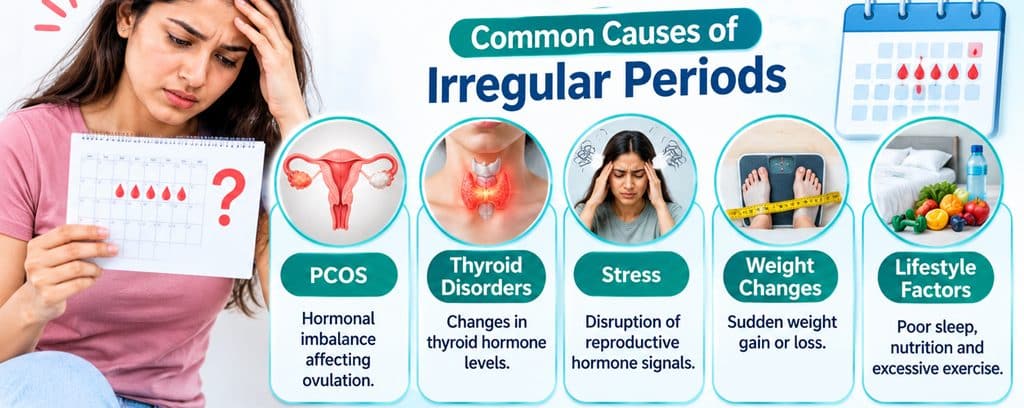
Irregular menstruation is mainly caused by three types of causes: hormonal, lifestyle causes, and medical causes. Sometimes, more than one of these may contribute to the issue.
1. Hormonal Fluctuations
The cycle requires a balance in terms of the levels of oestrogen, progesterone, and other hormones in your body. If there is an imbalance of these hormones, it can cause ovulation to be affected, causing periods to be late, occurring frequently, or missing altogether. Hormonal fluctuations can also result in such problems as acne, hair loss, excess facial hair, and unexpected weight gain.
2. Polycystic Ovary Syndrome (PCOS)
Irregular menstruation may be caused by a condition known as polycystic ovary syndrome (PCOS). This is where there is production of male hormones (androgens) in large numbers by the ovaries. Therefore, the woman doesn’t ovulate. PCOS patients have a few periods a year accompanied by such symptoms as acne, hairiness, and weight gain.
Fortunately, PCOS is a treatable condition. It can be managed through lifestyle changes and medication.
3. Pituitary and Thyroid Disorders
The thyroid gland controls the metabolism of the body and affects the reproductive hormones. Hyperthyroidism and hypothyroidism may result in menstrual problems such as irregular, too light, or too heavy periods. A high level of prolactin, which is produced in the pituitary gland, can also lead to lack of ovulation. This is easily detectable with a simple blood test.
4. Stress
In situations where there is stress, the body tends to produce high levels of cortisol. This affects the body’s signalling from the brain to the ovaries, hence either delaying or skipping periods. The causes can include exams, job-related stress, grief, travel and even a bout of illness.
5. Weight Changes, Exercise, and Nutrition
The body needs enough energy for the process of ovulation to be successful. The explanation of why these factors may cause irregular menstrual cycles is:
- Rapid weight loss or crash diets: The body is unable to produce sufficient amounts of oestrogen when the amount of body fat is very low.
- Obesity: The body produces more oestrogen and ovulation cannot occur because of too much body fat.
- Extremely high levels of physical activity: Women such as athletes, dancers, and long-distance runners may cease menstruating if they are not properly fed.
- Poor nutrition and lack of sleep: Both affect the production of hormones.
6. Puberty and Perimenopause
It is the period when a woman suffers from irregular menstrual periods. In the case of young individuals, it takes one or two years to stabilize the menstrual cycle after having their first menstrual period. In the case of women aged 40, it is the perimenopause period.
7. Contraception and Other Drugs
Contraceptive methods involving hormones can have an impact on your periods. It may take up to six months for periods to normalise when you discontinue oral contraceptives. Other medications like steroids, anti-coagulants, and some antidepressants may also impact the menstrual cycle.
8. Pregnancy, Lactation, and Miscarriage
Missed periods usually signal the onset of pregnancy; hence, the first thing that you must do when you experience a missed period is to take a pregnancy test. Breast-feeding is an instance wherein a woman will not have periods for several months.
9. Uterine and Reproductive Disorders
There are a number of diseases in the pelvis that can result in irregular periods:
Uterine Fibroids/Polyps: These are benign diseases causing excessive bleeding.
Endometriosis: This is where tissue which resembles that of the uterine lining appears in other areas of the body and causes pain and irregular bleeding.
Pelvic Inflammatory Disease (PID): This is the inflammation of the reproductive organs which leads to pain, discharge and irregular menstrual bleeding.
Primary Ovarian Insufficiency: This is premature ovarian failure before reaching 40 years of age.
Bleeding disorders and sometimes cancer of the uterus/ovaries
10. Chronic Illnesses
Diabetes, coeliac disease and many other diseases may affect your hormones and ovulation. This is just another reason why you should visit a doctor instead of guessing.
Irregular Periods at Different Age
The reasons behind menstrual irregularities can differ based on your age.
Teenage years: Hormonal development is incomplete, which means that during the first couple of years, irregular periods are a natural occurrence. Any more serious irregularity should be examined.
20s and 30s: PCOS, problems with the thyroid gland, stress, changes in weight, and the use of contraceptive devices are the most frequent causes.
40+ years old: Menopause is the primary cause, but it is important to exclude other diseases, especially with heavy periods.
After menopause: Any kind of menstruation is a sign of disease.
Can Irregular Periods Affect Fertility and Long-Term Health?
With irregular periods, you can also have irregular ovulations. If you do not ovulate regularly, then it becomes hard to tell when you are fertile and conceive. There are women who have trouble with ovulations but have managed to conceive despite taking some time.
Several other problems may appear due to untreated menstrual disorders:
- Anaemia – heavy and prolonged periods result in iron deficiency, tiredness, dizziness, and difficulty breathing.
- Endometrial hyperplasia – lack of menstruation for months causes the thickening of the uterine lining due to the influence of oestrogen. It may also lead to abnormal cell changes.
- Osteoporosis – lack of menstruation leads to the lack of oestrogen and weakening of bones.
- Emotional distress – irregular periods cause stress and problems in everyday life.
All these problems can be avoided.
When to See a Gynaecologist for Irregular Periods
A delayed period once in a while isn’t usually cause for concern. However, several symptoms require booking an appointment:
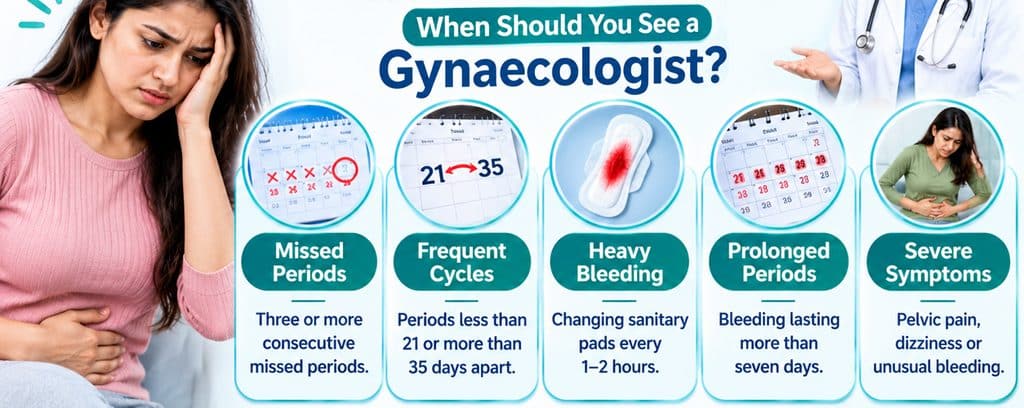
- You are experiencing three or more consecutive missed periods and aren’t pregnant.
- You experience cycles lasting fewer than 21 days or greater than 35 days.
- Your periods become irregular suddenly when they were regular for many years.
- The bleeding continues for more than seven days.
- The bleeding requires changing a sanitary towel or tampon every one to two hours.
- The bleeding occurs when not on your periods, either after having sex or after menopause.
- The bleeding is associated with severe pelvic pain, dizziness, or tiredness.
- The symptoms include uncontrolled bleeding with hairiness, acne, and unusual weight gain.
- You are attempting to conceive and have irregular periods.
- You have an unusual odour during vaginal bleeding or a fever associated with it.
If you are experiencing heavy bleeding that causes you to faint and severe pain, do not wait for an appointment but seek help at the nearest emergency department. More information regarding this condition is provided by the American College of Obstetricians and Gynaecologists.
How Gynaecologists Diagnose Abnormal Menstruation
Any diagnosis is never complete without a discussion. Keep track of when your periods start and end; their heaviness; and any associated symptoms like pain, clots or spotting. Using an application to keep a record of your menstrual cycle can be very helpful in this case, as well as just keeping a calendar.
During your consultation, your gynaecologist will most likely:
- Take a complete history of your menstrual cycles, medications, weight loss/gain, stress and family history;
- Perform a physical and pelvic examination;
- Order tests including, but not limited to:
- Pregnancy test in urine or blood;
- Hormone levels, thyroxine, prolactin in the blood
- Anaemia blood work
- Pelvic ultrasound for detecting any uterine fibroids, polyps or ovarian cysts.
Endometrial biopsy and hysteroscopy procedures are sometimes recommended in certain situations.
Treatment Methods for Irregular Periods
The treatment will depend on the causes of the problem, age, and desire to have children in the future.Here are the causes of irregular periods and the treatment options.
- Changes in lifestyle: Maintaining proper body weight, healthy eating habits, exercising regularly, improving sleeping conditions, and managing stress.
- Hormonal treatment: Using contraceptive pills or progestogens to regulate the cycles and decrease the bleeding.
- Thyroid medications: If there is underactivity or overactivity of the thyroid gland.
- Polycystic ovary syndrome: A combination of changes in the way of life and medications.
- Medications for bleeding: Tranexamic acid for the management of menstrual flow.
- Minimally invasive procedures: Used to remove fibroids and polyps that cause abnormal bleeding.
- Fertility treatment: Ovulation medications for those wishing to get pregnant.
Surgery should be the last option because the majority of women respond well to medications and changes in their lifestyles.
Simple Habits That Support a Regular Cycle
While not all causes can necessarily be avoided, living a healthy lifestyle will go a long way:
- A healthy diet, including no fad diets
- Regular exercise, but never overtraining
- Seven to eight hours of sleep every night
- Meditation/yoga and other methods of relaxation
- Healthy body mass index (BMI)
- Moderation in drinking/smoking
- Monthly tracking of your menstrual period
- Gynaecology visits
Why Choose SilverStreak Hospital for Menstrual Health Care?
The SilverStreak Multispeciality Hospital at Sector 87, Gurugram, provides comprehensive gynaecological and obstetric services. At our hospital, we believe in putting the needs of patients first. We listen to your case in detail, examine you and take appropriate tests before recommending any course of action.
Here is what we have to offer:
- Gynaecological specialists who treat issues like menstrual disorders, PCOS, fibroids, endometriosis, and hormonal problems
- On-site diagnostic facilities such as labs and imaging to ensure you do not have to go to different places for all of this
- Latest operation theatres for any minimally invasive procedure that you may require
- Facilities for every age group, starting from young girls having irregular periods to women nearing menopause
- Eco-friendly campus, which is the first certified green hospital in New Gurugram
If you are having problems with irregular periods and it is impacting your health, well-being or family planning, there is no need to wait. Book an appointment today because early diagnosis makes treatment easier.
Conclusion
There are several reasons behind irregularities in your menstrual cycle – from stress to health issues. In most cases, irregular periods can be cured easily if diagnosed at an early stage. Maintain a calendar of your cycle, maintain a healthy lifestyle, and do not neglect symptoms such as late cycles, heavy bleeding, and pain.
At SilverStreak Hospital, Gurugram, our expert gynaecology panel can guide you on what your body is trying to communicate with you.
FAQs
The most common reasons are PCOS, thyroid problems, stress, substantial weight gain or loss, strenuous exercise, hormonal contraceptives, and perimenopause. Sometimes fibroids, polyps, and endometriosis may cause this issue too.
Irregularity in a cycle sometimes happens, especially when a girl is a teenager or approaching menopause. But any changes that occur frequently should be discussed with a doctor.
A delay of several days is okay. In case of missing three menstrual periods one after another and not being pregnant, consult a gynaecologist. If there is a possibility of pregnancy, then do a test.
Yes. Chronic physical or psychological stress interferes with the hormones regulating ovulation and results in delayed or missed periods. However, if there are still irregular periods even after the removal of stress factors, you should be examined.
No. PCOS is a frequent cause, but there can also be other causes like thyroid disorders, chronic stress, weight fluctuations, and other diseases.
Yes, although it may take more time due to difficulties with ovulation. A gynaecologist will help you track ovulation and treat the cause of the problem.
The tests performed for irregular periods are: pregnancy test, hormone and thyroid blood tests, blood count, and pelvic ultrasound.