


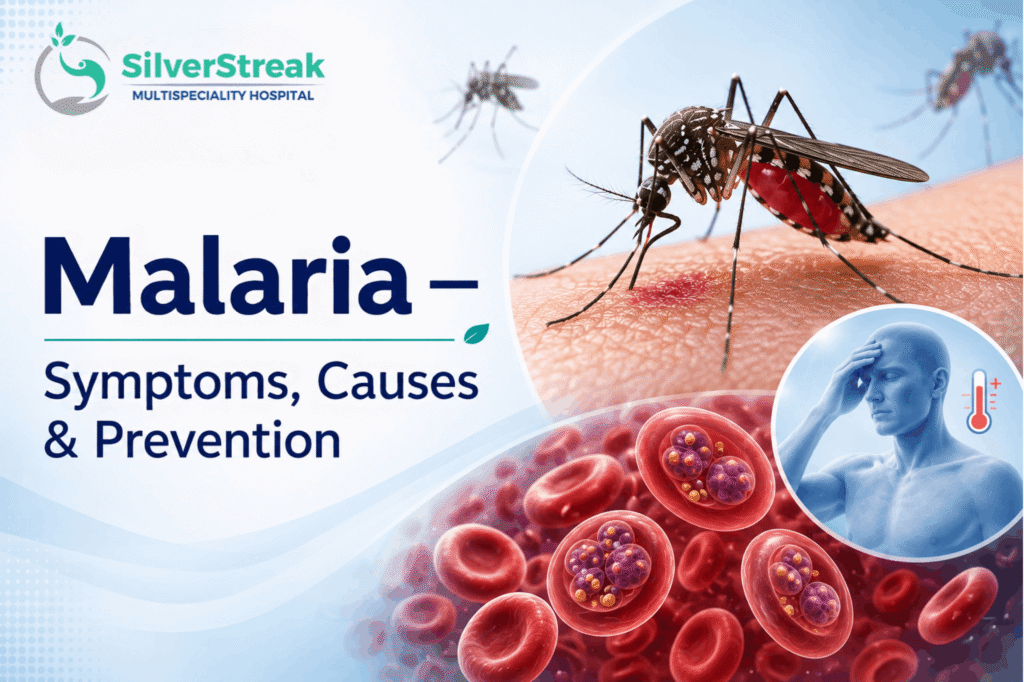
Malaria is still a major global health problem despite being both preventable and curable. Nearly 610,000 people died of malaria worldwide in 2024, and 80% of those who died were children under the age of five. WHO African region accounts for 95% of all malaria deaths. This blog discusses malaria’s cause, symptoms, complications, diagnostic tests, treatment, and prevention in detail.
What is Malaria?
Malaria is a potentially fatal mosquito-borne illness that is widespread throughout tropical areas of the world. It is both preventable and manageable. The causative agent of malaria is a parasite that cannot be passed from person to person. There are several kinds of malaria parasites, the most deadly of which is Plasmodium falciparum. It is essential to become familiar with the signs and symptoms of malaria and get tested as soon as possible.
Malaria is a severe disease that can only be transmitted through an infected female Anopheles mosquito’s bite, which carries the parasite. The infection from the parasite can cause severe complications in humans if not treated promptly. Mosquitoes carrying the Plasmodium parasite are most numerous in tropical regions and may be particularly prevalent in rural settings. Understanding the causes of malaria is essential to being able to prevent it.
Types of Malaria
Although there are numerous species of malaria parasites, the majority of them may be grouped into five distinct categories. The most widespread amongst them are:
- Plasmodium falciparum
- Plasmodium vivax
- Plasmodium malariae
- Plasmodium ovale
P. falciparum is the most prevalent kind of malaria parasite in Africa, where the illness may be especially severe. The most prevalent form of malaria is P. vivax; it has a lengthy incubation period and may periodically relapse.
Transmission or Causes of Malaria
Understanding the causes of malaria is critical to preventing it.
- Malaria is primarily caused by the parasite carried by an infected mosquito.
- Additionally, it is essential to highlight that not all species of mosquitoes are capable of carrying the infection.
- There are indeed some particular species that play a role in the process of transmitting the infection from one person to another.
- There are several contributing factors that might raise the likelihood of being infected with malaria.
- The risk of being bitten by an infected mosquito is increased if there is a high concentration of the insects in the region and if they share the same habitat as humans.
- Furthermore, rainfall patterns and the time of year are also considered to be significant influences.
In regions where malaria is typically present, the number of illnesses tends to be relatively consistent throughout the year. However, in some areas, there is a period of the year when the number of infections peaks and is highly increased. This is commonly known as the malaria season.
Malaria is not transmitted from one person to another via touch, coughing, or sneezing; rather, it is disseminated almost exclusively through the bite of an infected mosquito. It is vital to keep that in mind in order to avoid getting bitten.
Additionally, it should be noted that malaria can occasionally be transmitted through contaminated blood, such as during a blood transfusion or from an infected mother to her unborn child.
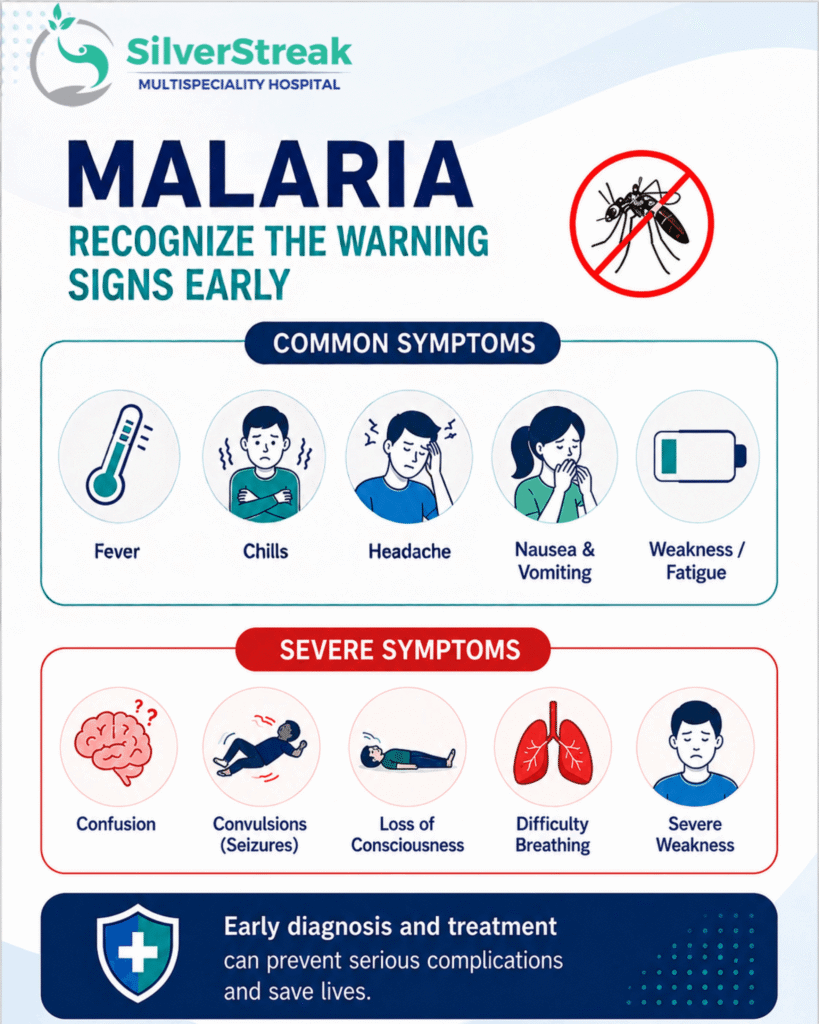
Symptoms of Malaria
Who is at High Risk of Malaria?
There are several groups of people who are considered to be more likely to contract malaria and experience severe symptoms. These are:
- Children under the age of 5, especially those who have not yet developed a strong enough immune system.
- Pregnant women and girls
- HIV/AIDS patients
- People who visit or live in malarious areas
The likelihood of developing malaria and experiencing severe symptoms is particularly high in children, pregnant women, and HIV/AIDS patients. In addition, children, pregnant women, and HIV/AIDS patients are more likely to develop life-threatening anemia.
Complications of Malaria
There are several severe malaria complications, the majority of which can be fatal if not treated.
- Complications of cerebral malaria, severe malarial anemia, and organ failure frequently develop when malaria is left untreated or inadequately treated.
- Fluid accumulation in the lungs, decreased blood pressure, and hypoglycemia are additional dangerous consequences of the disease.
- Despite the fact that most malaria patients feel better after treatment and recover fully, several problems may still appear.
- These include severe anemia, cerebral malaria, coma, and even death may develop if the illness is not diagnosed and treated promptly.
That is why diagnostic testing and the early stages of diagnosis are so essential when there is a suspected infection.
Diagnostic Test For Malaria: Malaria Antigen Test
One of the best things anyone can do if they think they’ve been infected is to get tested as soon as possible following infection and before symptoms appear. A number of malaria diagnostic tests are currently available. The most reliable technique to detect malaria is a blood smear examination, also known as a malaria microscopic test.
Another test that uses rapid diagnostic tests to detect malaria antigens in the blood and doesn’t require a microscope is the malaria antigen test. This test is recommended for use in remote regions because it delivers results in approximately 15 to 20 minutes.
Rapid diagnostic tests for malaria have been used extensively in low-resource settings where microscopy is unavailable. Nevertheless, pfhrp2 gene deletions, which cause false-negative results for rapid diagnostic tests, are becoming more prevalent.
Prevention: How to Avoid Being Infected with Malaria
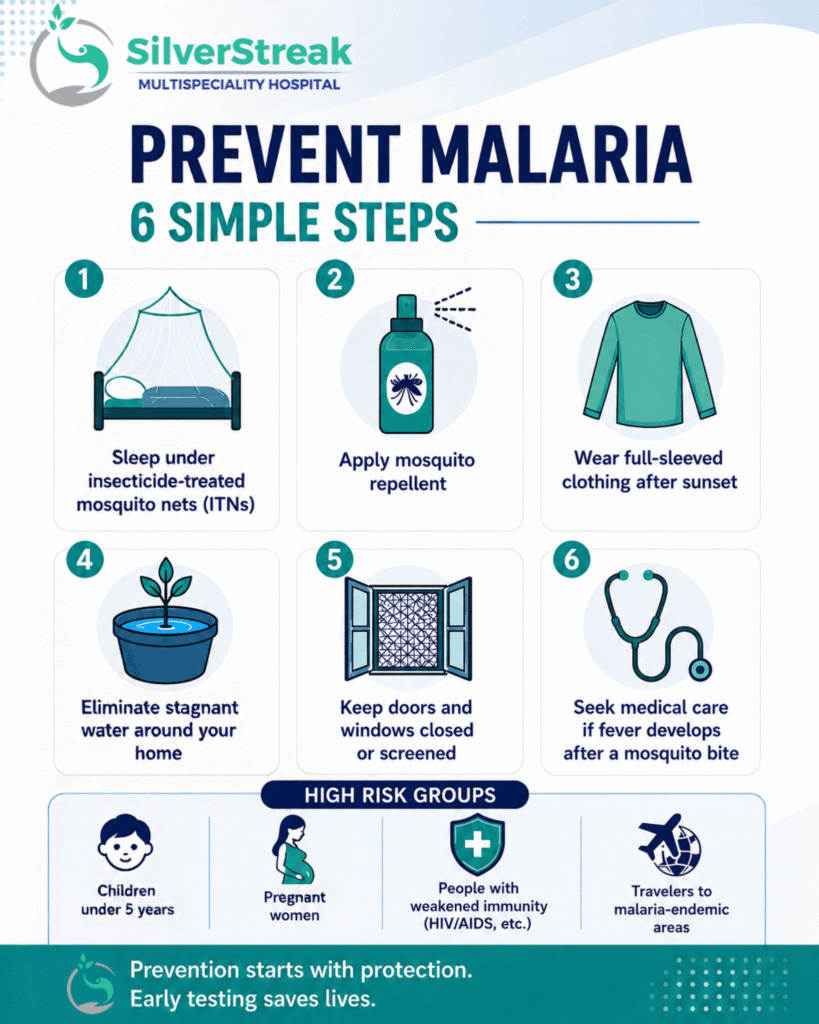
There are many measures you may take to safeguard yourself from the infection. For example, as the primary vector for malaria transmission, mosquitoes should be avoided.
- Using insecticide-treated mosquito nets (ITNs) while sleeping is one way to do this.
- It’s also a good idea to apply mosquito repellents to the skin when going outside.
- Wearing long-sleeved clothes and pants made of sturdy fabric when it’s dark outside is another option.
- Additionally, it’s a good idea to close windows and doors while it’s dark outside. Avoiding going outside when mosquitoes are most prevalent is also recommended.
- Measures taken at the community and institutional levels, such as reducing stagnant water in which mosquitoes may lay their eggs, are critical in reducing the number of mosquitoes.
- Another popular method for controlling malaria is Indoor Residual Spraying (IRS). The use of insecticides in IRS is essential.
- A major emphasis has been placed on the widespread use of Insecticide-Treated Nets (ITNs) and the creation of insecticide resistance.
- PBO or dual-ingredient nets, which are more effective against resistant mosquitoes, now account for 84 percent of net distributions, up from only 10 percent in 2019.
Medications for Malaria Prevention
If you’re visiting a region where malaria is endemic, you should definitely consult a physician about taking antimalarial drugs. Another crucial strategy for preventing malaria, particularly in pregnant women, is IPT.
Despite the availability of effective treatments, just 45 percent of pregnant women in malaria-endemic nations got the suggested three IPTp-DSP courses of medication in 2025, far below the desired threshold of 80 percent. Source Link
Vaccination
One of the most recent developments in malaria prevention is the introduction of malaria vaccines. To prevent the disease, 25 nations will begin administering malaria vaccines in 2026, providing around 10 million children with vital protection each year.
World Malaria Day: April 25th, a Day Dedicated to Malaria Control and Prevention
Every year, on April 25th, World Malaria Day is celebrated. Malaria prevention and control are the focus of World Malaria Day, which is celebrated annually on April 25th. Its goal is to inspire a coordinated effort to increase awareness and involvement in malaria prevention and treatment. World Malaria Day is a fantastic opportunity to learn more about malaria and how to assist in its control and eventual elimination.
World Malaria Day was created to raise awareness and promote year-round malaria prevention and control measures. These mostly include extensive community-based diagnosis and treatment initiatives in endemic regions, as well as the development of malaria control programs.
Africa Malaria Day was established in 2001 when the 44 malaria-endemic countries adopted the Abuja Declaration. As a result, World Malaria Day was created. The theme for World Malaria Day 2026 is “Driven to End Malaria: Now We Can. Now We Must.” Because of new tools and methods, such as recently approved malaria vaccines, there is genuine hope that malaria may be eradicated in a matter of years.
However, there are still serious obstacles to overcome, such as increasing antimalarial resistance. Artemisinin partial resistance has already been detected in 4 African nations and is on the rise. There is also a growing issue with insecticide resistance, notably pyrethroids on mosquito nets; 48 of the 53 nations that reported data confirmed widespread resistance to pyrethroids.
When to See a Doctor?
You should contact a doctor if you have a fever, chills, or flu-like symptoms. That is because the majority of the signs and symptoms of malaria are comparable to those of the flu.
Even though having the flu or a cold is not life-threatening, it might interfere with day-to-day activities. However, a blood test is advised to double-check whether someone has malaria or not.
It is important to understand that malarial infections, if diagnosed and treated rapidly, are typically totally curable.
Why Choose Silver Streak Hospital for Malaria Treatment?
When it comes to malaria, the difference between a simple fever and life-threatening intricacy often comes down to one thing: receiving timely and expert diagnosis and treatment. Silverstreak Hospital, a multi-speciality NABH-accredited clinic based in Sector 87, Gurgaon, provides the best kind of malaria care. The hospital focuses on getting patients back to full health as soon as possible in a responsible manner.
1. Experienced Internal Medicine Specialists
Silverstreak Hospital’s doctors and medical staff can deliver the experience and insight required to tackle a range of infections, including such serious diseases as COVID-19, dengue, and malaria. With MBBS and MD (Internal Medicine) degrees and more than 9 years of experience in the field of infectious disease management, the specialists know what they are doing.
The hospital’s team provides comprehensive care for a range of infections, treating them with a degree of success higher than average.
2. Timely Diagnosis and Access To Required Tests
One of the things that set Silverstreak hospital’s malaria management services apart from others is timely diagnosis. The hospital has its own diagnostic equipment, including blood tests, ECG, X-ray, and ultrasonography. So, a patient suffering from a severe form of the infection can receive an exact diagnosis on the same day and begin malaria treatment right away. (Source: silverstreakhospital.com/speciality/best-general-physician-in-gurgaon)
3. Personalized Care Based on the Cause and Severity of the Infection
The doctors at Silverstreak Hospital understand that treating the symptoms is only half the battle. Because of the personalized approach to care, patients with a serious form of the infection can expect to receive expert care. This is based on the cause and severity of their condition. (Source: silverstreakhospital.com/best-general-physician-in-gurgaon)
4. Emergency and Critical Care Services Available Around the Clock
If a patient has complications due to a severe form of malaria infection, emergency and critical care services can be provided at the hospital as well. This is yet another advantage that sets Silverstreak hospital’s malaria treatment apart from others. In addition, critical care physicians can also assist with arranging further appointments with other specialists. (Source: silverstreakhospital.com/speciality/best-general-physician-in-gurgaon)
5. Excellent Reputation Among Patients
Silverstreak hospital offer excellent care that is truly focused on making the patients feel well. With a rating of 98% across all services, this multi-specialty clinic continues to take care of patients like family. At Silver Streak we treat patients like out family. Our medical staff is trained to provide specialized care to patients depending on the condition. Book your consultation for today.
Conclusion
Frequently Asked Questions
Q1. Is malaria contagious?
Q2. What are the 10 causes of malaria?
The 10 major causes of malaria are –
- Mosquitoe bites
- Infected needle
- Contaminated water
- Unbalanced diet
- 6 types of protozoa and their infections
Q3. How can I prevent malaria naturally?
Some tips will really help to prevent malaria at home:
- Stay away from mosquitoes
- Secure your bed with nets
- Keep your space clean
- Maintain proper hygiene
- Wash your hands and wear clean clothes
Q4. Is there a vaccine for malaria?
Yes, there are several vaccines for malaria. A specialist doctor can guide you better on that. At Silver Streak, we have qualified doctors who look at malaria symptoms and diagnosis closely.