


Piles/Hemorrhoids Disease Treatment in Gurgaon
Painful, itchy, or bleeding bowel movements are one of the most common reasons people in Gurgaon quietly put off a doctor’s visit—often for months. Piles, medically known as hemorrhoids, affect a large share of adults at some point in their lives, yet most cases are highly treatable once diagnosed correctly.
At SilverStreak Hospital, Gurgaon, our General & Minimal Access Surgery team evaluates and treats piles/hemorrhoids disease using everything from simple lifestyle correction to advanced laser and laparoscopic techniques. So, you don’t have to live with the discomfort any longer than necessary.
What Are Piles (Hemorrhoids)?
Piles are swollen, inflamed blood vessels (cushions of tissue) located in and around the anal canal and lower rectum. Everyone has these vascular cushions naturally; they only become “piles” when they swell, stretch, or prolapse due to excess pressure, straining, or weakened supporting tissue. Depending on where they form, piles are broadly internal or external, and either type can range from a minor nuisance to a condition that interferes with daily life.
Types of Piles
Internal hemorrhoids
Internal hemorrhoids form inside the rectum. Usually, they can't be seen or felt. They are painless but are the most common cause of bright red bleeding during or after passing stool. In more advanced cases, internal piles may prolapse through the anus during bowel movements.
Thrombosed hemorrhoids
Thrombosed hemorrhoids develop when blood pools and clots inside an external pile. They produce a firm, bluish lump and sudden, often intense pain. Though they are not medically dangerous, this variant needs prompt clinical attention for relief.
External hemorrhoids
External hemorrhoids develop under the skin around the anal opening since this area has more sensitive nerve endings. External piles tend to cause itching, swelling, and pain, especially if irritated by wiping or sitting for long periods.
Prolapsed hemorrhoids
Prolapsed hemorrhoids occur when internal piles stretch enough to bulge outside the anus. They may retract on their own or need to be pushed back manually. In severe cases, they remain permanently outside the body.
Common Symptoms of Piles/Hemorrhoids Disease
Gradually, piles of symptoms can appear. They can worsen with continued straining, or they can flare suddenly, as with a thrombosed pile. Bleeding should never be assumed to be “just piles” without an examination. Other conditions, such as anal fissures or, rarely, colorectal growths, can present in a similar manner. symptoms of piles in female

Bright red blood on toilet paper, in the stool, or in the toilet bowl

Itching or irritation around the anus


A soft lump or swelling near the anal opening

A feeling of incomplete evacuation after passing stool

Mucus discharge or leakage in more advanced cases.
Symptoms of Piles in Female
The symptoms of piles in females vary according to the severity and type (internal or external). They experience the same symptoms like men. Due to obesity, hormonal variations, pregnancy, uterovaginal organ prolapse, and other common causes, women develop piles/hemorrhoids disease.
Piles Causes & Risk Factors
- Chronic constipation or diarrhea
- Straining during bowel movements
- Prolonged sitting (including long commutes or desk jobs common in Gurgaon's corporate workforce)
- A low-fiber diet
- Inadequate water intake
- Obesity Heavy lifting
- Pregnancy
- A family history of weak connective tissue
- Age
Grades of Internal Piles/Stages of Piles
Typical Approach | ||
|---|---|---|
Grade I | Small, stay inside the rectum; you may bleed but don't prolapse. | Diet, fiber, topical medication. |
Grade II | Prolapse during straining but retract on their own. | Diet plus minor procedures (banding/sclerotherapy). |
Grade III | Prolapse and need to be pushed back manually. | Minimally invasive or surgical treatment. |
Grade IV | Permanently prolapsed and cannot be pushed back. | Surgical treatment, often laser or stapled hemorrhoidopexy. |
Treatment Options at SilverStreak Hospital
Your surgeon will suggest the right option based on the grade, your symptoms, and your overall health. They won’t push a one-size-fits-all procedure. Learn the treatment options for piles:
Lifestyle and dietary correction
This is the foundation for Grade I and many Grade II cases. A high-fiber diet, adequate fluids, regular movement, and avoiding prolonged straining or sitting may resolve mild symptoms within days to weeks.
Minimally invasive office procedures
They include rubber band ligation, sclerotherapy, or infrared coagulation, suitable for specific Grade II and early Grade III cases. Generally, this treatment option involves little to no downtime.
Laser hemorrhoidoplasty
It is now the preferred option for many Grade II–III cases at SilverStreak. It uses targeted laser energy to shrink the hemorrhoidal tissue with minimal cutting. Laser pile treatment causes less bleeding, less post-operative pain, and a faster return to normal activity as compared to traditional surgery.
Medical management
It includes topical creams, suppositories, stool softeners, and pain relief to manage symptoms. At the same time, you need to correct your underlying habits.
Stapled hemorrhoidopexy (PPH)
It repositions prolapsed tissue with the help of a circular stapling device. It is especially effective for circumferential or higher-grade prolapse.
Conventional or laparoscopic hemorrhoidectomy
It remains the most definitive option for large, complicated, or recurrent Grade IV piles. Doctors perform it when other approaches are not suitable.
Why Choose SilverStreak Hospital for Piles/Hemorrhoids Disease Treatment in Gurgaon
SilverStreak’s General & Minimal Access Surgery team is led by Dr. Paras Kumar Gupta, who brings over 12 years of experience in laparoscopic and general surgery. Our other leading piles specialist is Dr. Utkarsh Gupta. He was trained at Indraprastha Apollo Hospital, New Delhi, with a strong reputation for precision and a patient-first approach to piles, fissure, and fistula care.
Patients who have been treated here mention attentive nursing support and a smooth treatment process from consultation through recovery.
Beyond the surgical team, a few things set the experience apart. SilverStreak is a NABH-accredited, 150-bed multi-specialty hospital. This means the same clinical-quality and infection-control standards that apply across the hospital apply to your procedure.
The hospital is empanelled with 40+ insurers, CGHS, ECHS, ESIC, and the Haryana government. So, cashless treatment is straightforward for eligible patients and includes on-site diagnostics (3T MRI, 128-slice CT, and digital X-ray). Therefore, any pre-procedure evaluation can be completed without referrals elsewhere.
SilverStreak Hospital’s Sector 87 location, opposite DLF Skycourt, is one of the most accessible points for residents across Sectors 82–95, Pataudi Road, the Dwarka Expressway corridor, and Manesar. If Gurgaon residents search ‘piles hospital near me,’ they will get 24×7 emergency support for a thrombosed pile or sudden bleeding.
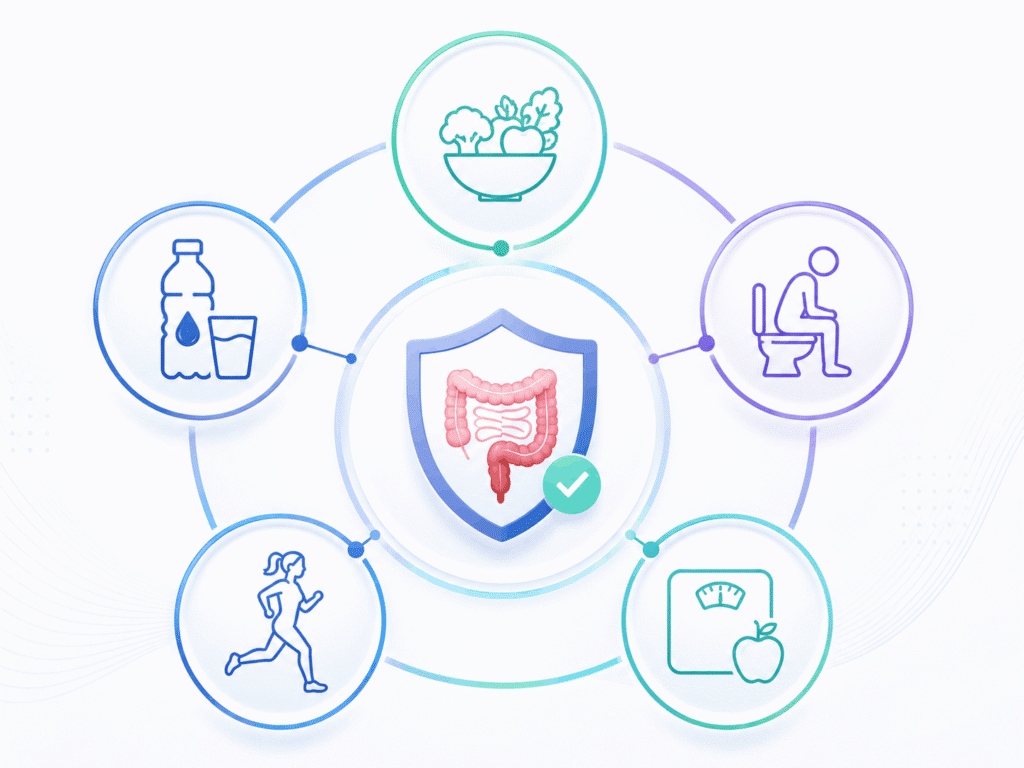
Measures for Preventing Piles from Recurring
Even after successful treatment, piles can return. It happens when the underlying habits that caused them are not addressed. For anyone with a desk-bound routine, standing or walking briefly every hour can reduce pressure on the lower rectum over time. They carry risk factors. Adopt the most effective long-term habits to prevent piles/hemorrhoid disease:
- Eat plenty of fiber from fruits, vegetables, and whole grains
- Drink enough water through the day
- Avoid straining or spending long periods on the toilet (including with a phone in hand)
- Stay physically active to keep bowel movements regular
- Maintain a healthy body weight.
Book Your Consultation
If bleeding, pain, or discomfort during bowel movements has been bothering you, it’s worth getting it checked rather than waiting it out. Call SilverStreak Hospital’s 24×7 helpline at +91-124-432-4444, or book an appointment online with our General & Minimal Access Surgery specialists at Sector 87, Gurugram, for an accurate diagnosis and a treatment plan for piles/hemorrhoid disease suited to your specific case.
Book An Appointment
Frequently asked Questions
What are the common symptoms of piles?
- Painless bright red bleeding during bowel movements
- Itching, irritation, or pain around the anal region
- Swelling or a lump near the anus
What non-surgical treatments for piles/hemorrhoids are available in Gurgaon?
- Dietary changes (high fiber) and increased water intake
- Sitz baths (warm water soaks)
- Rubber band ligation or sclerotherapy injections for early grades
What is the recovery time for laser vs. conventional surgery?
- Traditional open hemorrhoidectomy requires a longer recovery of 2 to 4 weeks.
- Usually, minimally invasive laser procedures allow discharge within 24 hours with a 3- to 5-day recovery.
Are there any tips for preventing piles recurrence post-treatment?
Yes. To prevent recurrence: you should adopt a high-fiber diet, stay well-hydrated, exercise regularly, and avoid prolonged straining. Most importantly, you need to follow your doctor's post-treatment advice to lower the risk of piles recurrence.
Can pregnancy cause or worsen hemorrhoids, and how are they treated during pregnancy?
Yes, pregnancy can cause or worsen hemorrhoids due to the increased pressure on the pelvic veins. Generally, conservative measures like increasing fiber and fluid intake, taking warm baths, and using topical treatments are safe during pregnancy.