

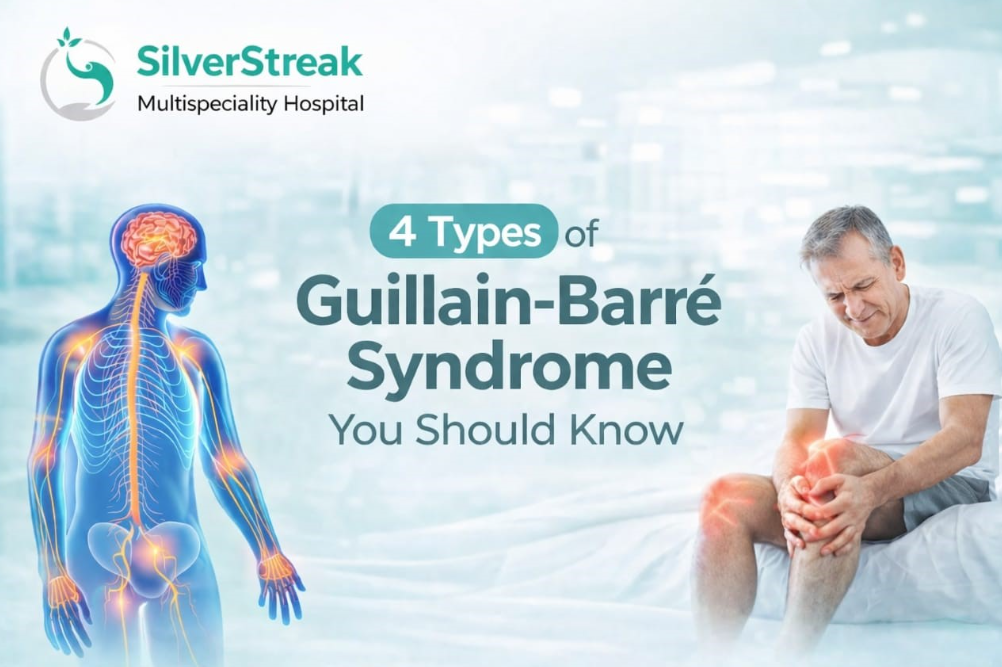
Guillain-Barré Syndrome is a rare but serious autoimmune nerve disease. In this condition, the body’s immune system mistakenly attacks the healthy nerves in the peripheral nervous system. This can lead to muscle weakness, numbness and even total loss of movement.
There are 4 types of Guillain-Barré Syndrome that doctors mainly identify which are Acute Inflammatory Demyelinating Polyneuropathy (AIDP), Miller Fisher Syndrome (MFS), Acute Motor Axonal Neuropathy (AMAN) and Acute Motor-Sensory Axonal Neuropathy (AMSAN). It is a frightening paralysis cause, but most people recover with proper medical care.
Research from the National Institute of Neurological Disorders and Stroke shows that about 1 to 2 people out of every 100,000 develop GBS each year. Common GBS symptoms include tingling in the feet, difficulty walking, and rapid muscle weakness.
What Is Guillain-Barré Syndrome?
Guillain-Barré Syndrome is a rapid onset of nerve disorder where the immune system attacks the protective covering of nerves called myelin or the nerve fibers themselves. This damage prevents the brain from sending signals to the muscles effectively. It often begins with “pins and needles” in the legs and can spread to the upper body within hours or days.
If you or a loved one is experiencing sudden unexplained neurological symptoms, it is important to consult a neuroscience specialist at the earliest.
Causes of Guillain-Barré Syndrome
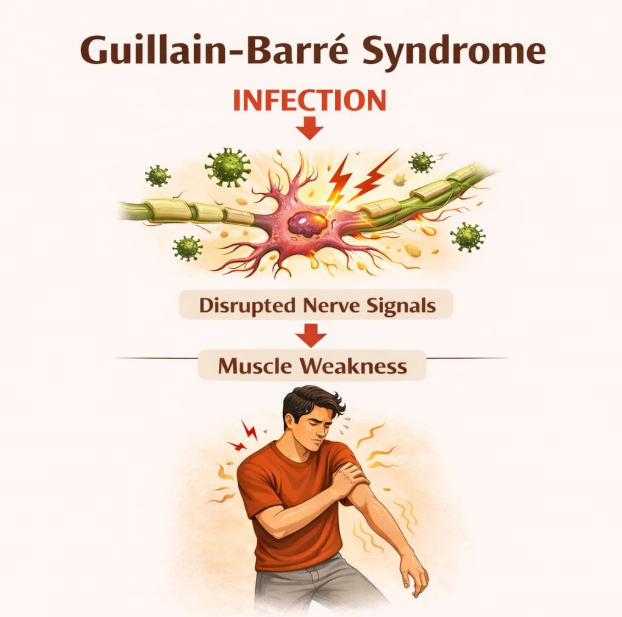
The actual cause of GBS is not fully known. However, it is usually triggered by an infection. Recent medical data suggests that nearly 70% of cases occur after a respiratory or digestive infection.
- Viral Infections: Flu, Cytomegalovirus, or Epstein-Barr virus.
- Bacterial Infections: Campylobacter jejuni (usually found in undercooked poultry) is the most common trigger.
- Zika Virus: Connected with outbreaks in specific regions.
- Surgery or Trauma: In rare cases, recent surgery can trigger the immune response.
- Vaccinations: Very rarely, certain flu or shingles vaccines are linked to GBS but the risk is much lower than getting the disease itself.
Common GBS Symptoms
The nerve disorder symptoms associated with GBS often move quickly. Recognizing them early is vital for recovery.
- Prickling or tingling sensations in your fingers, toes, ankles, or wrists.
- Weakness in your legs that spreads to your upper body.
- Unsteady walking or inability to climb stairs.
- Difficulty with facial movements including speaking, chewing or swallowing.
- Double vision or inability to move the eyes.
- Severe pain that may feel achy or cramp like.
- Difficulty with bladder control or bowel function.
- Rapid heart rate or high blood pressure.
Types of Guillain-Barré Syndrome
Doctors need to know which type of GBS a person has to give them the right care. Even though every type damages the nerves, they each affect the body in a different way.
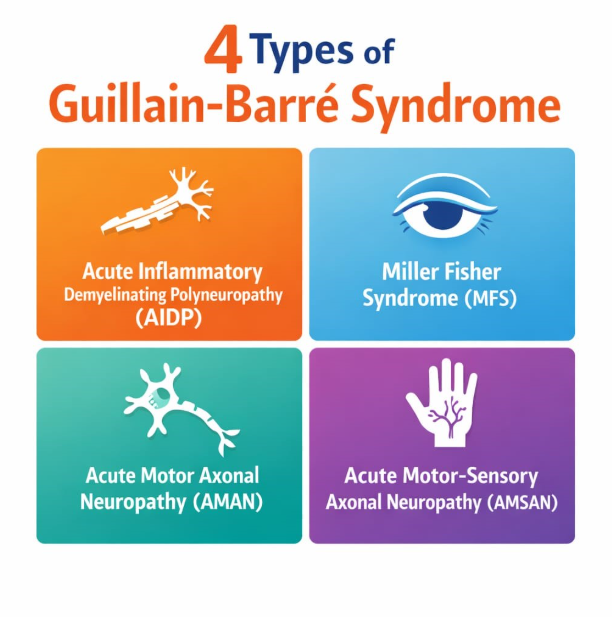
Acute Inflammatory Demyelinating Polyneuropathy (AIDP)
This is the most common type in the U.S. and Europe. In AIDP, the immune system attacks the protective coating of the nerves which is called the myelin sheath. Most people notice muscle weakness which starts in their legs. This weakness then moves up to the rest of the body.
Miller Fisher Syndrome (MFS)
This type is more common in Asian countries. Unlike other guillain barre syndrome types, MFS usually starts in the eyes. People often have trouble walking and lose their natural reflexes. The good news is that MFS is less likely to cause breathing problems than other types.
Acute Motor Axonal Neuropathy (AMAN)
This version attacks the core of the nerve rather than the coating. It specifically targets the nerves that control movement. Because of this, patients may experience paralysis or extreme weakness. However, their sense of touch and feeling usually stay normal.
Acute Motor-Sensory Axonal Neuropathy (AMSAN)
AMSAN is a more severe form of the syndrome. It attacks the core of both the movement nerves and the feeling nerves. This means patients lose both strength and sensation. As the damage is deeper, recovery usually takes a much longer time.
Treatment for Guillain Barre Syndrome
Treatment for GBS focuses on how to stop the immune system from attacking nerves . You cannot treat GBS at home as it needs constant care at hospital.
Medical Treatments
- Plasma Exchange: This process filters your blood. Doctors remove the liquid part of your blood (plasma) and keep your blood cells. The cells then go back into your body without the harmful proteins that attack your nerves.
- IVIG Therapy: Doctors give you healthy proteins from donors through an IV. These new proteins block the “bad” ones that cause nerve damage.
- Pain Relief: Doctors use special medicine to help with deep nerve pain and muscle aches.
Rehabilitation and Lifestyle Changes
- Physical Therapy: Once you are stable, our physiotherapy specialists help you move again. This builds your muscle strength gradually and safely.
- Occupational Therapy: This helps you relearn daily tasks. You might practice how to get dressed or brush your teeth.
- Speech Therapy: Some people need help talking or swallowing. These exercises help your throat and face muscles get stronger.
When to See a Doctor?
Guillain-Barré Syndrome is a medical emergency. You should get immediate help if you notice the following:
- Tingling that started in your feet or toes and is now moving up your body.
- Weakness that is spreading rapidly.
- Shortness of breath or difficulty taking your breath.
- Choking on saliva or difficulty swallowing.
Early intervention can prevent the condition from reaching the lungs which would need a ventilator for breathing. Do not delay — speak to a neurologist immediately if any of these symptoms appear.
When to Visit a Hospital in Gurgaon?
If you suddenly feels weak or loses feeling in your body, do not wait. Go to a hospital immediately.For the best care, you should see a specialist at a top hospital in Gurgaon like SilverStreak Multispecialty hospital.
Our hospital has special intensive care units (ICUs) equipped for complex nerve conditions, supported by a full range of patient services designed for high-acuity care. We are ready to handle the rapid symptoms of GBS variants and can provide life-saving treatments like plasma exchange or IVIG therapy to help you recover faster.
Prevention Tips
You cannot always stop an autoimmune nerve disease. But, you can lower your risk by avoiding common triggers by following the simple steps given below:
- Practice Food Safety: Always cook chicken and other poultry thoroughly. This helps you avoid Campylobacter infections which often trigger GBS.
- Wash Your Hands Often: Keeping your hands clean helps you avoid viruses. These infections can confuse your immune system and cause it to attack your nerves.
- Stay Informed: Pay attention to health news. Be aware of local outbreaks of viruses like Zika or West Nile.
- Talk to a Specialist:
- If you have had immune system problems before, tell your doctor. Discuss any new tingling or weakness right away. You can also explore our preventive health check-up packages to stay on top of your neurological and overall health before symptoms arise.
FAQs
GBS usually occurs after you have a cold, the flu or a stomach bug. Your immune system starts working hard to fight the germs. But, it gets confused.Thus, it starts attacking your own healthy nerves.
The most severe part of the illness usually lasts about two to four weeks. Most people need to stay in the hospital during this time. Many people feel much better within 6 to 12 months, but some may still feel a little weak for a few years.
Doctors use two main treatments like Plasmapheresis (filtering the blood) and IVIG (giving healthy proteins). Both work very well. Your doctor will choose the best one based on your health and the availability in the hospital.
No, you will not get GBS from another person. But, you can have the viruses that trigger it like the flu, but the nerve reaction itself does not spread from person to person.